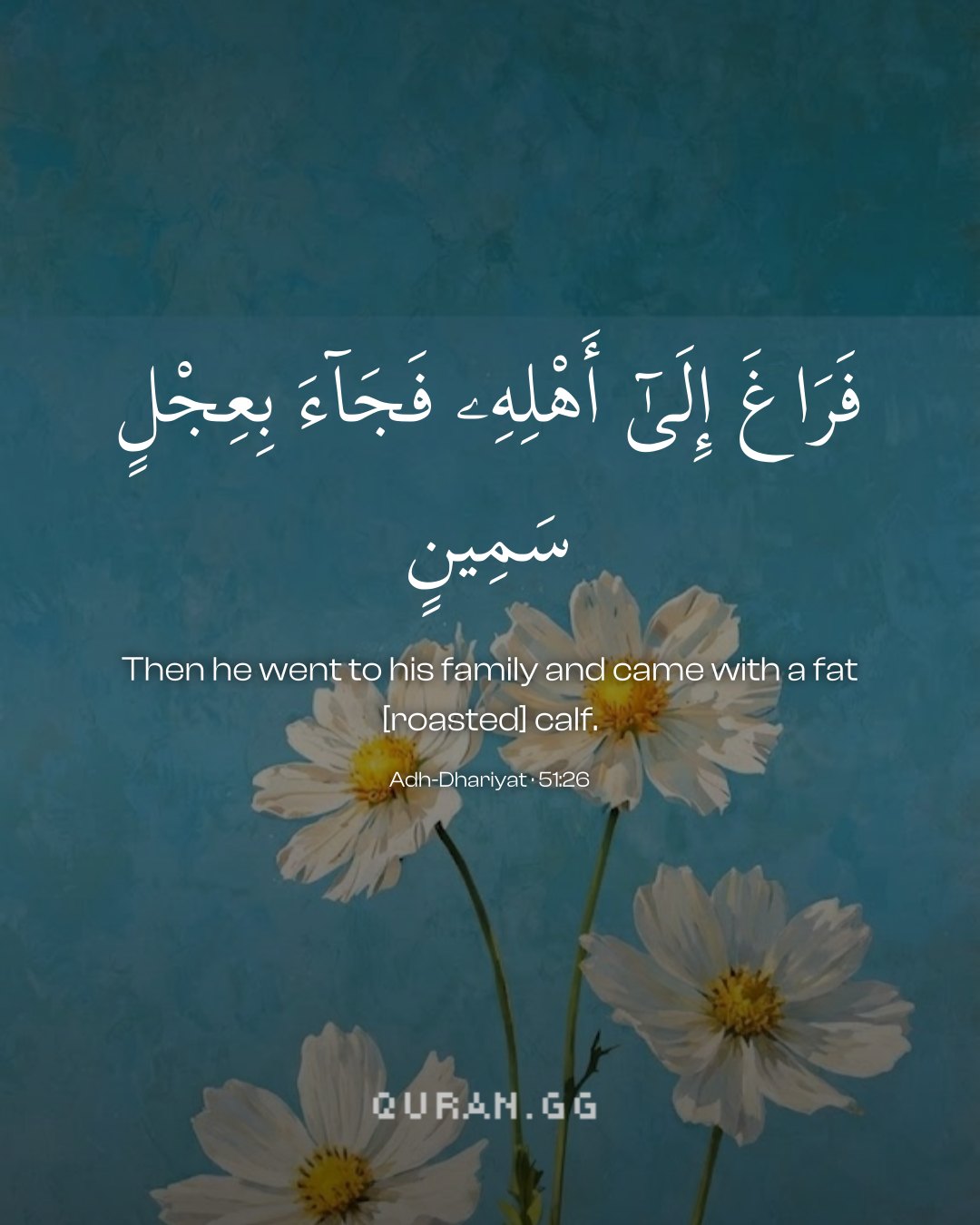
(When you are greeted with a greeting, greet in return with what is better than it, or return it equally.)(4:86) So the Friend of Allah chose a better reply in return for their greeting, implementing Allah's command: Reciprocating the greeting with the term Salamun is stronger than the greeting using the term Salaman. The three angels; Jibril, Mika'il and Israfil came to Ibrahim in the image of handsome young wonderfully graceful men. This is why Ibrahim said,
رَاغَ إِلَىٰ أَهْلِهِ (Then he slipped off to his home - 51:26). Ragha is derived from rawgh which means to slip out quietly. In other words, Holy Prophet Ibrahim (علیہ السلام) discreetly went in the house in haste to arrange for meal for his guests, so that they do not sense it. Otherwise they would have stopped him.
Rules of Entertaining Guests
Ibn Kathir says that this verse indicates proper manners for entertaining guests: Holy Prophet Ibrahim (علیہ السلام) ، the host, did not first mention that he would make food for them. He slipped out quietly, and brought the food to his guests quickly, while they were unaware that it was being prepared for them. Rather, he discreetly had it prepared and placed before them. He prepared the best kind of food he had, a young, fat roasted calf. Moreover, he did not place the food far from them and invite them to come close to it to eat. Rather, he placed it close to them فَقَرَّبَهُ إِلَيْهِمْ 'brought it close to them' and refrained from ordering them to eat. Instead he invited them politely, kindly and cordially to partake thus أَلَا تَأْكُلُونَ 'Would you not eat?' This statement in the form of a question is similar to one of us saying to a guest, 'Would you kindly partake of it - even if you are not hungry, at least for my sake?'
Tazkirul Quran
Maulana Wahiduddin KhanOn ayahs 23–29
Literally ‘It is certain like your talking’. It implies that when one’s voice can be reproduced, it should be possible to reproduce one’s existence. Perfect reproduction of a part of a man’s existence may be experienced in this world. It can be imagined from this that reproduction of the whole existence of man is possible.
Uthmani text of the Madinah mushaf (King Fahd Complex). Translation: Saheeh International. Tafsir via Quran.com.