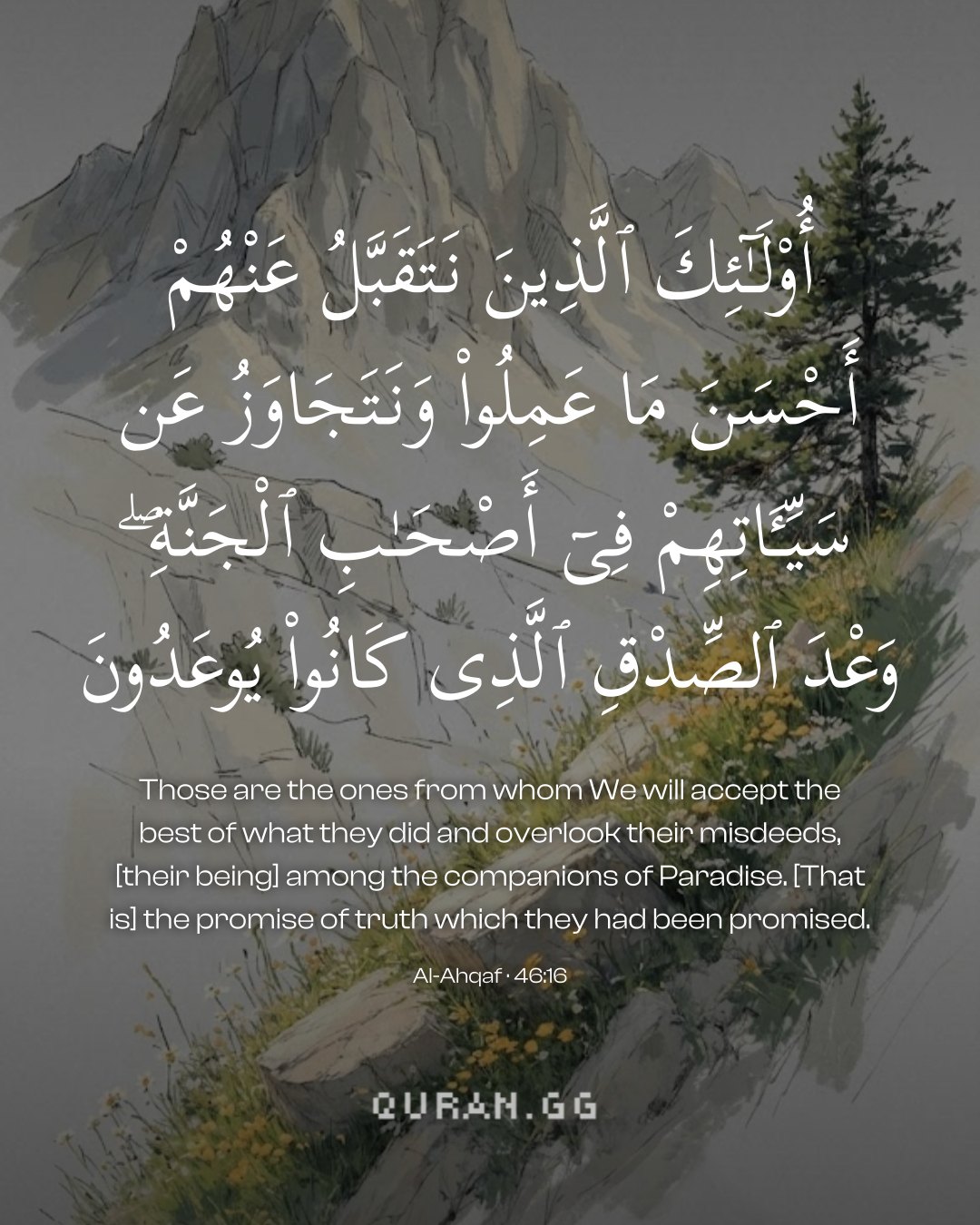
Those are the ones from whom We will accept the best of what they did and overlook their misdeeds, [their being] among the companions of Paradise. [That is] the promise of truth which they had been promised.
After mentioning that one must confess His Oneness, worship Him with sincerity, and remain upright in obeying Him, Allah follows that by giving instructions regarding the parents. These appear together in many places of the Qur'an, such as Allah's saying,
أُولَـٰئِكَ الَّذِينَ نَتَقَبَّلُ عَنْهُمْ أَحْسَنَ مَا عَمِلُوا وَنَتَجَاوَزُ عَن سَيِّئَاتِهِمْ (Such are the people from whom we accept the best of what they did and overlook their evils.... - 46:16) This, too, is a general rule, and if the verse was revealed with reference to Sayyidna Abu Bakr ؓ ، then he would be the first to be included in its generality. A quotation from Sayyidna ‘Ali ؓ which is given below also indicates that sense of the verse is general. Ibn Kathir has reported the narration of Muhammad Ibn Hatib (رح) that once he was with Sayyidna ‘Ali ؓ along with some other persons who blamed Sayyidna ` Uthman ؓ for some wrong-doings. There upon Sayyidna ‘Ali ؓ said:
کان عثمان ؓ تعالیٰ عنہ من الّذین قال اللہ تعالیٰ فیھم اُولٰٓیٔکَ الَّذینَ نَتَقَبَّل عنھُم اَحسَن مَا عَمِلُواونَتَجَاوَزُ عن سَیِّاٰتِھِم فِی اَصحابِ الجَنَّنۃِ وَعدَ الصِّدقِ الَّذِی کَانُوا یُوعَدُونَ ۔ قال واللہ عثمان واصحاب عثمان ؓ تعالیٰ عنہم ، قالھا ثلاثا۔ (ابن کثیر)
(` Uthman was one of those people about whom Allah Ta’ ala has said: "Such are the people from whom We accept the best of what they did, and overlook their evils, (so they will be) among the people of Paradise according to the true promise that was made to them." (46:16) I swear by Allah that ` Uthman and his companions were examples of this verse." Sayyidna ` Ali ؓ repeated this three times.
Tazkirul Quran
Maulana Wahiduddin KhanOn ayahs 16–17
Human procreation takes place through a father and a mother who nurture their offspring through infancy to adulthood. This is, so to say, the natural system of man’s training, which ensures that he develops a keen consciousness of his duties towards human beings along with the feeling that he must acknowledge the grace of his Benefactor and discharge his duties towards Him. This feeling teaches a man two things: firstly, to honour his pledges towards other men and, secondly, to fulfill important obligations to God, the Creator and Lord. Those who learn a lesson from Nature, the great teacher, who activate their sense of moral awareness to the extent that they properly identify and appropriately fulfill their duties towards all, ranging from their parents right up to God, are the ones who will be treated as deserving of the eternal Grace of God in the Hereafter.
Uthmani text of the Madinah mushaf (King Fahd Complex). Translation: Saheeh International. Tafsir via Quran.com.