Surah Al-Ahzab Ayah 21 (33:21) — Meaning & Tafsir | Quran.GG

Surah Al-Ahzab, Ayah 21

33:21 · Meaning and tafsir

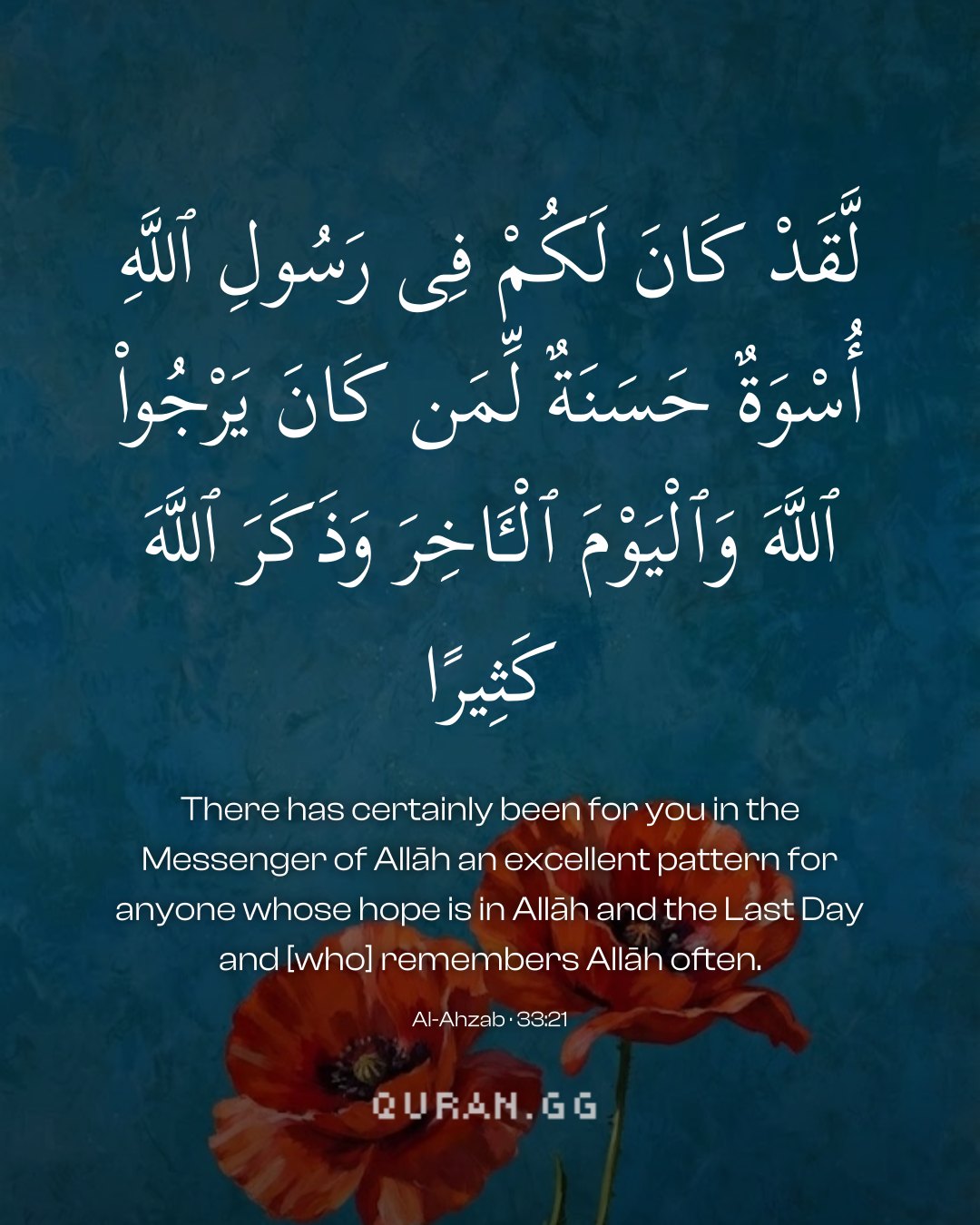
لَّقَدْ كَانَ لَكُمْ فِى رَسُولِ ٱللَّهِ أُسْوَةٌ حَسَنَةٌ لِّمَن كَانَ يَرْجُوا۟ ٱللَّهَ وَٱلْيَوْمَ ٱلْـَٔاخِرَ وَذَكَرَ ٱللَّهَ كَثِيرًا ٢١

There has certainly been for you in the Messenger of Allāh an excellent pattern for anyone whose hope is in Allāh and the Last Day and [who] remembers Allāh often.

Surah Al-Ahzab 33:21 in Arabic with its translation: “There has certainly been for you in the Messenger of Allāh an excellent pattern for anyone whose hope is in…”

Make something with this ayah

Turn it into a video for Stories, Reels or TikTok, recited by the reciter you pick, or an image on a background you choose. Free, in your browser.

Download this image

Tafsir Ibn Kathir (abridged)

The Command to follow the Messenger ﷺ

This Ayah is an important principle, to follow the Messenger of Allah ﷺ in all his words, and deeds, etc. Hence Allah commanded the people to take the Prophet as an example on the day of Al-Ahzab, with regard to patience, guarding, striving and waiting for Allah to provide the way out; may the peace and blessings of Allah be upon him forever, until the Day of Judgement. Allah says to those who were anxious and impatient and were shaken by feelings of panic on the day of Al-Ahzab:

لَّقَدْ كَانَ لَكُمْ فِى رَسُولِ اللَّهِ أُسْوَةٌ حَسَنَةٌ

(Indeed in the Messenger of Allah you have a good example to follow) meaning, `why do you not take him as an example and follow his lead' Allah says:

لِّمَن كَانَ يَرْجُو اللَّهَ وَالْيَوْمَ الاٌّخِرَ وَذَكَرَ اللَّهَ كَثِيراً

(for him who hopes in Allah and the Last Day, and remembers Allah much.)

The Attitude of the Believers towards the Confederates

Then Allah tells us about His believing servants who believed Allah's promise to them and how He will make the consequences good for them in this world and in the Hereafter. He says:

وَلَمَّا رَأَى الْمُؤْمِنُونَ الاٌّحْزَابَ قَالُواْ هَـذَا مَا وَعَدَنَا اللَّهُ وَرَسُولُهُ وَصَدَقَ اللَّهُ وَرَسُولُهُ

(And when the believers saw the Confederates, they said: "This is what Allah and His Messenger had promised us; and Allah and His Messenger had spoken the truth.") Ibn `Abbas, may Allah be pleased with him, and Qatadah said: "They mean what Allah said in Surat Al-Baqarah:

أَمْ حَسِبْتُمْ أَن تَدْخُلُواْ الْجَنَّةَ وَلَمَّا يَأْتِكُم مَّثَلُ الَّذِينَ خَلَوْاْ مِن قَبْلِكُم مَّسَّتْهُمُ الْبَأْسَآءُ وَالضَّرَّآءُ وَزُلْزِلُواْ حَتَّى يَقُولَ الرَّسُولُ وَالَّذِينَ ءَامَنُواْ مَعَهُ مَتَى نَصْرُ اللَّهِ أَلاَ إِنَّ نَصْرَ اللَّهِ قَرِيبٌ

(Or think you that you will enter Paradise without such (trials) as came to those who passed away before you They were afflicted with severe poverty and ailments and were so shaken that even the Messenger and those who believed along with him said,"When (will come) the help of Allah" Yes! Certainly, the help of Allah is near!) (2:214) meaning, `this is the trial and test that Allah and His Messenger promised us would be followed by the help and victory of Allah that is near.' Allah says:

وَصَدَقَ اللَّهُ وَرَسُولُهُ

(and Allah and His Messenger had spoken the truth. )

وَمَا زَادَهُمْ إِلاَّ إِيمَانًا وَتَسْلِيماً

(And it only added to their faith and to their submissiveness.) This indicates that faith can increase and strengthen in accordance with people's circumstances, as the majority of scholars stated: faith can increase and decrease. We have stated this at the beginning of our commentary on Al-Bukhari, praise be to Allah.

وَمَا زَادَهُمْ

(And it only added) means, at that time of stress and difficulty

إِلاَّ إِيمَانًا

(to their faith) in Allah,

وَتَسْلِيماً

(and to their submissiveness.) means their submission to His commands and their obedience to His Messenger .

Ma'arif al-Qur'an

The second state mentioned here is that of the hypocrites for they had started saying that the promises of Allah and His Rasul ﷺ were a web of deception: إِذْ يَقُولُ الْمُنَافِقُونَ وَالَّذِينَ فِي قُلُوبِهِم مَّرَ‌ضٌ مَّا وَعَدَنَا اللَّـهُ وَرَ‌سُولُهُ إِلَّا غُرُ‌ورً‌ا (And (remember) when the hypocrites and those having malady in their hearts were saying, "Allah and His messenger did not promise us but deceitfully; -12). This was an externalized demonstration of their inner disbelief. Onward from here, mention has been made of two groups of hypocrites who were practically a part of the Jihad effort along with Muslims, though outwardly only. One of the two groups started running without any permission saying: وَإِذْ قَالَت طَّائِفَةٌ مِّنْهُمْ يَا أَهْلَ يَثْرِ‌بَ لَا مُقَامَ لَكُمْ فَارْ‌جِعُوا (and when a group of them said, "0 people of Yathrib (Madinah), there is no place for you to stay; so go back. - 13" And the other group requested the permission of the Holy Prophet ﷺ to go back on the basis of false excuses. Their conduct has been mentioned as: وَيَسْتَأْذِنُ فَرِ‌يقٌ مِّنْهُمُ النَّبِيَّ يَقُولُونَ إِنَّ بُيُوتَنَا عَوْرَ‌ةٌ (And a group of them was seeking permission (to leave) from the prophet, saying, "In fact our homes are vulnerable," while they were not vulnerable - 13). Thus, the Qur'an exposed the hollowness of their excuses as a pack of lies. The truth of the matter was no more than that they intended to run from the battlefront:إِن يُرِ‌يدُونَ إِلَّا فِرَ‌ارً‌ا (They wanted nothing but to escape - 13). Taken up in the next several verses is their mischief-making and enmity with Muslims following which their sad end has been pointed out.

Continue reading the tafsir of ayahs 13–27

Tazkirul Quran

There are those who lag behind at the time when sacrifice is required, but who feel ashamed of this shortcoming. Then there are others who do not make sacrifices when they are called for, but who feel no shame on this account. This amounts to adding arrogance to neglect of duty. A shortcoming may be pardonable, but arrogance is not. Even if some apparently good deeds are performed by those who are flawed by arrogance, they are worthless, because the essence of a good deed is sincerity, and that is the very thing which is lacking. Shirking the duty of making sacrifices for a religious cause is invariably the result of a love for worldly affairs. Man loses his faith for the sake of saving his worldly assets. When materially-minded people see that worldly advantage is coupled with religion, they display their oratorical skill in speaking in favour of religion, in order to show off their connection with religion and then they extract the maximum advantage from this. But when following religion means sacrifice, they lose interest in becoming men of religion. Wandering Arabs.

Uthmani text of the Madinah mushaf (King Fahd Complex). Translation: Saheeh International. Tafsir via Quran.com.