Surah Al-Ahzab Ayah 55 (33:55) — Meaning & Tafsir | Quran.GG

Surah Al-Ahzab, Ayah 55

33:55 · Meaning and tafsir

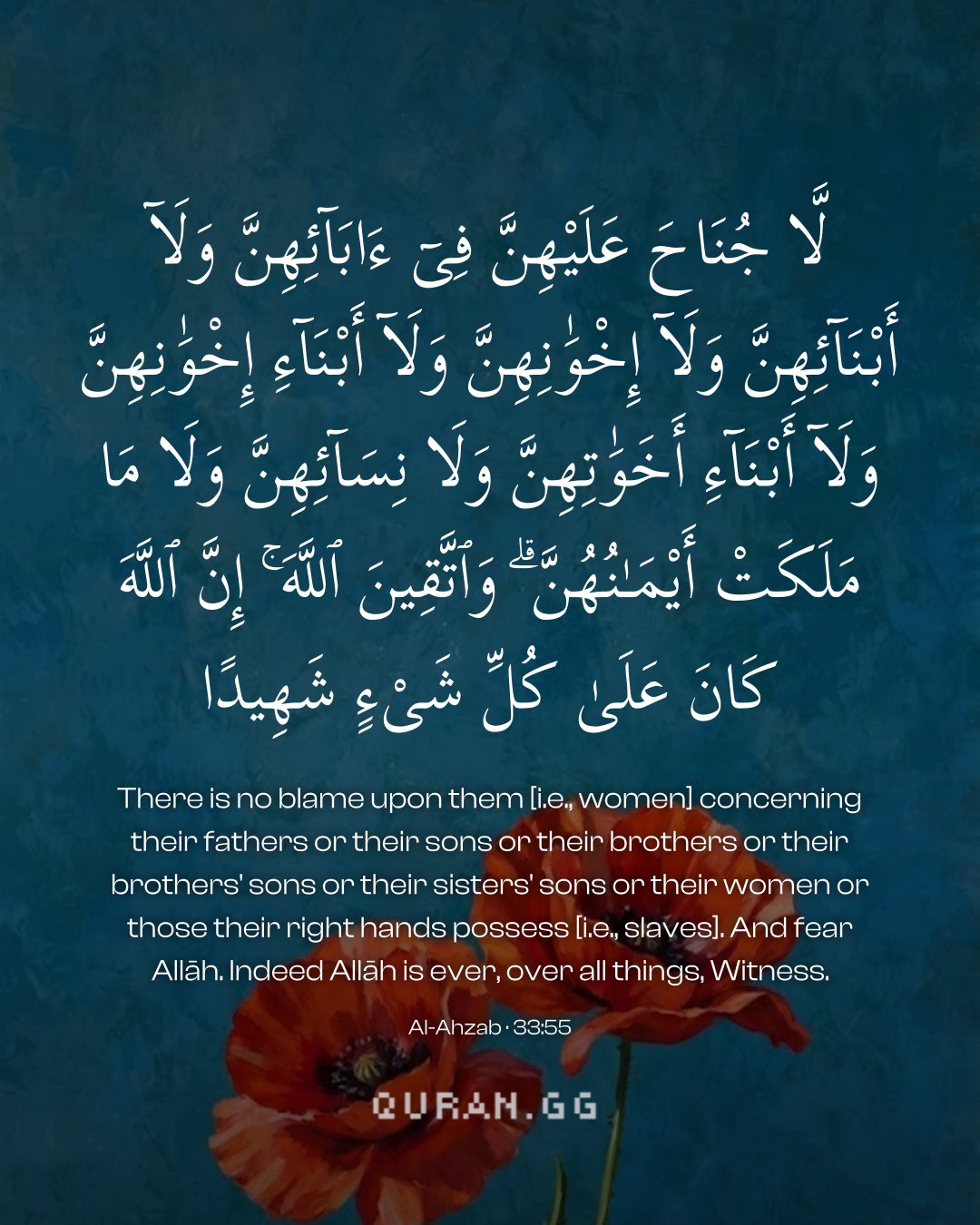
لَّا جُنَاحَ عَلَيْهِنَّ فِىٓ ءَابَآئِهِنَّ وَلَآ أَبْنَآئِهِنَّ وَلَآ إِخْوَٰنِهِنَّ وَلَآ أَبْنَآءِ إِخْوَٰنِهِنَّ وَلَآ أَبْنَآءِ أَخَوَٰتِهِنَّ وَلَا نِسَآئِهِنَّ وَلَا مَا مَلَكَتْ أَيْمَـٰنُهُنَّ ۗ وَٱتَّقِينَ ٱللَّهَ ۚ إِنَّ ٱللَّهَ كَانَ عَلَىٰ كُلِّ شَىْءٍ شَهِيدًا ٥٥

There is no blame upon them [i.e., women] concerning their fathers or their sons or their brothers or their brothers' sons or their sisters' sons or their women or those their right hands possess [i.e., slaves]. And fear Allāh. Indeed Allāh is ever, over all things, Witness.

Surah Al-Ahzab 33:55 in Arabic with its translation: “There is no blame upon them [i.e., women] concerning their fathers or their sons or their brothers or their…”

Make something with this ayah

Turn it into a video for Stories, Reels or TikTok, recited by the reciter you pick, or an image on a background you choose. Free, in your browser.

Download this image

Tafsir Ibn Kathir (abridged)

Relatives before Whom a Woman does not need to observe Hijab

When Allah commands women to observe Hijab in front of men to whom they are not related, He explains who are the relatives before whom they do not need to observe Hijab. This is like the exceptions stated in Surat An-Nur, where Allah says:

وَلاَ يُبْدِينَ زِينَتَهُنَّ إِلاَّ لِبُعُولَتِهِنَّ أَوْ ءَابَآئِهِنَّ أَوْ ءَابَآءِ بُعُولَتِهِنَّ أَوْ أَبْنَآئِهِنَّ أَوْ أَبْنَآءِ بُعُولَتِهِنَّ أَوْ إِخْوَانِهِنَّ أَوْ بَنِى إِخْوَانِهِنَّ أَوْ بَنِى أَخَوَتِهِنَّ أَوْ نِسَآئِهِنَّ أَوْ مَا مَلَكَتْ أَيْمَـنُهُنَّ أَوِ التَّـبِعِينَ غَيْرِ أُوْلِى الإِرْبَةِ مِنَ الرِّجَالِ أَوِ الطِّفْلِ الَّذِينَ لَمْ يَظْهَرُواْ عَلَى عَوْرَتِ النِّسَآءِ

(And not to reveal their adornment except to their husbands, or their fathers, or their husbands' fathers, or their sons, or their husbands' sons, or their brothers, or their brothers' sons, or their sisters' sons, or their women, or their right hand possessions, or the Tabi`in among men who do not have desire, or small children who are not aware of the nakedness of women.) (24:31). The Ayah contains more detail than this, which we have already discussed in the Tafsir of the Ayah and do not need to repeat here. Ibn Jarir recorded that Ash-Sha`bi and `Ikrimah said concerning the Ayah,

لاَّ جُنَاحَ عَلَيْهِنَّ فِى ءَابَآئِهِنَّ

(It is no sin on them before their fathers...) I said, "What about the paternal uncle and the maternal uncle -- why are they not mentioned" He said: "Because they may describe her to their sons, so it is disliked for a woman to remove her covering in front of her paternal uncle or maternal uncle."

وَلاَ نِسَآئِهِنَّ

(or their own women,) means that they do not have to observe Hijab in front of other believing women.

وَلاَ مَا مَلَكَتْ أَيْمَانُهُنَّ

(or their (female) slaves.) Sa`id bin Al-Musayyib said: "This means female slaves only." This was recorded by Ibn Abi Hatim.

وَاتَّقِينَ اللَّهَ إِنَّ اللَّهَ كَانَ عَلَى كُلِّ شَىْءٍ شَهِيداً

(And (O ladies) have Taqwa of Allah. Verily, Allah is Ever All-Witness over everything.) means, and fear Him in private and in public, for He witnesses all things and nothing is hidden from Him, so think of the One Who is always watching.

Ma'arif al-Qur'an

إِن تُبْدُوا شَيْئًا أَوْ تُخْفُوهُ فَإِنَّ اللَّـهَ كَانَ بِكُلِّ شَيْءٍ عَلِيمًا (If you disclose any thing, or conceal it, Allah is All-Knowing about everything - 33:54). It has been repeated again in this verse that Allah Ta’ ala knows even the intents and thoughts hidden in the hearts. So whether you disclose or conceal, Allah Ta’ ala knows it all. What is being emphasized here is that one should not let any doubt or suspicion enter one's mind or heart about the above-stated rules, and must avoid any violation of these rules.

The issue of Hijab for women, out of the three injunctions in the above mentioned verse, needs some further elaboration which is being given below.

Tazkirul Quran

In the foregoing verse, men were prohibited from coming before the Prophet’s consorts. In this verse, it has been clarified that near relatives (with whom marriage is not permissible) and frequent lady visitors are exempt from these restrictions. In the range of relations mentioned here, other relations will be included which come within the ambit of this instruction, further details of which are contained in chapter 24, verse 31. The sum and substance of all these instructions is that men and women should have the fear of God in their hearts. They should lead their lives bearing in mind that God is keeping a watch on them at all times.

Uthmani text of the Madinah mushaf (King Fahd Complex). Translation: Saheeh International. Tafsir via Quran.com.