Tafsir Ibn Kathir (abridged)
The Threat against Man's Transgression for the sake of Wealth
Allah informs that man is very pleased, most evil, scornful and transgressive when he considers himself self-sufficient and having an abundance of wealth. Then Allah threatens, warns and admonishes him in His saying,
إِنَّ إِلَى رَبِّكَ الرُّجْعَى
(Surely, unto your Lord is the return.) meaning, `unto Allah is the final destination and return, and He will hold you accountable for your wealth, as to where you obtained it from and how did you spend it.'
Scolding of Abu Jahl and the Threat of seizing Him
Then Allah says,
أَرَأَيْتَ الَّذِى يَنْهَى - عَبْداً إِذَا صَلَّى
(Have you seen him who prevents. A servant when he prays) This was revealed about Abu Jahl, may Allah curse him. He threatened the Prophet for performing Salah at the Ka`bah. Thus, Allah firstly admonished him with that which was better by saying,
أَرَءَيْتَ إِن كَانَ عَلَى الْهُدَى
(Have you seen if he is on the guidance.) meaning, `do you think this man whom you are preventing is upon the straight path in his action, or
أَوْ أَمَرَ بِالتَّقْوَى
(Or enjoins Taqwa) in his statements Yet, you rebuke him and threaten him due to his prayer.' Thus, Allah says,
أَلَمْ يَعْلَم بِأَنَّ اللَّهَ يَرَى
(Knows he not that Allah sees) meaning, doesn't this person who is preventing this man who is following correct guidance know that Allah sees him and hears his words, and He will compensate him in full for what he has done Then Allah says by way of warning and threatening,
كَلاَّ لَئِن لَّمْ يَنتَهِ
(Nay! If he ceases not,) meaning, if he does not recant from his discord and obstinacy,
لَنَسْفَعاً بِالنَّاصِيَةِ
(We will scorch his forehead.) meaning, `indeed We will make it extremely black on the Day of Judgement.' Then He says,
نَاصِيَةٍ كَـذِبَةٍ خَاطِئَةٍ
(A lying, sinful forehead!) meaning, the forehead of Abu Jahl is lying in its statements and sinful in its actions.
فَلْيَدْعُ نَادِيَهُ
(Then let him call upon his council.) meaning, his people and his tribe. In other words, let him call them in order to seek help from them.
سَنَدْعُ الزَّبَانِيَةَ
(We will call out the guards of Hell!) `And they are the angels of torment. This is so that he may know who will win -- Our group or his group' Al-Bukhari recorded that Ibn `Abbas said, "Abu Jahl said, `If I see Muhammad praying at the Ka`bah, I will stomp on his neck.' So this reached the Prophet , who said,
«لَئِنْ فَعَلَ لَأَخَذَتْهُ الْمَلَائِكَة»
(If he does, he will be seized by the angels.)" This Hadith was also recorded by At-Tirmidhi and An-Nasa'i in their Books of Tafsir. Likewise, it has been recorded by Ibn Jarir. Ahmad, At-Tirmidhi, An-Nasa'i and Ibn Jarir, all recorded it from Ibn `Abbas with the following wording: "The Messenger of Allah ﷺ was praying at the Maqam (prayer station of Ibrahim) when Abu Jahl bin Hisham passed by him and said, `O Muhammad! Haven't I prevented you from this' He threatened the Prophet and thus, the Messenger of Allah ﷺ became angry with him and reprimanded him. Then he said, `O Muhammad! What can you threaten me with By Allah, I have the most kinsmen of this valley with me in the large.' Then Allah revealed,
فَلْيَدْعُ نَادِيَهُ - سَنَدْعُ الزَّبَانِيَةَ
(Then let him call upon his council. We will call out the guards of Hell!)" Ibn `Abbas then said, "If he had called his people, the angels of torment would have seized him at that very instant." At-Tirmidhi said, "Hasan Sahih." Ibn Jarir recorded from Abu Hurayrah that Abu Jahl said, "Does Muhammad cover his face with dust (i.e., from prostration) while he is among you all" They (the people) replied, "Yes." Then he said, "By Al-Lat and Al-`Uzza, if I see him praying like this, I will stomp on his neck, and I will certainly put his face in the dust." So the Messenger of Allah ﷺ came and he began praying, which made it possible for Abu Jahl to stomp on his neck. Then the people became surprised at him (Abu Jahl) because he began retreating on his heels and covering himself with his hands. Then it was said to him, "What's the matter with you" He replied, "Verily, between me and him is a ditch of fire, monsters and wings." Then the Messenger of Allah ﷺ said,
«لَوْ دَنَا مِنِّي لَاخْتَطَفَتْهُ الْمَلَائِكَةُ عُضْوًا عُضْوًا»
(If he had come near me, the angels would have snatched him limb by limb.) The narrator added; "Allah revealed an Ayah, but I do not know whether it is concerning the Hadith of Abu Hurayrah or not:
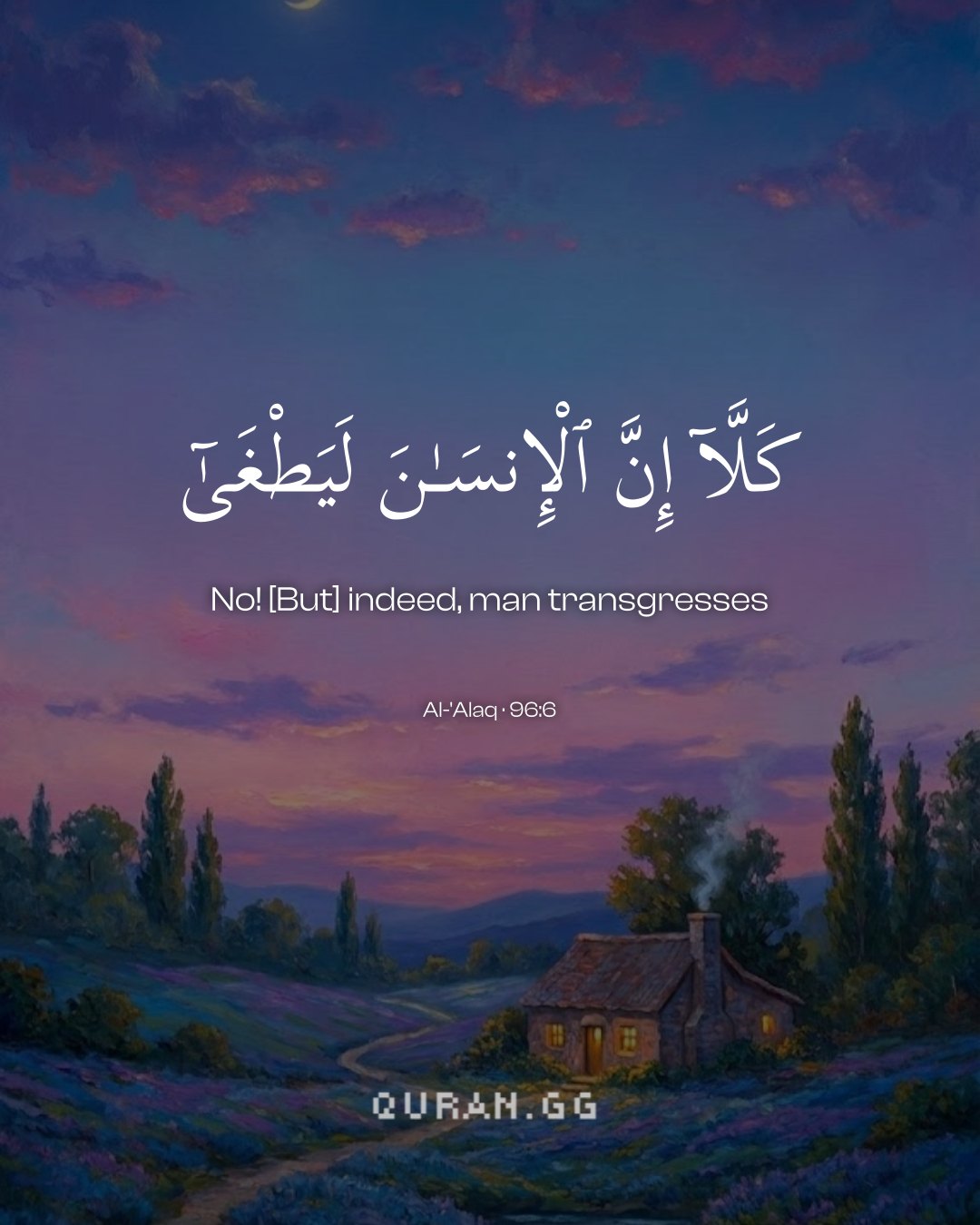
كَلاَّ إِنَّ الإِنسَـنَ لَيَطْغَى
(Nay! Verily, man does transgress.) to the end of the Surah." Imam Ahmad bin Hanbal, Muslim, An-Nasa'i and Ibn Abi Hatim all recorded this Hadith.
Amusement for the Prophet
Then Allah says,
كَلاَّ لاَ تُطِعْهُ
(Nay! Do not obey him.) meaning, `O Muhammad! Do not obey him in what he is forbidding from such as steadfastness in worship and performing worship in abundance. Pray wherever you wish and do not worry about him. For indeed Allah will protect you and help you, and He will defend you against the people.'
وَاسْجُدْ وَاقْتَرِب
(Fall prostrate and draw near (to Allah)!) This is just like what has been confirmed in the Sahih of Muslim on the authority of Abu Salih who reported from Abu Hurayrah that the Messenger of Allah ﷺ said,
«أَقْرَبُ مَا يَكُونُ الْعَبْدُ مِنْ رَبِّهِ وَهُوَ سَاجِدٌ، فَأَكْثِرُوا الدُّعَاء»
(The closest that a servant can be to his Lord is when he is in prostration. Therefore, make abundant supplications (i.e., while prostrating).)" It has also been mentioned previously that the Messenger of Allah ﷺ used to prostrate when he recited
إِذَا السَّمَآءُ انشَقَّتْ
(When the heaven is split asunder.) (84:1) and
اقْرَأْ بِاسْمِ رَبِّكَ الَّذِى خَلَقَ
(Read! In the Name of your Lord Who has created.) (96:1) This is the end of the Tafsir of Surah Iqra' (Surat Al-`Alaq). Unto Allah is due all praise and thanks, and He is the Giver of success and protection against error.