Tafsir Ibn Kathir (abridged)
Ismail ibn Kathir
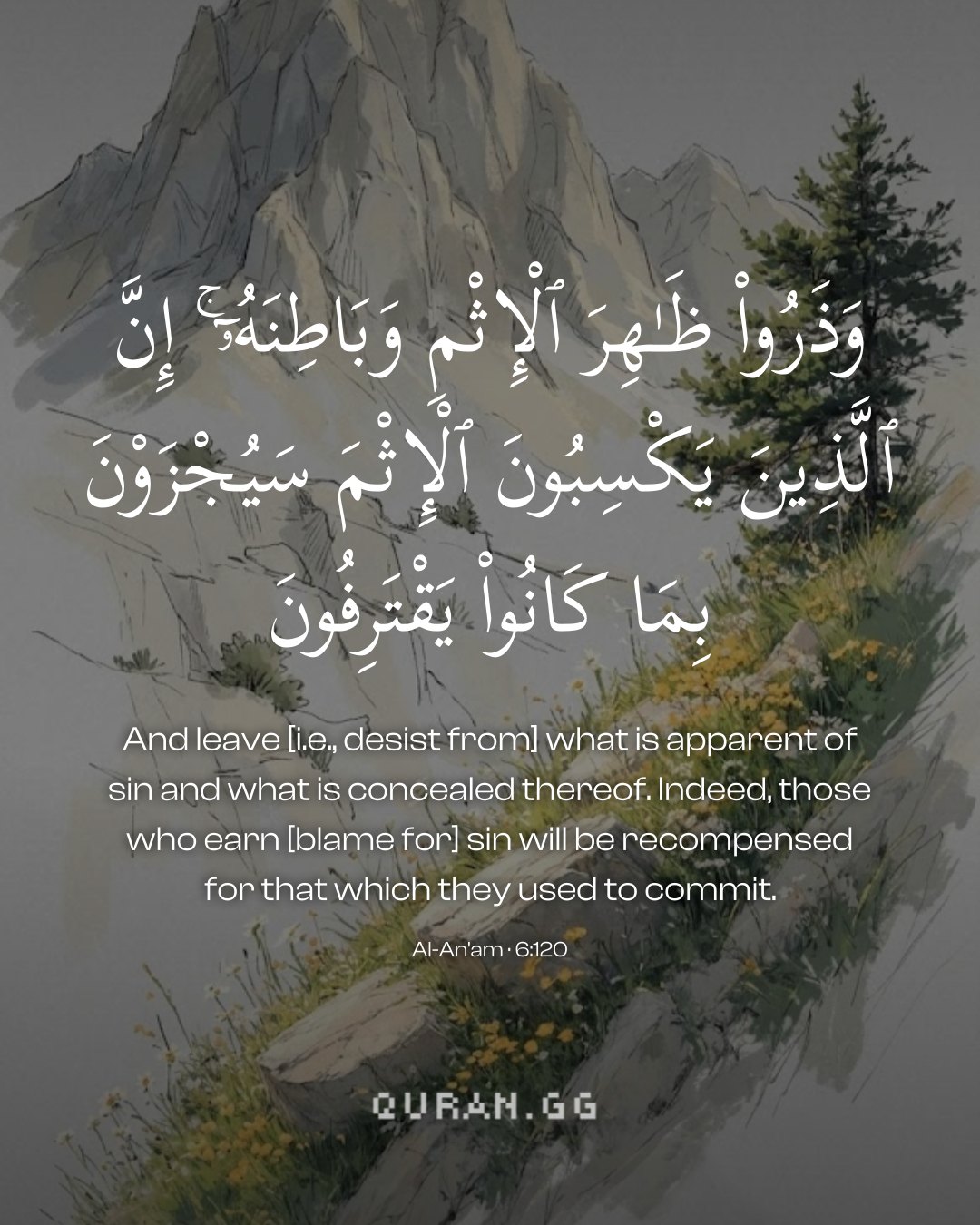
وَذَرُواْ ظَـهِرَ الإِثْمِ وَبَاطِنَهُ
(Leave evil, open and secret...) refers to all kinds of sins committed in public and secret. Qatadah said that,
وَذَرُواْ ظَـهِرَ الإِثْمِ وَبَاطِنَهُ
(Leave sin, open and secret...) encompasses sins committed in public and secret, whether few or many. In another statement, Allah said,
قُلْ إِنَّمَا حَرَّمَ رَبِّيَ الْفَوَحِشَ مَا ظَهَرَ مِنْهَا وَمَا بَطَنَ
(Say: "(But) the things that my Lord has indeed forbidden are Al-Fawahish (evil sins) whether committed openly or secretly.) 7:33 This is why Allah said,
إِنَّ الَّذِينَ يَكْسِبُونَ الإِثْمَ سَيُجْزَوْنَ بِمَا كَانُواْ يَقْتَرِفُونَ
(Verily, those who commit sin will get due recompense for that which they used to commit.) Whether the sins they committed were public or secret, Allah will compensate them for these sins. Ibn Abi Hatim recorded that An-Nawwas bin Sam`an said, "I asked Allah's Messenger ﷺ about Al-Ithm. He said,
«الْإِثمُ مَا حَاكَ فِي صَدْرِكَ وَكَرِهْتَ أَنْ يَطَّلِعَ النَّاسُ عَلَيْه»
(The sin is that which you find in your heart and you dislike that people become aware of it.)
Linkage of Verses
Earlier (116), by saying: وَ اِن تطِع (And if you obey), following people in error was prohibited absolutely. Onward from there, comes the prohibition of such following in a particular matter as necessitated by an event. That event pertains to the lawfulness of what has been slaughtered properly or improperly. The event is that disbelievers tried to put Muslims in doubt by commenting that they did not eat of the animals killed by Allah (i.e. by natural death) while they had no problem with eating of what they killed (slaughtered) themselves (as deduced by Abu Dawud and al-Hakim from Sayyidna Ibn ` Abbas ؓ ). Some Muslims reported this doubt before the Holy Prophet ﷺ Thereupon, these verses ending at: لَمُشْرِكُونَ (121) were revealed (narrated by Abu Dawud and Al Tirmidhi from Sayyidna Ibn ` Abbs as in Al-Lubab).
Continue reading the tafsir of ayahs 118–121 Whatever there is in the world is all ‘others’ property’ for us, because all of it belongs to God. We have no right to possess or use anything unless it is obtained and utilized in the manner shown by God. This holds good for animals also. Animals provide valuable food for us, but the question arises as to how we acquired the right to use them as food. God creates animals and He alone rears them and brings them to maturity. Then, how does it become permissible for us to use them as our food? Taking God’s name at the time of sacrificing an animal is the answer to this very question. But the taking of God’s name is not a verbal formality. It is, in fact, the recognition of God’s ownership rights over the animal and a demonstration of our gratitude to Him for his gift. Taking God’s name at the time of sacrifice is the symbol of this admission and of our gratitude—the ‘price’ on payment of which an animal in the eyes of our Lord becomes sacrificeable for us. However, one who faces accidental compulsion has been exempted by God from this restriction. When man neglects God’s commands on the subject of what is permitted or prohibited, legal or illegal, superstitions begin to take the place of divine injunctions. On the basis of superstitious ideas, people form divergent opinions. There are some self-devised philosophies behind these superstitions, and on their basis some formalities become established. It is necessary for those who want to become God’s obedient servants to completely give up these superstitions, in practice as well as in theory.
Uthmani text of the Madinah mushaf (King Fahd Complex). Translation: Saheeh International. Tafsir via Quran.com.