Allah states that He is the King and Owner of the heavens and earth and all of what is in them, and that He has written mercy on His Most Honorable Self. It is recorded in the Two Sahihs, that Abu Hurayrah said that the Prophet said,
(Indeed He will gather you together on the Day of Resurrection, about which there is no doubt.) swearing by His Most Honored Self that He will gather His servants,
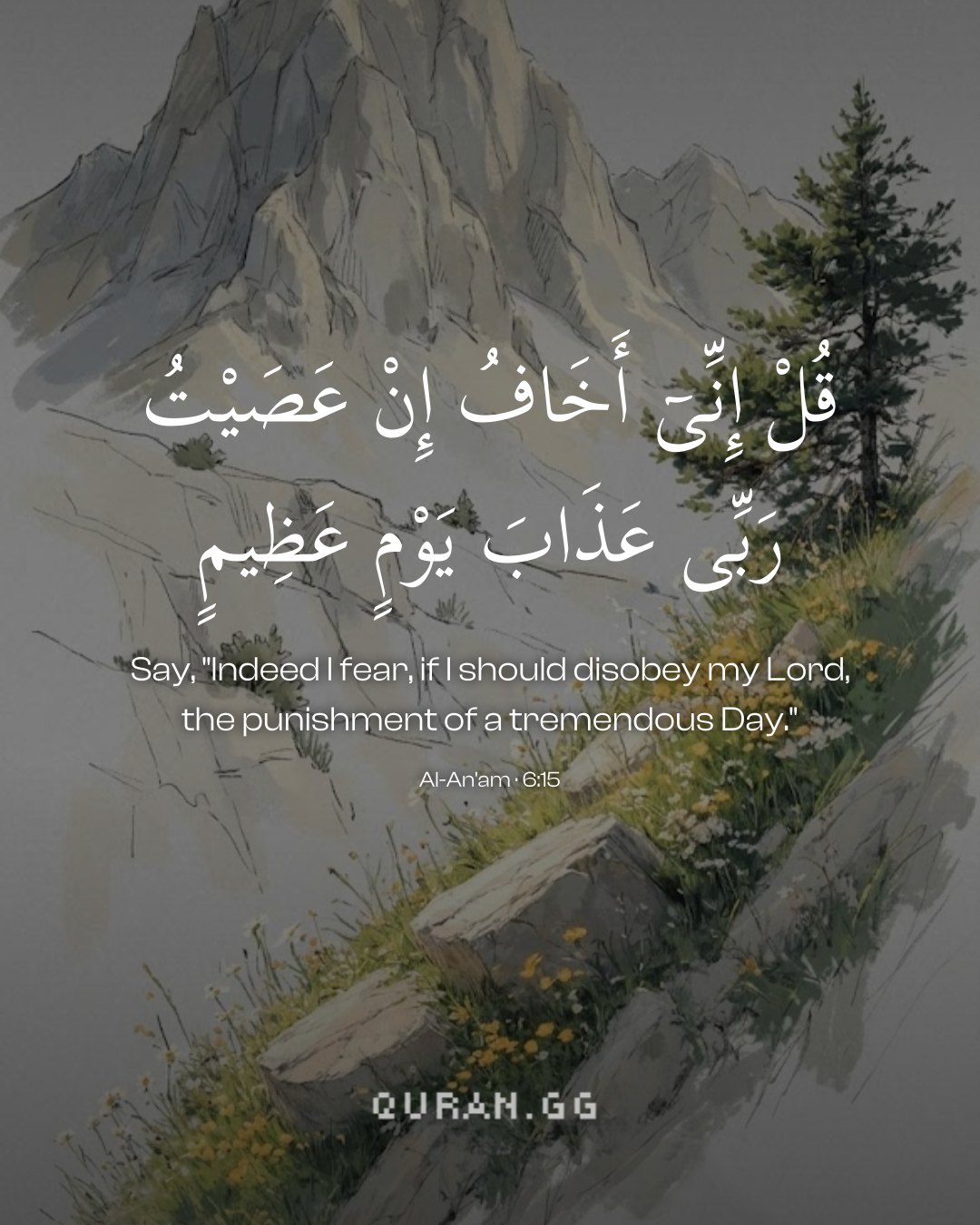
In the previous verses, the command given was to shun Shirk and believe in the perfect power of Allah Jalla Sha'nuhu mentioned there-in. In the first of the present verses (15), the punishment for the contravention of this command has been mentioned in a particularly endearing manner, that is, the Holy Prophet ﷺ has been ` commanded' that he should tell the people that should he too (God forbid) come to contravene the command of His Lord, then, he too has the fear of the punishment of the day of Qiyamah. It is obvious that the noble Messenger of Allah is (Divinely) protected from every sin - so, the likelihood of disobedience coming from him simply does not exist. But, by mentioning this hypothetical situation, the purpose is to convey the message to the community that the contravention of the Divine command is so serious a matter that even the greatest prophet cannot stand excused from it - if not him, who else?
Tazkirul Quran
Maulana Wahiduddin KhanOn ayahs 13–15
In this world communicating the Word of God is a task of some complexity. This is because God has ordained that the Truth be veiled in doubt, so that man may find reasons for rejecting it alongside arguments in support of its acceptance. The real test of man is that he should be able to tear down the veil of doubt and raise himself to the position of certainty. He should eschew doubt in all its guises and take a firm hold of the divine Truth. Believing without seeing is the real test of man. When reality is made visible, its acceptance has no value. Man denies the obvious truth. On obtaining power, he degrades others. One man makes another the victim of his tyranny. Why is this so? Does man wield absolute power in this world? Is there nobody here to stay his hand? Is there a combination of opposites in God’s regime, given that He seems to have filled man’s world with oppression and injustice and the rest of the world with mercy and meaningfulness? No, it is not so. God, who is the Lord of Heaven and earth, is also the Lord of that creature who toils during the day and rests at night. Just as God’s grace is given unstintingly to the universe, so also is it given to human beings. The difference is that for the rest of the world, His grace is fully in evidence right from the first day, whereas for the world of human beings, His grace will be fully shown on the Day of Judgement.
Uthmani text of the Madinah mushaf (King Fahd Complex). Translation: Saheeh International. Tafsir via Quran.com.