Censuring the Rebellious and their Refusal to Accept Human Messengers
Allah describes the rebellion and stubbornness of the idolators in defying the truth and arguing against it,
وَلَوْ نَزَّلْنَا عَلَيْكَ كِتَـباً فِى قِرْطَاسٍ فَلَمَسُوهُ بِأَيْدِيهِمْ
(And even if We had sent down unto you a Message written on paper so that they could touch it with their hands,) meaning, if they saw this Message's descent and were eye- witnesses to that,
لَقَالَ الَّذِينَ كَفَرُواْ إِنْ هَـذَآ إِلاَّ سِحْرٌ مُّبِينٌ
(the disbelievers would have said: "This is nothing but obvious magic!") This is similar to Allah's description of the disbelievers' defiance of facts and truth,
وَلَوْ فَتَحْنَا عَلَيْهِم بَاباً مِّنَ السَّمَاءِ فَظَلُّواْ فِيهِ يَعْرُجُونَ - لَقَالُواْ إِنَّمَا سُكِّرَتْ أَبْصَـرُنَا بَلْ نَحْنُ قَوْمٌ مَّسْحُورُونَ
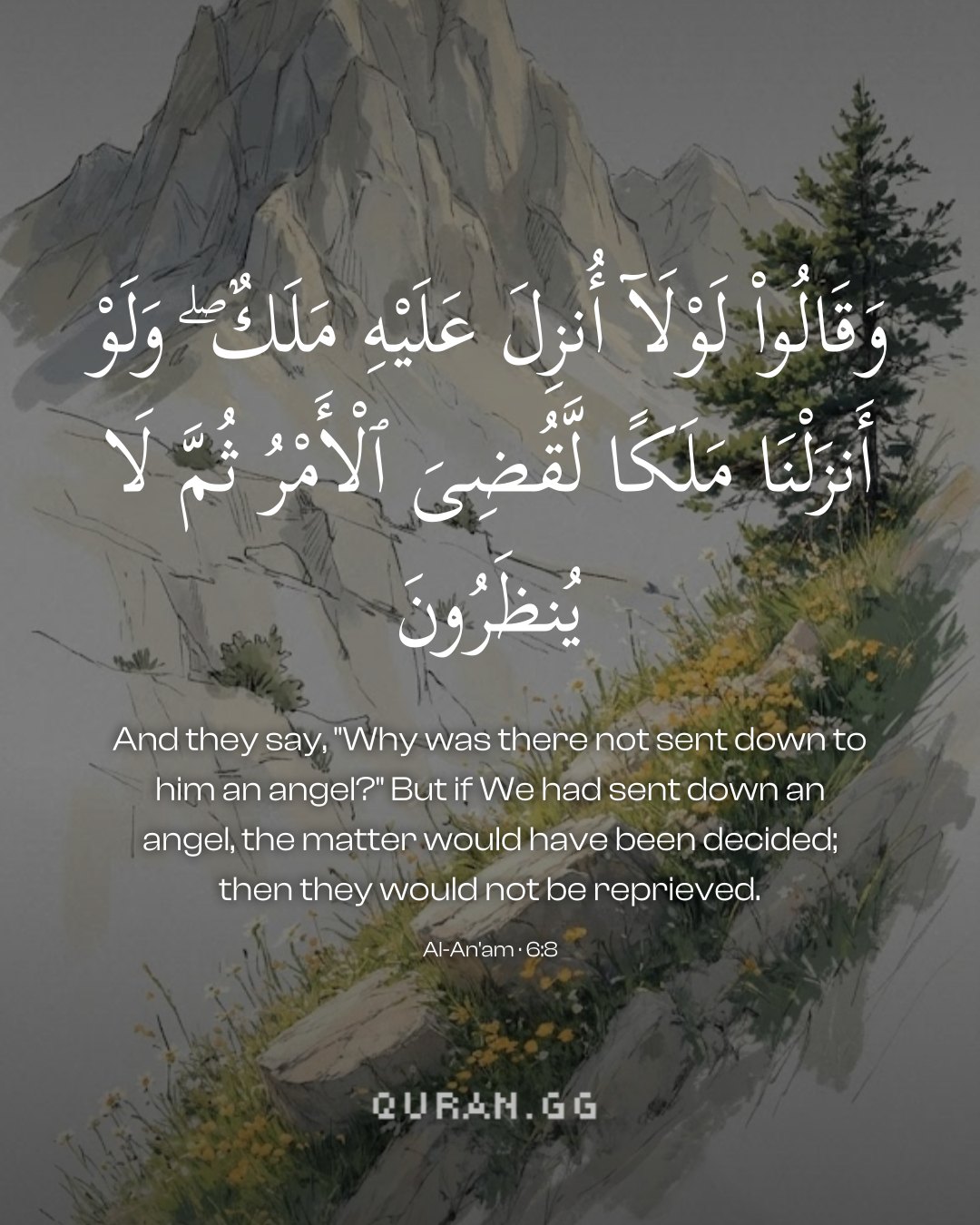
Continue reading the tafsir of ayahs 7–11 The third verse (8) was also revealed because of an event which concerns this very ` Abdullah ibn Abi Umaiyyah who, accompanied by Nadr ibn al-Harith and Nawfal ibn Khalid ؓ ، came to the Holy Prophet ﷺ . This time their demand was: ` We shall believe in you only when you go and bring a book from the heavens and let four angels come along with it to testify that the book was from none but Allah and that you are the Messenger of Allah.'
One answer Allah gave to them was that by making such demands, these heedless people were inviting their own destruction, because the Divine law is that, should a people ask their prophet to show a miracle of their choice, and as a result of their demand, such miracle is shown by the power and will of Allah, then, should they, even then, remain reluctant to believe and accept faith any longer, they are destroyed by a mass general punishment. These particular people of Makkah were really not making their demands as based on any good intentions, which may have at the least given some hope of their accepting the truth. Therefore, it was said: وَلَوْ أَنزَلْنَا مَلَكًا لَّقُضِيَ الْأَمْرُ ثُمَّ لَا يُنظَرُونَ (And had We sent down an angel, the whole matter would have been finished). In other words, it means ` If We do send the miracle they demand, that is, send an angel, then, these people who are not the kind who would accept truth will still act contrary and hostile even after having seen the miracle, then, the Divine command to have them destroyed would stand activated. Since they would be given no respite after that hap-pens, therefore, they should understand that the fact of not showing the miracle demanded by them spells out real good for them, without which they would be nowhere.
The second answer to this problem with them was given in the fourth verse (9) in a different manner where it was said that people asking such questions were certainly strange people who were demanding that angels should come down to them. This is so because there are only two ways angels can come down. Firstly, an angel may come as he is, in his form and state of being. If so, no human being can stand before his real awe - in fact, he is more likely to die at the never imagined sight. The second form in which the angel could come down is that the angel comes in human shape and form, as Sayyidna Jibra'il al-Amin (علیہ السلام) has come to the Holy Prophet ﷺ several times in the shape of a human being. In this situation too, the Holy Prophet ﷺ is told, this questioner will have the same objection against this ` angel' as he has against you - because he would take him to be nothing but human.
After having answered all these hostile questions, solace has been given to the Holy Prophet ﷺ in the fifth verse (10) by saying that this attitude of mockery and injury directed against him by his people is not something particular to him. Other prophets and messengers before him had to face similar heart-breaking experiences, but they did not lose hope. Finally, what happened was that those who used to mock were overtaken by the punishment which they mocked at.
In short, the Holy Prophet ﷺ has been assured that his mission is to convey the commandments of Allah. Once he feels he has done that, let his heart be at rest. Whether someone is affected by the message or not, that is not for him to worry about - for it is not a part of his duty as a Messenger of Allah. So, let this concern bring no sorrow to his heart.
Those who have firmly established themselves in this world, having accumulated many material goods for themselves, and who see the manifestations of their own greatness and popularity around them, are always liable to be a prey to misunderstanding. They look down upon the things God has gathered around the caller of Truth as compared to the things around them. This overweening confidence on their part increases to such an extent that they even become unafraid of God. They make fun of the warning given by the missionary of Truth that, if their arrogance continued, their material achievements would not be able to save them from God’s scourge. Their treatment of the dayee as a non-entity makes his warnings also insignificant. Even historic instances of God’s having destroyed materially well set up people, as if their lives were of no value whatsoever, fail to teach them a lesson. The recurrence of events in which one set of people face decline while another set rises shows that the rule of ‘crime and punishment’ is prevalent here, but man does not learn a lesson from this. The succeeding generations repeat those very same actions as were indulged in by their predecessors, due to which they were destroyed.
Uthmani text of the Madinah mushaf (King Fahd Complex). Translation: Saheeh International. Tafsir via Quran.com.