(Certainly you and that which you are worshipping now besides Allah, are (but) Hasab for Hell!). Ibn `Abbas said: "Kindling." This is like the Ayah:
وَقُودُهَا النَّاسُ وَالْحِجَارَةُ
(whose fuel is men and stones) 66:6. According to another report, Ibn `Abbas said:
حَصَبُ جَهَنَّمَ
(Hasab for Hell) means firewood in (the dialect of the people of) Zanjiyyah. Mujahid, `Ikrimah and Qatadah said: "Its fuel." Ad-Dahhak said: "The fuel of Hell means that which is thrown into it." This was also the view of others.
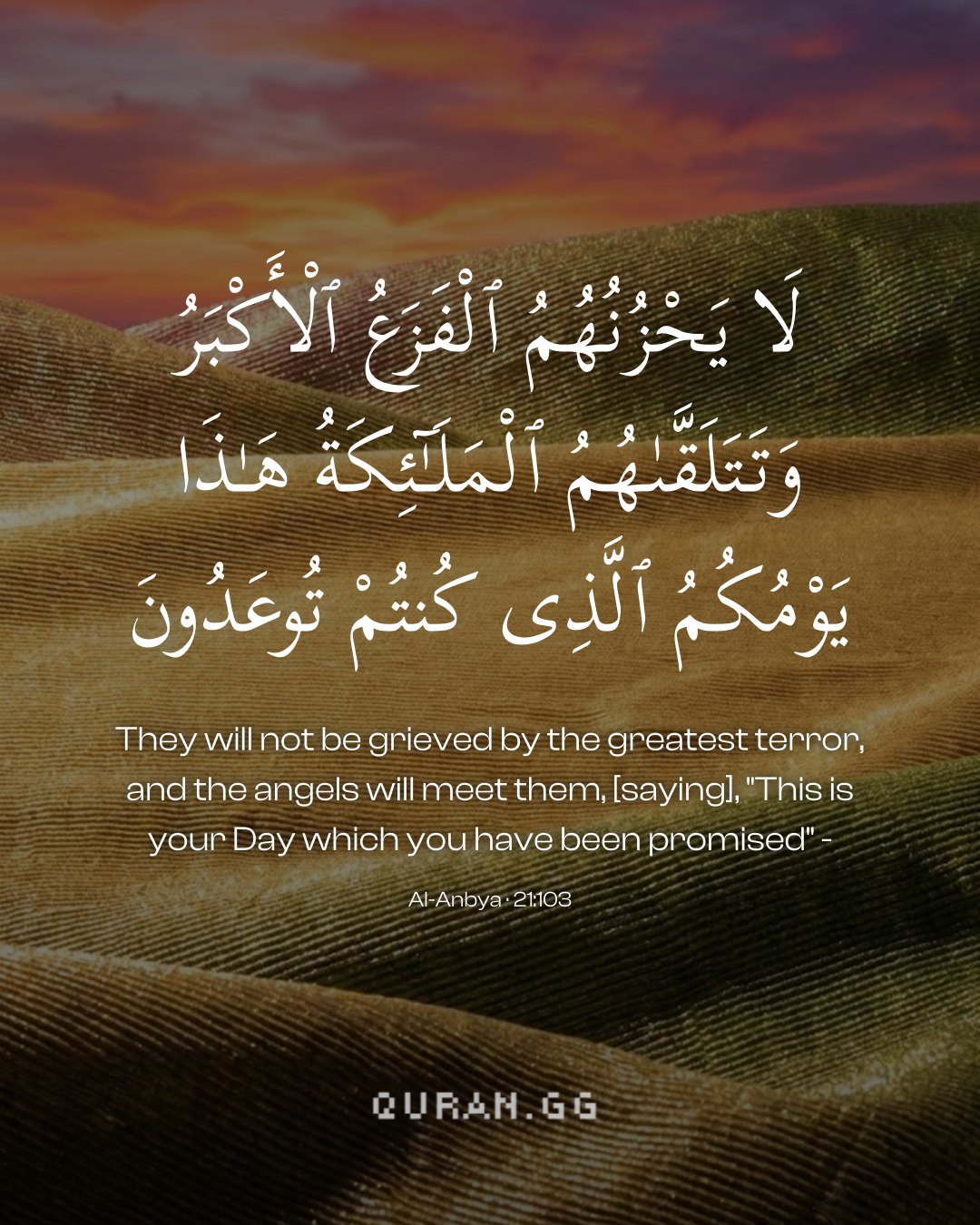
لَا يَحْزُنُهُمُ الْفَزَعُ الْأَكْبَرُ (They will not be grieved by the Biggest Panic - 21:103). Sayyidna Ibn ` Abbas ؓ has said that (the Biggest Panic) refers to the second call of the Horn ( صُور ), when all the dead will assemble to give an account of their actions in the world. Some others have said that الْفَزَعُ الْأَكْبَرُ (the Biggest Panic) is the first call of the Horn. Ibn Al-` Arabi has said that the Horn will be blown thrice: The first call will be نَفخَہُ الفَزَع which will put everyone into utter confusion, and is referred to here as الْفَزَعُ الْأَكْبَرُ (the Biggest Panic). The second call will be نَفخہُ الصِّعق when everyone will die. The third call will be نَفخَہُ البَعث when all the dead will be resurrected. This version derives support from a hadith of Abu Hurairah رضی اللہ تعالیٰ عنہ which has been quoted in Musnad Abu Ya` la and Baihaqi, ` Abd Ibn Humaid, Abu al-Sheikh, Ibn Jarir al-Tabari etc. (Mazhari).
Tazkirul Quran
Maulana Wahiduddin KhanOn ayahs 103–105
‘Abdullah ibn az-Zab‘ari was a famous poet of ancient times. When this verse was revealed, he urged the people to ask the Prophet Muhammad if all those being worshipped other than God along with their worshippers would go to hell. He then pointed out that, in fact, they were worshipping angels, the Jews were worshipping the Prophet ‘Uzayr and the Christians were worshipping the Messiah. The polytheists were very anxious to understand this point and asked the Prophet Muhammad about it. He replied that the one who was being worshipped, and liked to be worshipped instead of God, would accompany the worshipper. On hearing this reply, ‘Abdullah ibn az-Zab‘ari did not enter into any further arguments but embraced Islam. (Tafsir ibn Kathir, vol. III, p. 199 ). This shows that this verse refers to a deity made of stone, etc., or one who himself liked to be worshipped. One who worshipped anybody other than God and one who was so worshipped and liked to be so worshipped, would both be cast into hell in order to teach the people a lesson. Doomsday will be a terrible day. But those who fear Doomsday before its arrival, will be safe from the terror of that day. They will be sent to a world full of heavenly pleasures.
Uthmani text of the Madinah mushaf (King Fahd Complex). Translation: Saheeh International. Tafsir via Quran.com.