How the Idolators mocked the Prophet Allah tells His Prophet ...
وَإِذَا رَآكَ الَّذِينَ كَفَرُواْ
(And when those who disbelieved see you,) meaning, the disbelievers of the Quraysh, such as Abu Jahl and his like.
إِن يَتَّخِذُونَكَ إِلاَّ هُزُواً
(they take you not except for mockery) means, they make fun of you and insult you, saying,
أَهَـذَا الَّذِى يَذْكُرُ آلِهَتَكُمْ
("Is this the one who talks about your gods") meaning, is this the one who insults your gods and ridicules your intelligence Allah says:
وَهُمْ بِذِكْرِ الرَّحْمَـنِ هُمْ كَـفِرُونَ
(While they disbelieve at the mention of the Most Gracious.) meaning, they disbelieve in Allah and yet they mock the Messenger of Allah ﷺ. As Allah says:
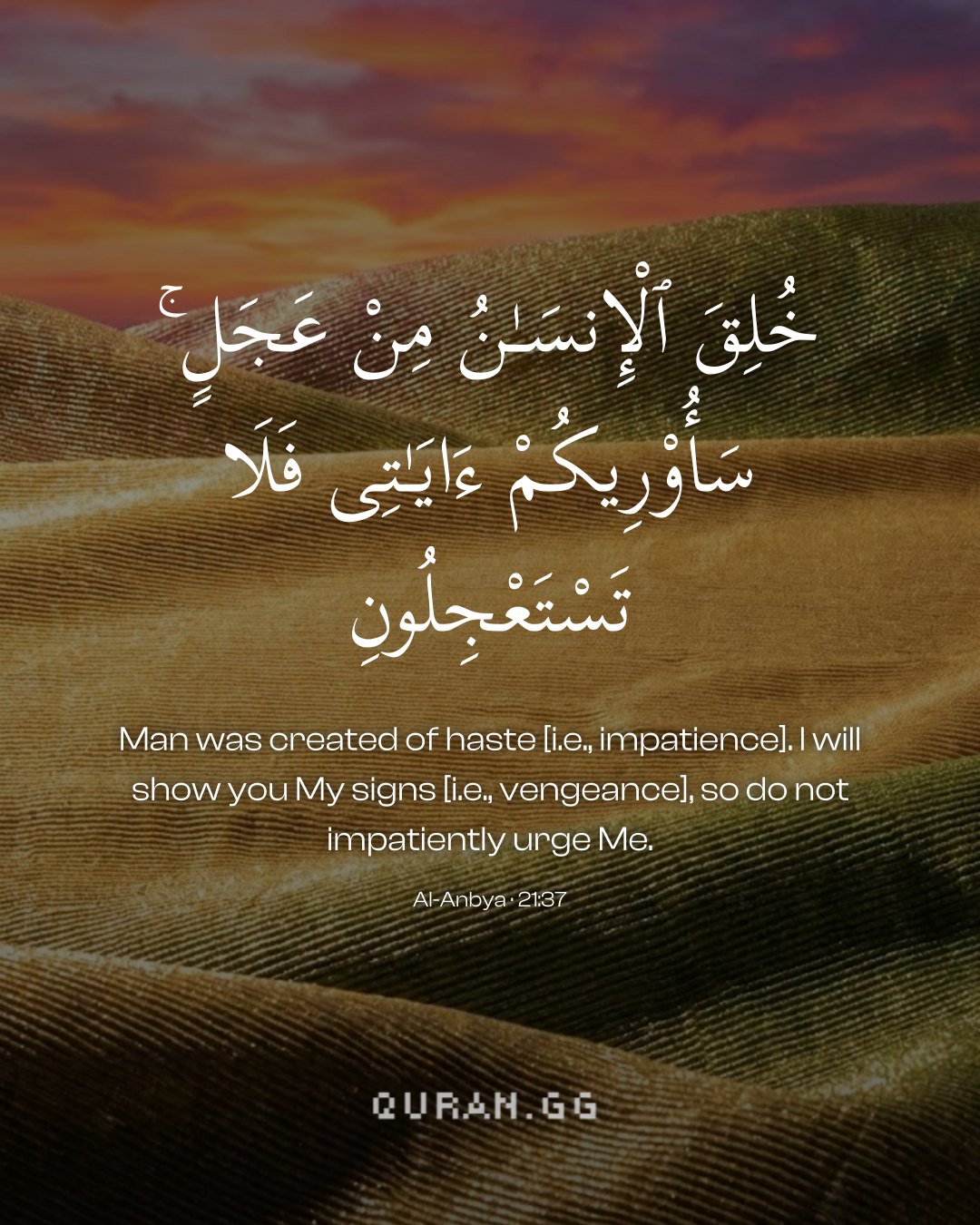
خُلِقَ الْإِنسَانُ مِنْ عَجَلٍ (Man is made of haste. - 21:37). عَجَل ('ajal) means haste or hurry. The word is used in situations when one desires things to happen before their time, and this trait is bad by its very nature. In another place also the word is used to denote human weakness. For instance وَكَانَ الْإِنسَانُ عَجُولًا i.e. Man is prone to haste - 17:11, meaning that he is very impatient. When Sayyidna Musa (علیہ السلام) went to the mount Tur in a hurry leaving his people behind, he was censured by Allah Ta` ala.
Prophets (علیہم السلام) and the devout people who try to excel each other in the performance of righteous deeds have been commended and their zeal to do good deeds does not constitute haste and hurry because they do not try to do these deeds before their time. In fact they do the deeds on time, but try to excel each other in quantity and quality.
Here خُلِقَ الْإِنسَانُ مِنْ عَجَلٍ (Man is made of haste - 21:37) means that haste and hurry is one of the many weaknesses which are inherent in human nature. When a man is identified by some intrinsic trait of his character, me Arabs used to say that he is 'made of that trait. For instance a short tempered man would be called a 'man made of anger'.
سَأُرِيكُمْ آيَاتِي فَلَا تَسْتَعْجِلُونِ (I shall show you my signs -.21:37) Here the word آیات (signs) refers to those miracles and events which bear evidence to the honesty of the Holy Prophet ﷺ and the truth of his message. (Qurtubi)
These miracles also occurred during the battle of Badr (غزوہ بدر) when the Muslims who were considered weak and worthy of contempt gained a great victory over their enemies.
Tazkirul Quran
Maulana Wahiduddin KhanOn ayahs 36–40
The gods of the Quraysh were, in reality, the great ones of the community. On the one hand, there was their imaginary greatness which was imbedded in their minds. On the other hand, there was the Prophet, whose image at that time was not more elevated than that of an ordinary man. In this comparison, the Prophet appeared, indeed, to be an ordinary man with no special merit. They used to ask contemptuously, ‘Is this the man who criticises our great men, who rejects the religion of these great men which we follow, and seeks to introduce a new religion?’ The Prophet Muhammad used to invite people to accept the oneness of God. But these people were not interested in God. All their interests were centred round their great men, whom they had elevated to the status of gods. As it was these false gods who were affected by the call of the Prophet, their devotees became his deadly opponents. They forgot that, by rejecting the false gods, he was presenting the cause of the real God and not promoting his own self.
Uthmani text of the Madinah mushaf (King Fahd Complex). Translation: Saheeh International. Tafsir via Quran.com.