Idols do not create, help, or have Power over Anything
Allah admonishes the idolators who worshipped idols, rivals and images besides Him, although these objects were created by Allah, and neither own anything nor can they bring harm or benefit. These objects do not see or give aid to those who worship them. They are inanimate objects that neither move, hear, or see. Those who worship these objects are better than they are, for they hear see and have strength of their own. Allah said,
(Do they attribute as partners to Allah those who created nothing but they themselves are created) meaning, `Do you associate with Allah others that neither create, nor have power to create anything' Allah said in another Ayah,
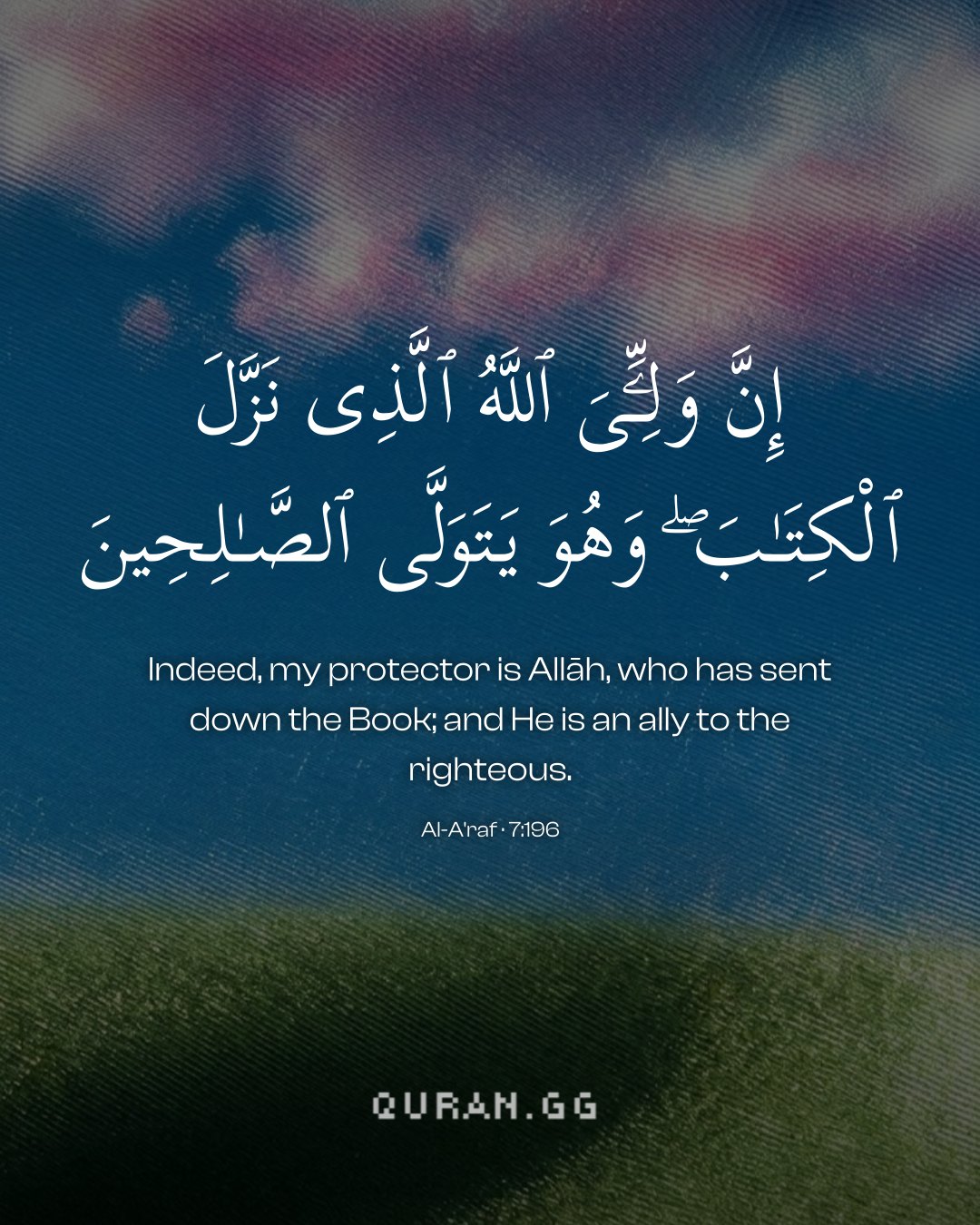
"Surely my protector is Allah who has revealed the Book and who does protect the righteous."
The Arabic word ولی rendered here as 'protector' also means helper. The word ~ISJI (The Book) here refers to the Holy Qur'an, and the word صَلِحِین (the righteous), according to Sayyidna Ibn ` Abbas J.II L, , here refers to all those who do not take any one equal to Allah, including the prophets and other faithful Muslims:
The Holy Prophet ﷺ has been asked to declare that he was not fearful of their opposition in the least since Allah, who had revealed the Qur'an to Him was his protector and helper. It may be noted that out of all the divine attributes of Allah, this verse spoke specially of His revelation to the Holy Prophet ﷺ . It is because the only reason of their hostility to the Holy Prophet was his invitation to the message of the Holy Qur'an. He was therefore, sure to have been helped and protected by Allah. The next sentence provides us with a general rule that Allah does not only help and protect His messengers, who have special favours of Allah, but also helps and protects all the Muslims who are righteous.
The last sentence وَ ھوَ یَتَوَلَّی اَلصَّلحِین "He helps and protects the righteous" has given us a general principle that in addition to helping the prophets who hold the highest status among all the people, Allah helps and protects all the Muslims who act righteously. Therefore, the opposition or hostility of any one does not harm a true Muslim in the real sense of the word. Most often he is made to triumph over his enemies in this very world. If, for some good reason, he does not overcome and is apparently defeated, this, too, does not go to damage his real objective. His failure in this world is, in fact, his success in true sense, because the main objective of his life is to seek Allah's pleasure and to obey Him in each and every activity of his life. His failure, being from Allah draws him nearer to his objective of seeking Allah's pleasure.
Tazkirul Quran
Maulana Wahiduddin KhanOn ayahs 196–197
But how surprising it is that in this world, where there are so many arguments in favour of one God, man makes polytheism his religion. By this miraculous harmony between two human beings, a child is born. Now some hold the belief that this has happened due to the blessing of some living or dead saint, some attribute it to certain supposed deities; some say that it was the result of some action and reaction between certain blind forces of matter, while others thought that it was the result of their own striving that had come to them in the shape of a beautiful baby. Behind the idols of stone or metal set up by polytheists is the ‘philosophy’ that these are external manifestations and in them their alleged god has become incarnate. By this token, the worship of these manifestations amounts to the worship of the god whom they are supposed to represent. However, at the level of the common people, polytheism takes the shape of people considering these idols themselves as holy. These idols are not capable of walking or talking or seeing or hearing, but superstitious man presumes they will be of use to him and will fulfil his needs.
Uthmani text of the Madinah mushaf (King Fahd Complex). Translation: Saheeh International. Tafsir via Quran.com.