Surah Al-A'raf Ayah 50 (7:50) — Meaning & Tafsir | Quran.GG

Surah Al-A'raf, Ayah 50

7:50 · Meaning and tafsir

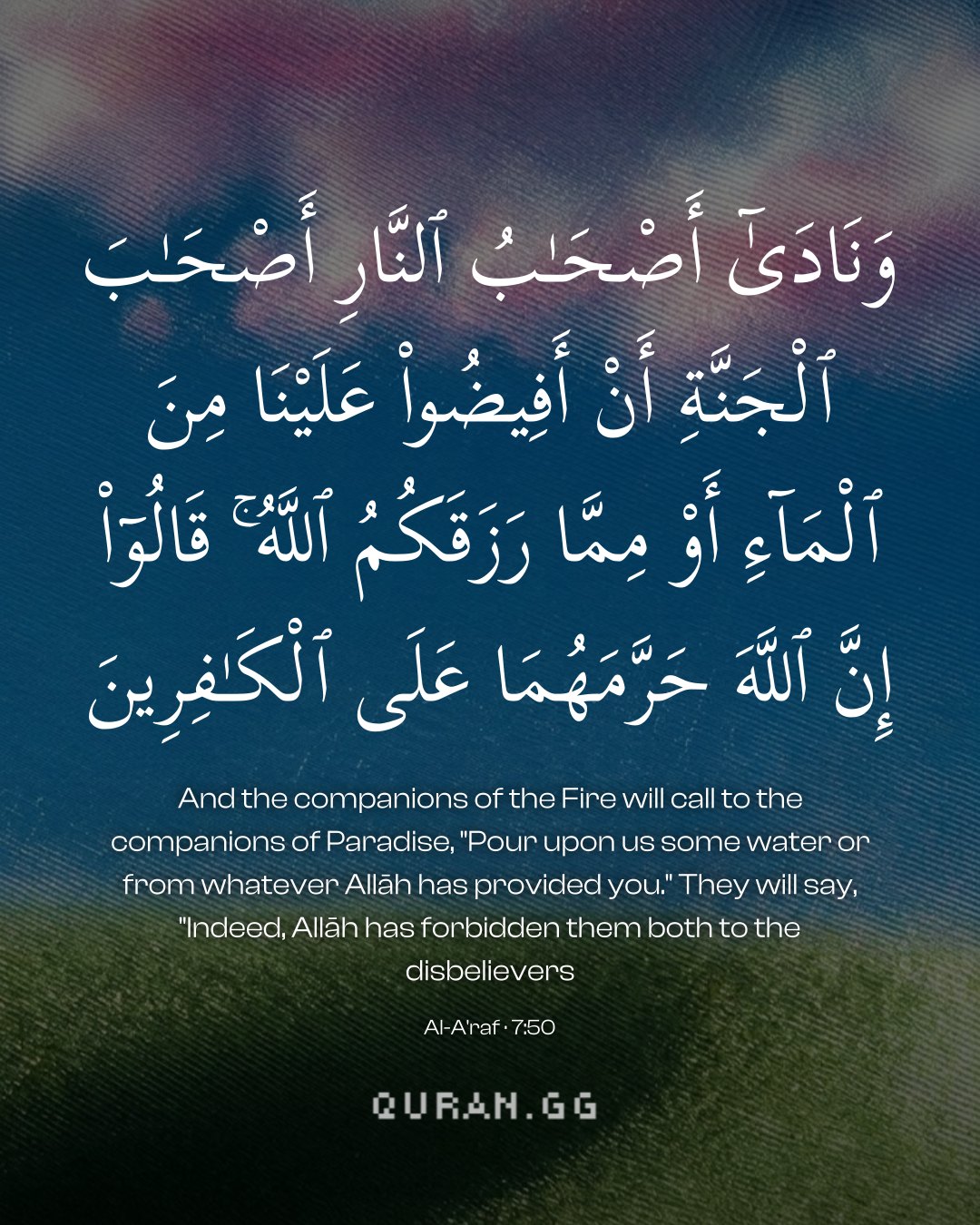
وَنَادَىٰٓ أَصْحَـٰبُ ٱلنَّارِ أَصْحَـٰبَ ٱلْجَنَّةِ أَنْ أَفِيضُوا۟ عَلَيْنَا مِنَ ٱلْمَآءِ أَوْ مِمَّا رَزَقَكُمُ ٱللَّهُ ۚ قَالُوٓا۟ إِنَّ ٱللَّهَ حَرَّمَهُمَا عَلَى ٱلْكَـٰفِرِينَ ٥٠

And the companions of the Fire will call to the companions of Paradise, "Pour upon us some water or from whatever Allāh has provided you." They will say, "Indeed, Allāh has forbidden them both to the disbelievers

Surah Al-A'raf 7:50 in Arabic with its translation: “And the companions of the Fire will call to the companions of Paradise, "Pour upon us some water or from…”

Make something with this ayah

Turn it into a video for Stories, Reels or TikTok, recited by the reciter you pick, or an image on a background you choose. Free, in your browser.

Download this image

Tafsir Ibn Kathir (abridged)

The Favors of paradise are Prohibited for the People of the Fire

Allah emphasizes the disgrace of the people of the Fire. They will ask the people of Paradise for some of their drink and food, but they will not be given any of that. As-Suddi said,

وَنَادَى أَصْحَـبُ النَّارِ أَصْحَـبَ الْجَنَّةِ أَنْ أَفِيضُواْ عَلَيْنَا مِنَ الْمَآءِ أَوْ مِمَّا رَزَقَكُمُ اللَّهُ

(And the dwellers of the Fire will call to the dwellers of Paradise: "Pour on us some water or anything that Allah has provided you with.") "That is food". Ath-Thawri said that `Uthman Ath-Thaqafi said that Sa`id bin Jubayr commented on this Ayah, "One of them will call his father or brother, `I have been burned, so pour some water on me.' The believers will be asked to reply, and they will reply,

إِنَّ اللَّهَ حَرَّمَهُمَا عَلَى الْكَـفِرِينَ

("Both Allah has forbidden to the disbelievers.")" `Abdur-Rahman bin Zayd bin Aslam said that,

إِنَّ اللَّهَ حَرَّمَهُمَا عَلَى الْكَـفِرِينَ

("Both Allah has forbidden to the disbelievers.") "Refers to the food and drink of Paradise." Allah describes the disbelievers by what they used to do in this life, taking the religion as amusement and play, and being deceived by this life and its adornment, rather than working for the Hereafter as Allah commanded,

فَالْيَوْمَ نَنسَـهُمْ كَمَا نَسُواْ لِقَآءَ يَوْمِهِمْ هَـذَا

(So this Day We shall forget them as they forgot their meeting of this Day) meaning, Allah will treat them as if He has forgotten them. Certainly, nothing escapes Allah's perfect watch and He never forgets anything. Allah said in another Ayah,

فِى كِتَـبٍ لاَّ يَضِلُّ رَبِّى وَلاَ يَنسَى

(In a Record. My Lord neither errs nor forgets) 20:52 Allah said -- that He will forget them on that Day -- as just recompense for them, because,

نَسُواْ اللَّهَ فَنَسِيَهُمْ

(They have forgotten Allah, so He has forgotten them) 9:67

كَذَلِكَ أَتَتْكَ آيَـتُنَا فَنَسِيتَهَا وَكَذلِكَ الْيَوْمَ تُنْسَى

(Like this: Our Ayat came unto you, but you disregarded them, and so this Day, you will be neglected) 20:126 and,

وَقِيلَ الْيَوْمَ نَنسَاكُمْ كَمَا نَسِيتُمْ لِقَآءَ يَوْمِكُمْ هَـذَا

(And it will be said: "This Day We will forget you as you forgot the meeting of this Day of yours.") 45:34 Al-`Awfi reported that Ibn `Abbas commented on,

فَالْيَوْمَ نَنسَـهُمْ كَمَا نَسُواْ لِقَآءَ يَوْمِهِمْ هَـذَا

(So this Day We shall forget them as they forgot their meeting of this Day) "Allah will forget the good about them, but not their evil." And `Ali bin Abi Talhah reported that Ibn `Abbas said, "We shall forsake them as they have forsaken the meeting of this Day of theirs." Mujahid said, "We shall leave them in the Fire." As-Suddi said, "We shall leave them from any mercy, just as they left any action on behalf of the meeting on this Day of theirs." It is recorded in the Sahih that Allah will say to the servant on the Day of Resurrection:

«أَلَمْ أُزَوِّجْكَ؟ أَلَمْ أُكْرِمْكَ؟ أَلَمْ أُسَخِّرْ لَكَ الْخَيْلَ وَالْإِبِلَ وَأَذَرْكَ تَرْأَسُ وَتَرْبَعُ؟ فَيَقُولُ: بَلَى، فَيَقُولُ: أَظَنَنْتَ أَنَّكَ مُلَاقِيَّ؟ فَيَقُولُ: لَا، فَيَقُولُ اللهُ تَعَالَى: فَالْيَوْمَ أَنْسَاكَ كَمَا نَسِيتَنِي»

("Have I not gotten you married Have I not honored you Have I not made horses and camels subservient for you and allowed you to become a leader and a master" He will say, "Yes." Allah will say, "Did you think that you will meet Me" He will say, "No." Allah the Exalted will say, `Then this Day, I will forget you as you have forgotten Me.")

Ma'arif al-Qur'an

Said in the sixth verse (49) is: أَهَـٰؤُلَاءِ الَّذِينَ أَقْسَمْتُمْ لَا يَنَالُهُمُ اللَّـهُ بِرَ‌حْمَةٍ ۚ ادْخُلُوا الْجَنَّةَ لَا خَوْفٌ عَلَيْكُمْ وَلَا أَنتُمْ تَحْزَنُونَ ﴿49﴾ (Is it these for whom you swore that Allah would not reach them with mercy?" - "Enter the Paradise; there is no fear on you, nor shall you grieve).

Explaining this, Sayyidna ` Abdullah ibn ` Abbas ؓ says: When the questions and answers between the people of A` raf and the people of Paradise and Hell both will be over, that will be the time when the Lord of all the worlds will address the people of Hell and tell them about the people of A` raf that they swore that the people of A` raf will not be forgiven their sins and mercy will not be shown to them. Then, there comes an immediate declaration of His mercy when the people of A` raf will be told: Go and enter the Paradise. You should have no fear of what had happened in the past nor should you have any anxiety about the future. (Ibn Kathir)

Tazkirul Quran

According to al-Qurtubi, ‘the people of the heights’ in this verse refers to shuhada’. That is, those special servants of God who, in the service of the religion of God, were witness to the deeds of the nations of the world. Some accepted their call, while others rejected it. These preachers of the divine message have been mentioned in the Quran in many different terms such as ‘warner’, ‘bearer of glad tidings’, ‘the caller’, etc. This group, originally formed of the prophets, was later made up of those special servants of God who followed the example of the prophets and performed dawah for the people of their times. The Final Judgement on human beings, which is going to take place in the hereafter, will be based on the task performed by the witnesses (shahadah) for the people of the world. This task of witness divides the people of the world into two groups: one which accepts the divine message and the other which rejects it. On the Day of Judgement these two opposing groups will be separated from each other. Then according to their deeds, they will be judged and will be destined to two different sets of consequences. Though this judgement will be entirely God’s judgement, the announcement of it will be made by those special servants of God who had undertaken the task of calling people to God. This will be a matter of a great honour to them. On the Day of Judgement, high platforms will be raised for ‘the people of the heights’ to stand on. From there they will be able to see everyone, and will pronounce God’s judgement to the people. Those who bore witness to people (shuhada’) and those who called people to truth (du‘at), strove very hard in the world to convey the message of God to people. They dedicated their entire lives to this mission, as if it were their own personal work. For this reason, they will be honoured on the Day of Judgement by being asked to announce the final result of their call to the people to truth. They ranked high in the world according to their mission, and they will be referred to as high-ranked on the Day of Judgement, according to the result of their actions. The conveying of the message of Truth to everyone, the responsibility for which has been placed on the Muslims, is not like an optional subject, which you may either take up or make some excuse to leave off. This is a responsibility of such a nature that it has to be discharged at all costs. No excuse made by the followers of the Prophet will be heard and found acceptable by God. Even other religious acts and deeds will not be enough for the salvation of the believers, if they have ignored the responsibility of conveying the message of Truth to all the people.Thousands of men and women are dying every day without having had the message of God conveyed to them; without having had the opportunity to accept it, they have missed their chance of improving their lives in the Hereafter. In such a situation it is the grave responsibility of the believers to desist from making excuses and seriously take up the mission of proclaiming the divine truth.

Continue reading the tafsir of ayahs 48–50

Uthmani text of the Madinah mushaf (King Fahd Complex). Translation: Saheeh International. Tafsir via Quran.com.