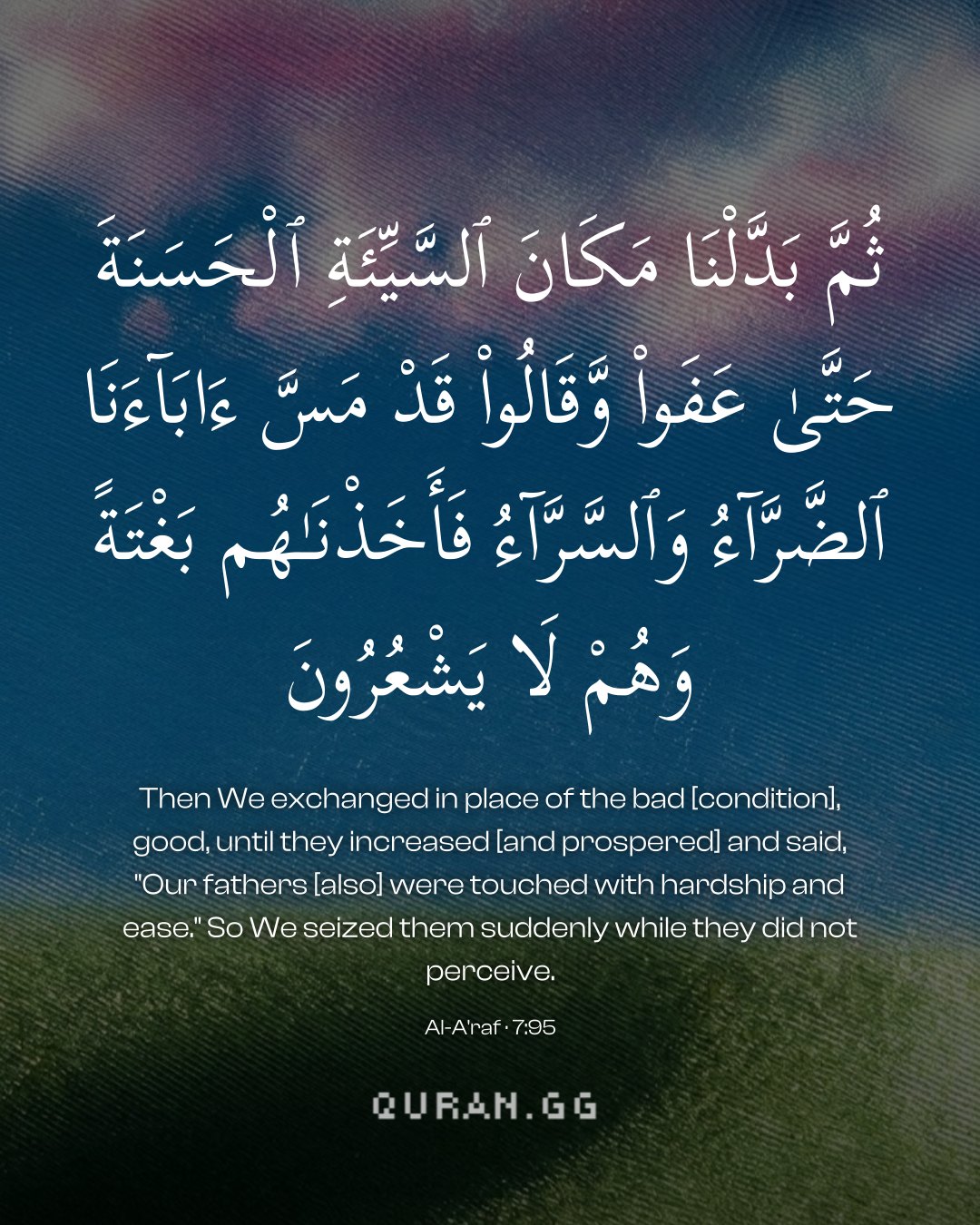
Then We exchanged in place of the bad [condition], good, until they increased [and prospered] and said, "Our fathers [also] were touched with hardship and ease." So We seized them suddenly while they did not perceive.
Allah mentions the Ba'sa' and Darra' that struck the earlier nations to whom He sent Prophets. Ba'sa', refers to the physical sicknesses and ailments that they suffered, while Darra', refers to the poverty and humiliation that they experienced,
لَعَلَّهُمْ يَضَّرَّعُونَ
(so that they might humble themselves) supplicate, humble themselves and invoke Allah, that He might remove the afflictions that they suffered from. This Ayah indicates that Allah sent down severe afflictions to them so that they might invoke Him, but they did not do what He ordered them. Therefore, He changed the affliction into prosperity to test them,
The Arabic word: سَّيِّئَةِ 'sayyiah' in this verse refers to distress, while the word: حَسَنَةَ 'hasanah' signifies prosperity, and the word عَفَو ` Afw': signifies increase or growth. The verse implies firstly that, they were made to undergo a test of hardship and suffering in order that they may repent and turn to Allah. When they did not take lesson from this warning and were a failure in this test, they were put to another test of a different kind. Their adversity was replaced with prosperity and their distress with ease and comfort until they increased in number and strength. This prosperity, after a long period of adversity, should have made them grateful to their Lord and they should have repented to Allah, but being completely lost in material pursuits and perverted by their mundane desires, they did nothing but to say, 'The suffering and prosperity came to our fathers (too).' that is, their suffering and prosperity had nothing to do with their deeds, it was just a natural course of changing phenomena. It was after their obstinate persistence in their evil and ignorance that they were seized by the punishment of Allah. The verse said, 'Then We seized them suddenly while they were unaware.'
Tazkirul Quran
Maulana Wahiduddin KhanOn ayahs 95–99
According to the tradition (of the Prophet), a believer goes on getting into difficulties until he becomes clear of sins, and a hypocrite is like a donkey who does not know why his owner has tied him and why he has let him loose. (Tafsir ibn Kathir). God imposes various types of difficulties on man so that his heart may soften, he may give up his reliance on anything other than God, and his haughtiness—which prevents him from accepting the Truth from outside may diminish. In this way, by God’s arrangements, the psychology of shortcomings and helplessness is instilled in man, so that he may give his full attention to the voice of Truth. The general public as well as the prophet’s addressees undergo this treatment. However, according to the usual procedure of God, all this happens garbed in doubt. For example, if some trouble affects somebody, it does so as part of the cause-and-effect process. This sort of occurrence poses a test for many people. They ignore it, saying that this was bound to happen and it happened. When they do not learn a lesson from these difficulties, God changes their conditions for the better. Now such people are pushed towards more severe misunderstandings. They firmly believe this to be a part of the occurrences of the time; a matter of the usual ups and downs which people are subjected to, under normal conditions; otherwise they would not have experienced good days after bad days. So they are thus prevented from learning a lesson from the first set of circumstances as well as from the second set. To be blessed with progress even after being guilty of arrogance is very dangerous. It is a sign of the fact that God has decided to catch hold of the culprit at the point where he has become most fearless of God’s punishment. The real reward of a God-fearing life will come in the Hereafter. However, if God wishes, He gives the initial reward in this world also in the shape of well-being and respect.
Uthmani text of the Madinah mushaf (King Fahd Complex). Translation: Saheeh International. Tafsir via Quran.com.