How `Amr bin Al-`As was aware of the Qur'an's Miracle due to this Surah
They have mentioned that `Amr bin Al-`As went to visit Musaylimah Al-Kadhdhab after the Messenger of Allah ﷺ was commissioned (as a Prophet) and before `Amr had accepted Islam. Upon his arrival, Musaylimah said to him, "What has been revealed to your friend (Muhammad ﷺ ) during this time" `Amr said, "A short and concise Surah has been revealed to him." Musaylimah then said, "What is it" `Amr replied;
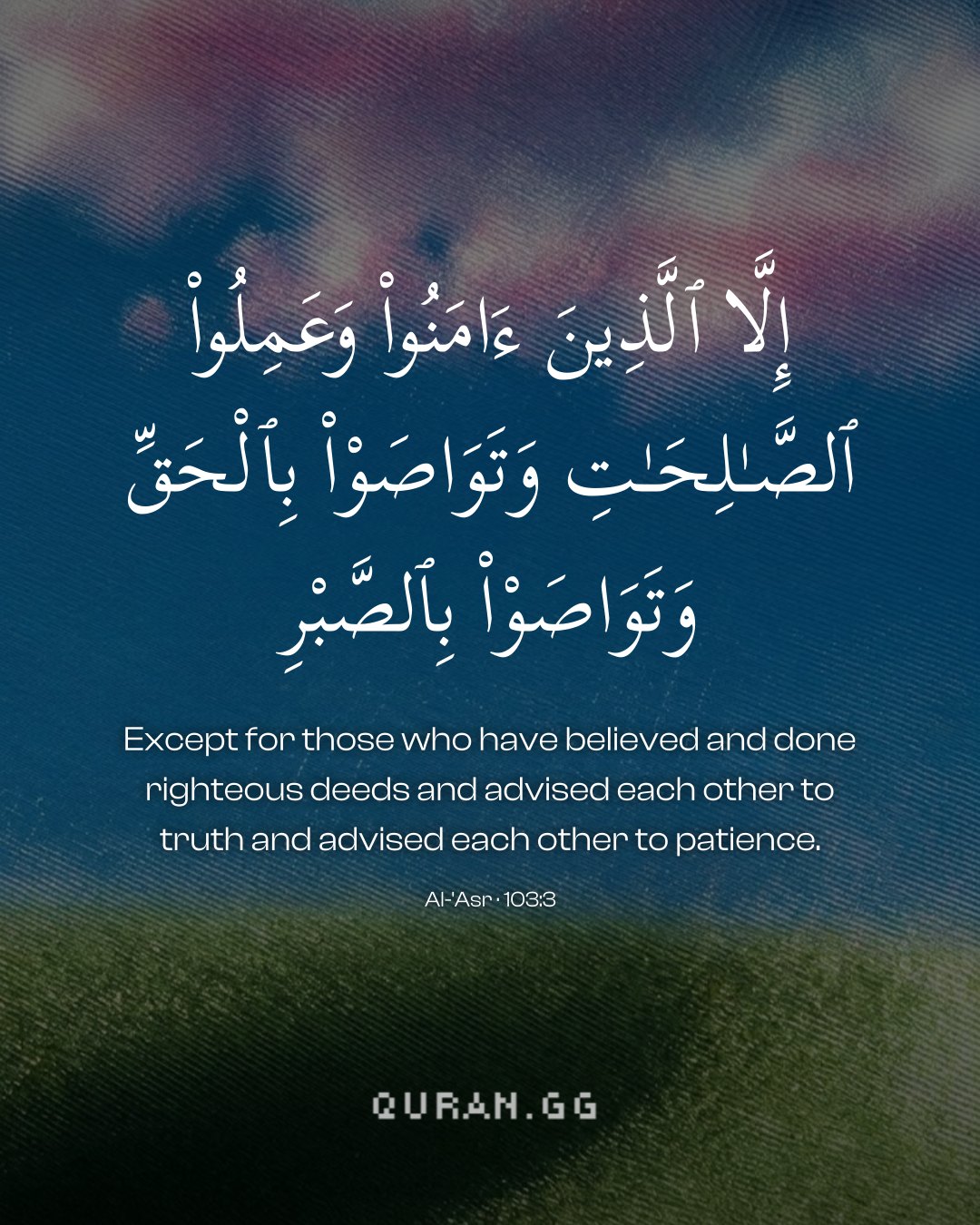
(By Al-`Asr. Verily, man is in loss. Except those who believe and do righteous deeds, and recommend one another to the truth, and recommend one another to patience.) So Musaylimah thought for a while. Then he said, "Indeed something similar has also been revealed to me." `Amr asked him, "What is it" He replied, "O Wabr (a small, furry mammal; hyrax), O Wabr! You are only two ears and a chest, and the rest of you is digging and burrowing." Then he said, "What do you think, O `Amr" So `Amr said to him, "By Allah! Verily, you know that I know you are lying." I saw that Abu Bakr Al-Khara'iti mentioned a chain of narration for part of this story, or what was close to its meaning, in volume two of his famous book Masawi' ul-Akhlaq. The Wabr is a small animal that resembles a cat, and the largest thing on it is its ears and its torso, while the rest of it is ugly. Musayli- mah intended by the composition of these nonsensical verses to produce something which would oppose the Qur'an. Yet, it was not even convin- cing to the idol wor- shipper of that time. At-Tabarani recorded from `Abdullah bin Hisn Abi Madinah that he said, "Whenever two men from the Companions of the Messenger of Allah ﷺ used to meet, they would not part until one of them had recited Surat Al-`Asr in its entirety to the other, and one of them had given the greetings of peace to the other." Ash-Shafi`i said, "If the people were to ponder on this Surah, it would be sufficient for them."
Sayyidna ` Ubaidullah Ibn Hisn ؓ reports that whenever two Companions of the Holy Prophet ﷺ met, they would not part company until one of them had recited Surah Al-` Asr in its entirety to the other. [ Transmitted by At-Tabarni ]. Imam Shafi` i (رح) says that if people thought about Surah Al-` Asr carefully, it would be enough for their guidance. It is a concise but comprehensive Surah, which in three verses, outlines a complete way of human life based on the Islamic worldview.
In this Surah, Allah swears an oath by the 'Time' and says that mankind is in a state of loss; exception, however, is made of people who are characterized by four qualities: [ 1] faith; [ 2] righteous deeds; [ 3] advising each other for Truth; and [ 4] advising each other for patience. This is the only path to salvation in this world, as well as in the next world. The Qur'anic prescription comprises, as we have just seen, of four elements. The first two of them relate to man's own personal betterment, and the other two relate to other people's guidance and reform. [ Ibn Kathir ].
At every moment man is advancing towards his death. This means that if a man does not make the best of the time which is still available to him, he will finally face total destruction. In order to be successful, a man has to exert himself, while for failure he has to do nothing. It is itself rushing towards him. A venerable gentleman tells us that he understood the meaning of this chapter of the Quran from an ice vendor who was shouting in market, ‘O, people! Have mercy on one whose assets are melting away.’ On hearing this shout, the gentleman said to himself that just as the ice melts and reduces, similarly the lifespan given to man is fast passing away. If the existing opportunity is lost in inaction or in evil action, this is man’s loss. (Imam Razi, Tafsir Kabir). One who utilises his time properly is one who adopts three courses in the present world. One is that of Faith (al-ladina a’manu), i.e. consciousness of Truth or reality and its acceptance. Secondly that of virtuous deeds (wa a‘milu as-salihat), i.e. doing that which is required to be done as a matter of religious duty and abstaining from what is sinful. Thirdly that of advising people about Truth and forbearance. This follows upon such a deep realisation of Truth that the concerned person becomes its preacher.
Uthmani text of the Madinah mushaf (King Fahd Complex). Translation: Saheeh International. Tafsir via Quran.com.