Which was revealed in Makkah
بِسْمِ اللَّهِ الرَّحْمَـنِ الرَّحِيمِ
In the Name of Allah, the Most Gracious, the Most Merciful.
Swearing by the Sanctity of Makkah and Other Things that Man was created in Hardship
Here Allah has sworn by Makkah, the Mother of the Towns, addressing its resident (during the non-sacred months,) free in this city in order to draw his attention to the significance of its sanctity when its people are in the state of sanctity. Khusayf reported from Mujahid;
لاَ أُقْسِمُ بِهَـذَا الْبَلَدِ
(Nay! I swear by this city;) "The word "La" (Nay) refers to the refutation against them (Quraish). I swear by this city." Shabib bin Bishr narrated from `Ikrimah, from Ibn `Abbas that he said,
لاَ أُقْسِمُ بِهَـذَا الْبَلَدِ
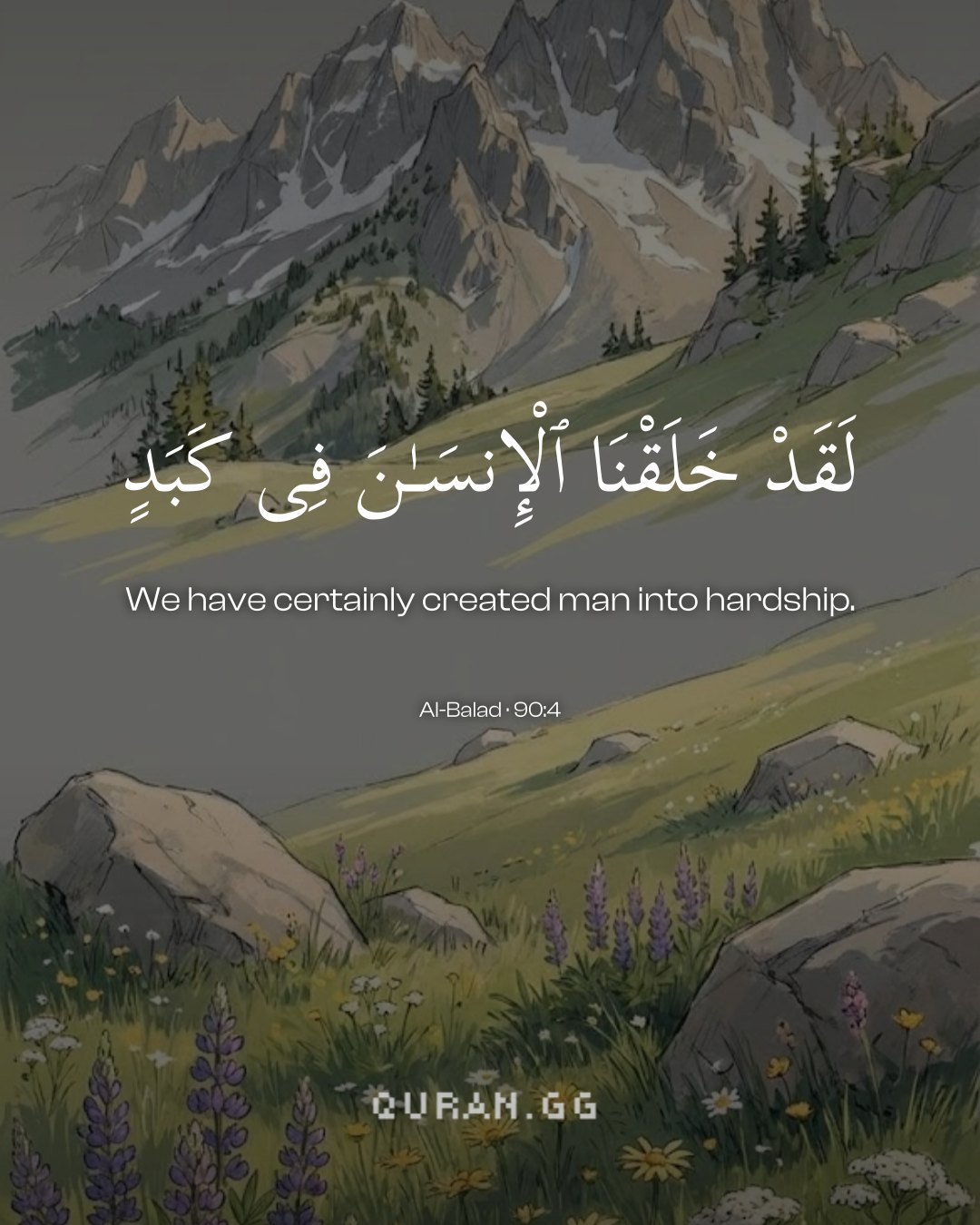
Continue reading the tafsir of ayahs 1–10 لَقَدْ خَلَقْنَا الْإِنسَانَ فِي كَبَدٍ (Indeed We have created man [ to live ] in hard struggle…90:4) The word kabad means 'labour, 'toil' or 'difficulty'. The verse purports to say that man's life is a series of hard and toilsome works.
Ibn ` Abbas ؓ says: 'Man was conceived and held in his mother's womb. The mother bore the pangs of birth. The hardship of sucking the mother's milk and the difficulty of weaning. This is followed by seeking livelihood and other necessities of life with hardship. Then he endures hardships and long-suffering of old age, death, grave, resurrection, accountability of deeds before Allah, reward and punishment.' These difficulties and hardships are not confined to man. Other animals too share them. Man has particularly been mentioned in this connection because of his intelligence. The more the power of a creature's intelligence, the higher the degree of his legal obligation. Lastly, the greatest difficulty and hardship would be borne at resurrection and life-after-death, when we will be required to give an account of the deeds we might have done throughout our life. Other species of animals will not be required to do this.
Some scholars say that no creation suffers as much difficulties or hardships as human beings, despite the fact that his body is smaller and weaker than most other animals. Man's brainpower, however, is most powerful. Therefore, he has been specifically mentioned. Swearing an oath by Makkah, 'Adam and his children, Allah has made it plain that man has been created in difficulties and to endure hardships. This is a proof that man did not come into existence on his own but his Creator is an All-Powerful Being who has, in His wisdom, created every species of creation with specific predisposition and capacity of actions. If man had any part in his own creation, he would never have allowed such difficulties and hardships for himself. [ Qurtubi ]
Absolute Comfort, without Hardship, Is not Possible in the World: Man Must be Prepared to Endure Hardships
The oath and its subject makes plain to man that his desire to live peacefully and comfortably in this world, without enduring any hardship, is a silly idea and false notion, which is not possible to happen. Therefore, it is necessary for difficulty, hardship, distress and affliction to befall every person. Since they are bound to befall, a wise person should be in readiness to work hard for something that may help him for an eternal life. The only factor that will help him for this is faith and obedience to the Truth.
Then, after describing a few of the ignorant disbeliever's qualities, the following verse says about an unbeliever: أَيَحْسَبُ أَن لَّمْ يَرَهُ أَحَدٌ (Does he think that no one has seen him?...90:7) that is, his evil deeds. He should realise that his Creator watches every action of his.
Man has never been able to free himself from hardship. This shows that he is subordinate to some Superior Power. Similarly, man’s eyes show that there is also a Superior Eye which is watching him. His power of speech indicates that there is One capable of speech over and above him, who has bestowed upon him the power of speech and showed him the right path. If a man realizes himself in the true sense, then he will certainly recognise God.
Uthmani text of the Madinah mushaf (King Fahd Complex). Translation: Saheeh International. Tafsir via Quran.com.