(And if you (Arab pagans, Jews, and Christians) are in doubt concerning that which We have sent down (i.e. the Qur'an) to Our servant) meaning, Muhammad ,
فَأْتُواْ بِسُورَةٍ
(then produce a Surah (chapter)) meaning, similar to what he brought to you. Hence, if you claim that what he was sent with did not come from Allah, then produce something similar to what he has brought to you, using the help of anyone you wish instead of Allah. However, you will not be able to succeed in this quest. Ibn `Abbas said that,
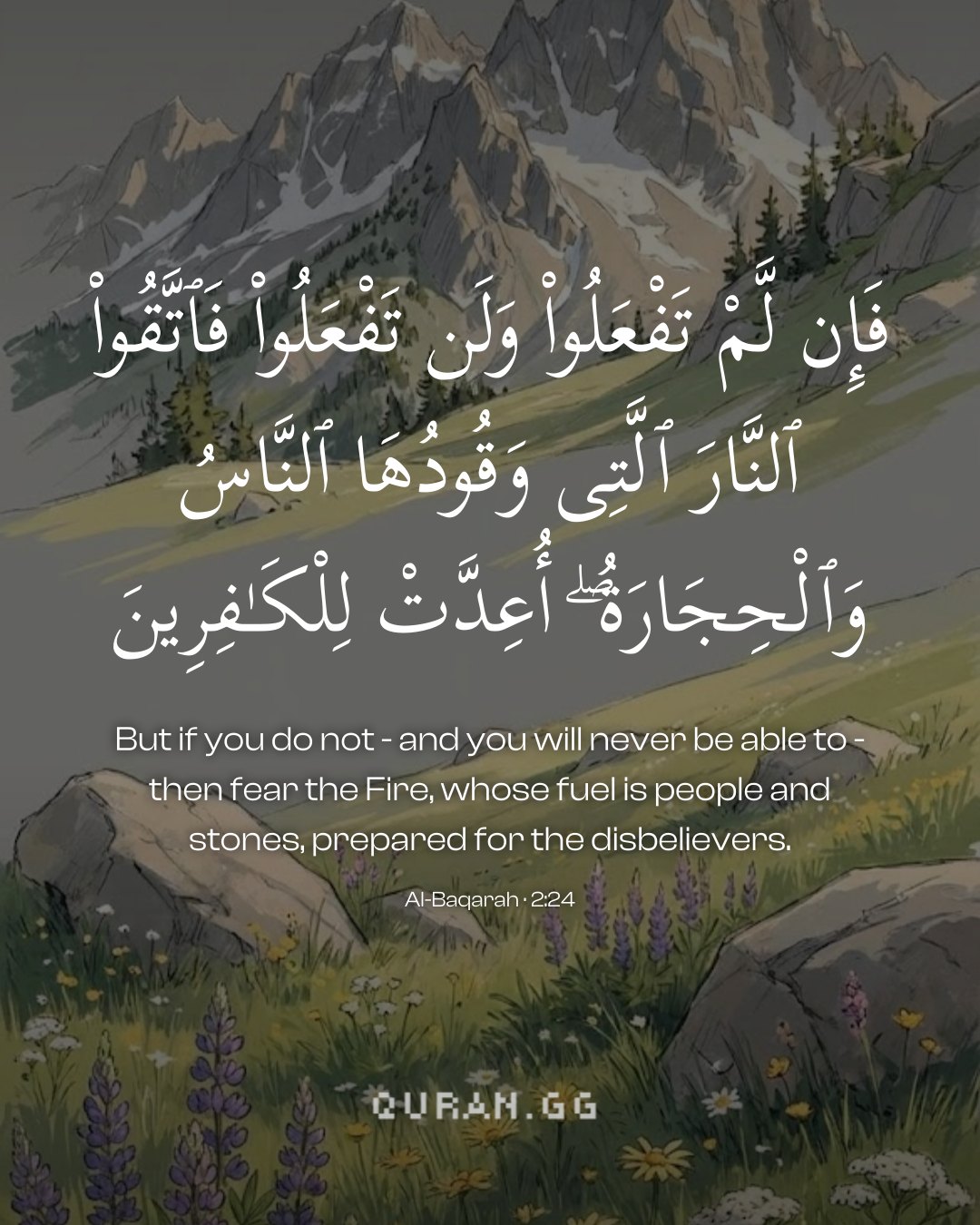
The Guidance which the Holy Qur'an provides to man rests on two basic principles - Tauhid توحید (the Oneness of God) and Risalah (Prophethood). The two preceding verses (21 and 22) affirm the Oneness of God in presenting certain acts peculiar to Allah alone as a proof; these two verses (23 and 24) affirm the prophethood of Muhammad ﷺ in presenting the word of Allah as a proof. In both the places, the mode of argument is the same. The preceding verses mention certain things which no one could or can do except Allah - for example, creating the sky and the earth, sending down water from the sky, bringing forth fruits with water; and the point of the argument is that since no one except Allah can do these things, no one else can be worthy of being worshipped. These two verses refer to a kind of speech which cannot possibly come from anyone except Allah, and the like of which no human being can ever produce just as the helplessness of man and other creatures in the matter of creating the sky and the earth etc. is a demonstration of the fact that these are the acts of Allah alone, in the same way the helplessness of all created beings in the matter of producing something equal to or resembling the Word of Allah is a demonstration of the fact that this is the Word of Allah alone. Here the Holy Qur'an challenges all men the world over, those of the present and those of the future, to produce even a small passage like this, if they suppose it to be the work of a man, for other men may also be capable of accomplishing what one man has achieved. In case individuals should fail in such an effort, the Holy Qur'an allows them the facility of calling to their aid all possible helpers - they could even hold an international 'workshop' for the purpose. The next verse fore-warns them that such a venture would never succeed, and threatens with the fires of hell, for having once acknowledged his inability to produce something to equal the Holy Qur'an, which is a clear evidence of its being the word, not of man but of a Being who stands above all created things, if a man still persists in his disbelief, he is only seeking a place in hell. The Holy Qur'an asks men to beware of such a fate.
God alone has created man and all that is in the heavens and on earth. He has invested the world with profound significance and He constantly looks after its needs. The proper course for a man is to take God as his Creator, Master and Sustainer, and not attempt to set up anyone as a partner with Him; that is, a man should give himself up entirely to God. But since He is invisible, it often happens that man gives importance to some visible object and worships that instead of God. He equates the created with the Creator—sometimes just a part of it and sometimes creation in its entirety, at times calling it by the name of God and at times doing so without taking God’s name. Therein lies man’s basic error. The prophets taught man to glorify God alone, and forsake the other things that he had elevated to a position of glory. People whose hearts are attached to objects other than God consider the call of true religion repugnant. They have become so greatly attached to their supposed ‘deities’ that they cannot believe that they are unreal. They cannot believe that the truth is what is proclaimed by a mortal just like themselves.
Uthmani text of the Madinah mushaf (King Fahd Complex). Translation: Saheeh International. Tafsir via Quran.com.