Tafsir Ibn Kathir (abridged)
After Allah reminded the Children of Israel of the favors that He has granted them, He warned them about the duration of the torment which He will punish them with on the Day of Resurrection. He said,
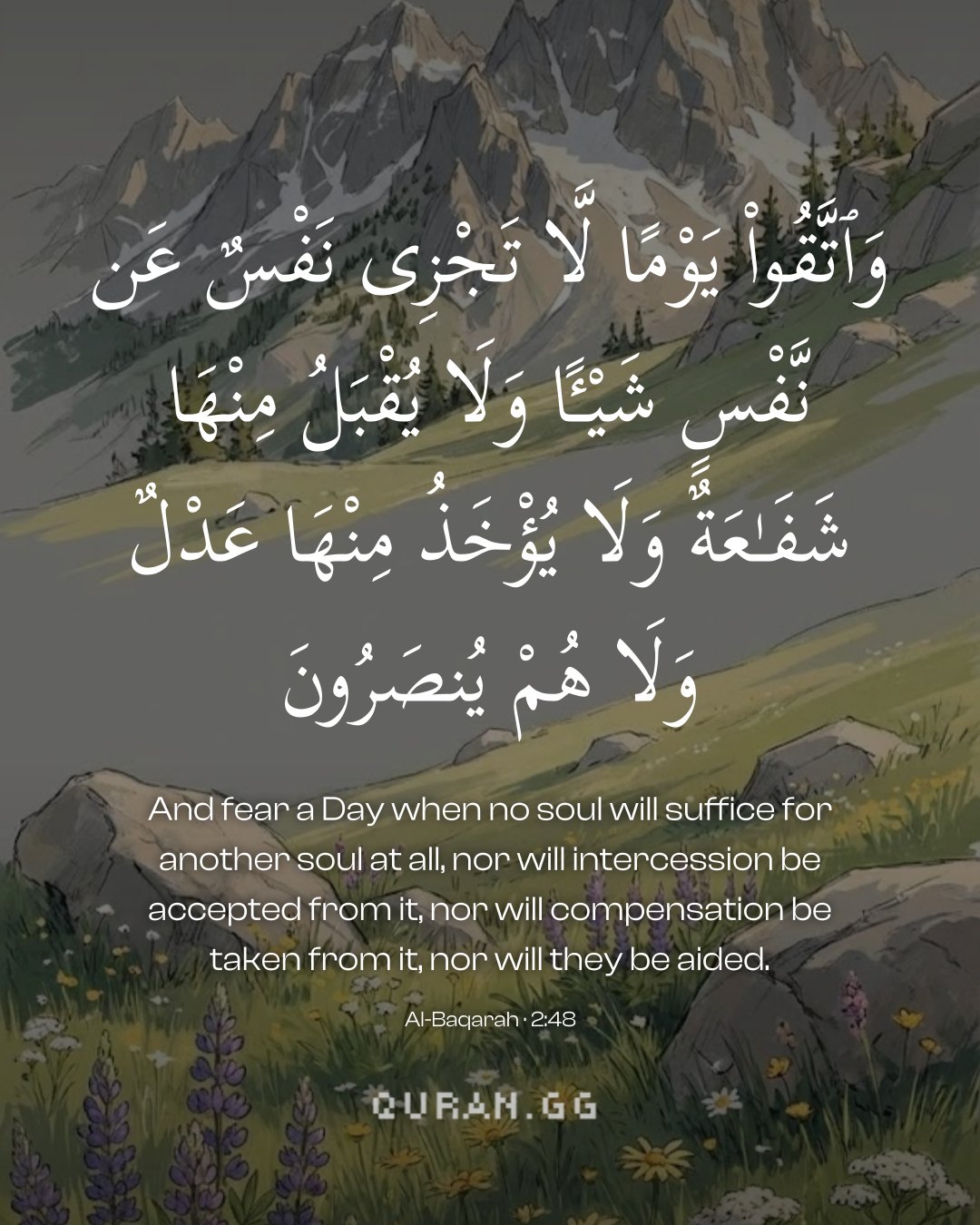
وَاتَّقُواْ يَوْمًا
(And fear a Day) meaning, the Day of Resurrection,
لاَّ تَجْزِى نَفْسٌ عَن نَّفْسٍ شَيْئًا
(When a person shall not avail another) meaning, on that Day, no person shall be of any help to another. Similarly, Allah said,
وَلاَ تَزِرُ وَازِرَةٌ وِزْرَ أُخْرَى
(And no bearer of burdens shall bear another's burden) (35:18)
لِكُلِّ امْرِىءٍ مِّنْهُمْ يَوْمَئِذٍ شَأْنٌ يُغْنِيهِ
(Every man that Day will have enough to make him careless of others.) (80:37) and,
يأَيُّهَا النَّاسُ اتَّقُواْ رَبَّكُمْ وَاخْشَوْاْ يَوْماً لاَّ يَجْزِى وَالِدٌ عَن وَلَدِهِ وَلاَ مَوْلُودٌ هُوَ جَازٍ عَن وَالِدِهِ شَيْئاً
(O mankind! Have Taqwa of your Lord (by keeping your duty to Him and avoiding all evil), and fear a Day when no father can avail aught for his son, nor a son avail aught for his father) (31: 33).
This indeed should serve as a great warning that both the father and the son will not be of help to each other on that Day.
Neither Intercession, Ransom, or Assistance will be accepted on behalf of the Disbelievers
Allah said,
وَلاَ يُقْبَلُ مِنْهَا شَفَـعَةٌ
(nor will intercession be accepted from him)
meaning, from the disbelievers. Similarly, Allah said,
فَمَا تَنفَعُهُمْ شَفَـعَةُ الشَّـفِعِينَ
(So no intercession of intercessors will be of any use to them) (74:48) and described the people of the Fire saying,
فَمَا لَنَا مِن شَـفِعِينَ - وَلاَ صَدِيقٍ حَمِيمٍ
(Now we have no intercessors. Nor a close friend (to help us)) (26:100-101).
Allah's statement here (2:48)
وَلاَ يُؤْخَذُ مِنْهَا عَدْلٌ
(nor will compensation be taken from him) means, that Allah does not accept the disbelievers to ransom themselves. Similarly, Allah said,
إِنَّ الَّذِينَ كَفَرُواْ وَمَاتُواْ وَهُمْ كُفَّارٌ فَلَن يُقْبَلَ مِنْ أَحَدِهِم مِّلْءُ الاٌّرْضِ ذَهَبًا وَلَوِ افْتَدَى بِهِ
(Verily, those who disbelieved, and died while they were disbelievers, the (whole) earth full of gold will not be accepted from anyone of them even if they offered it as a ransom) (3:91)
إِنَّ الَّذِينَ كَفَرُواْ لَوْ أَنَّ لَهُمْ مَّا فِى الاٌّرْضِ جَمِيعاً وَمِثْلَهُ مَعَهُ لِيَفْتَدُواْ بِهِ مِنْ عَذَابِ يَوْمِ الْقِيَـمَةِ مَا تُقُبِّلَ مِنْهُمْ وَلَهُمْ عَذَابٌ أَلِيمٌ
(Verily, those who disbelieve, if they had all that is in the earth, and as much again therewith to ransom themselves from the torment on the Day of Resurrection, it would never be accepted of them, and theirs would be a painful torment) (5:36)
وَإِن تَعْدِلْ كُلَّ عَدْلٍ لاَّ يُؤْخَذْ مِنْهَآ
(And even if he offers every ransom, it will not be accepted from him) (6:70) and,
فَالْيَوْمَ لاَ يُؤْخَذُ مِنكُمْ فِدْيَةٌ وَلاَ مِنَ الَّذِينَ كَفَرُواْ مَأْوَاكُمُ النَّارُ هِىَ مَوْلَـكُمْ
(So this Day no ransom shall be taken from you (hypocrites), nor of those who disbelieved. Your abode is the Fire. That is your Mawla (friend ـ proper place)) (57:15).
Allah stated that if the people do not believe in His Messenger and follow what He sent him with, then when they meet Him on the Day of Resurrection, after remaining on the path of disbelief, their family lineage and/or the intercession of their masters will not help them at all. It will not be accepted of them, even if they paid the earth's fill of gold as ransom. Similarly, Allah said,
مِّن قَبْلِ أَن يَأْتِىَ يَوْمٌ لاَّ بَيْعٌ فِيهِ وَلاَ خُلَّةٌ وَلاَ شَفَـعَةٌ
(Before a Day comes when there will be no bargaining, nor friendship, nor intercession) (2:254) and,
لاَّ بَيْعٌ فِيهِ وَلاَ خِلَـلٌ
(On which there will be neither mutual bargaining nor befriending) (19:31). Allah's statement next,
وَلاَ هُمْ يُنصَرُونَ
(nor will they be helped.) means, "no person shall get angry - or anxious - on their behalf and offer them any help, or try to save them from Allah's punishment." As stated earlier on that Day, neither the relative, nor persons of authority will feel pity for the disbelievers, nor will any ransom be accepted for them. Consequently, they will receive no help from others and they will be helpless themsleves. Allah said,
وَهُوَ يُجْيِرُ وَلاَ يُجَارُ عَلَيْهِ
(While He (Allah) grants refuge (or protection), but none grants refuge from Him) (23:88)
فَيَوْمَئِذٍ لاَّ يُعَذِّبُ عَذَابَهُ أَحَدٌ - وَلاَ يُوثِقُ وَثَاقَهُ أَحَدٌ
(So on that Day none will punish as He will punish. And none will bind (the wicked, disbelievers and polytheists) as He will bind) (89:25-26)
مَا لَكُمْ لاَ تَنَـصَرُونَ - بَلْ هُمُ الْيَوْمَ مُسْتَسْلِمُونَ
("What is the matter with you Why do you not help one another (as you used to do in the world)" Nay, but that Day they shall surrender) (37:25-26) and,
فَلَوْلاَ نَصَرَهُمُ الَّذِينَ اتَّخَذُواْ مِن دُونِ اللَّهِ قُرْبَاناً ءَالِهَةَ بَلْ ضَلُّواْ عَنْهُمْ
(Then why did those whom they had taken for alihah (gods) besides Allah, as a way of approach (to Allah) not help them Nay, but they vanished completely from them) (46:28).
Also, Ad-Dahhak said that Ibn `Abbas said that Allah's statement,
مَا لَكُمْ لاَ تَنَـصَرُونَ
("What is the matter with you Why do you not help one another") (37:25) means, "This Day, you shall not have a refuge from Us. Not this Day." Ibn Jarir said that Allah's statement,
وَلاَ هُمْ يُنصَرُونَ
(nor will they be helped.) meaning, on that Day, they shall neither be helped by any helper, nor shall anyone intercede on their behalf. No repeal or ransom will be accepted for them, all courtesy towards them will have ceased, along with any helpful intercession. No type of help or cooperation will be available for them on that Day. The judgment will, on that Day, be up to the Most Great, the Most Just, against whom no intercessor or helper can ever assist. He will then award the evil deed its kind and will multiply the good deeds. This is similar to Allah's statement,
وَقِفُوهُمْ إِنَّهُمْ مَّسْئُولُونَ - مَا لَكُمْ لاَ تَنَـصَرُونَ - بَلْ هُمُ الْيَوْمَ مُسْتَسْلِمُونَ
(But stop them, verily, they are to be questioned. "What is the matter with you Why do you not help one another" Nay, but that Day they shall surrender) (37:24-26).