Allah says, the matter is not as you have wished and hoped it to be. Rather, whoever does an evil deed and abides purposefully in his error, coming on the Day of Resurrection with no good deeds, only evil deeds, then he will be among the people of the Fire.
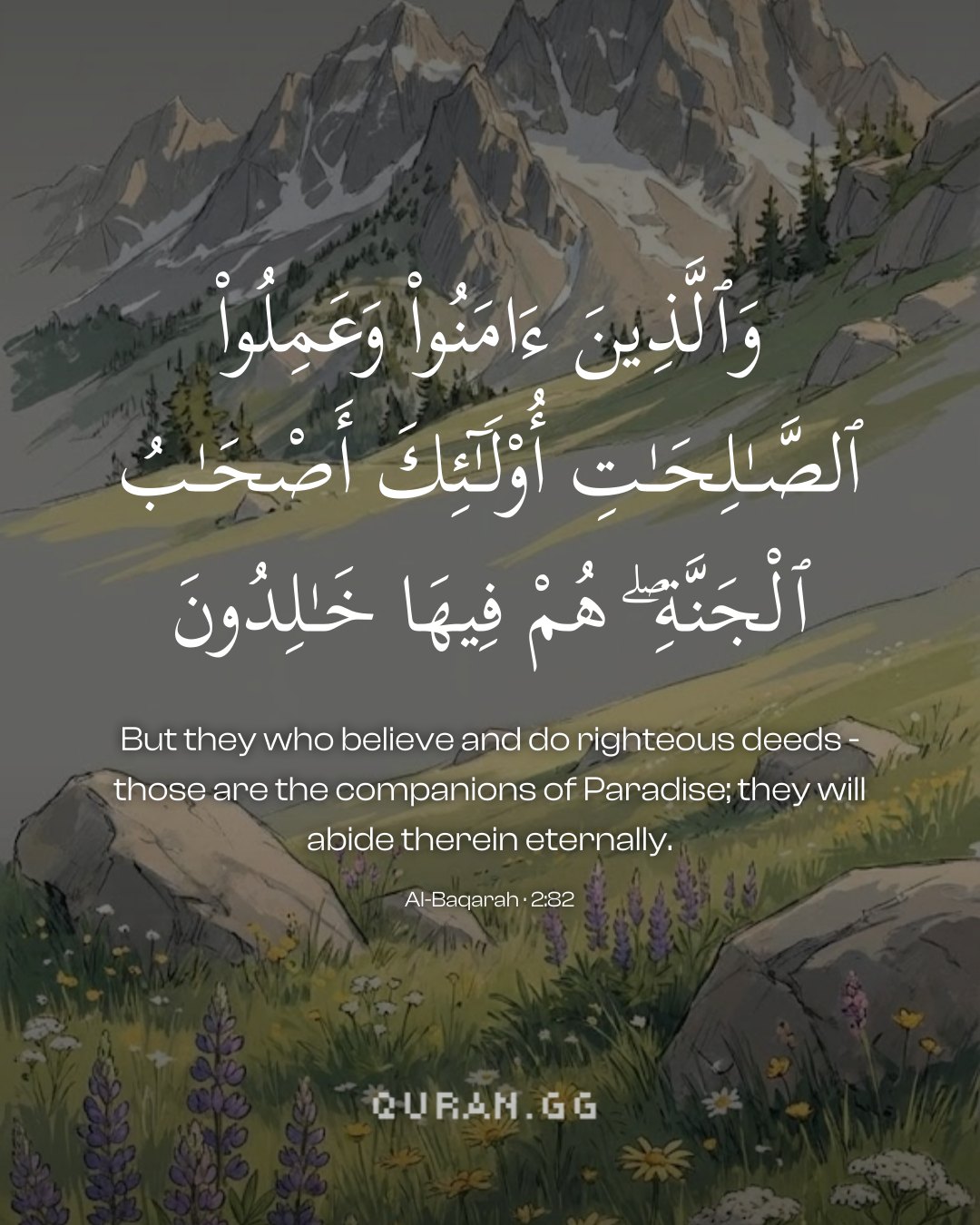
وَالَّذِينَ ءَامَنُواْ وَعَمِلُواْ الصَّـلِحَاتِ
(And those who believe and do righteous good deeds) meaning, "They believe in Allah and His Messenger and perform the good deeds that conform with the Islamic Law. They shall be among the people of Paradise." Allah said in a similar statement,
Having refuted the claim of the Jews as baseless, the Holy Qur'an lays down the divine law in this regard. Those who commit evil deeds knowingly and deliberately so that evil takes hold of them completely, leaving no trace of goodness - such men shall go to the Hell, and live there forever, without any intermission or release. But those who believe in Allah and the Holy Prophet ﷺ - whose Shari` ah has now abrogated all the earlier Shari'ahs and who do good deeds in conformity with the Islamic Shari'ah, - it is these men who shall go to Paradise, and will live there forever.
Let us explain how evil can take hold of a man so completely that no trace of goodness is left. This kind of thing happens only to infidels (Kafirs کفار), and not to Muslims, even when they are sinners. For, no good deed on the part of an infidel is acceptable to Allah on account of his infidelity; even the good deeds he has done before his apostasy and infidelity are lost, and rendered null and void. That is why on the Day of Judgment, infidels will have to show nothing but evil, in punishment of which they shall live in Hell for ever. On the contrary, men of faith will, to begin with, have the greatest and highest good deed to their credit - namely, faith ('Iman ایمان) itself. Then, their secondary good deeds too are recorded in their account. So, they cannot be devoid of all goodness, and evil cannot be said to have taken hold of them completely.
The Arabic word for ‘false notions’ is amani. According to Ibn ‘Abbas, Fara’ and Mujahid—some of the most reliable of the Quranic commentators—the word refers to the mythical tales invented by Jewish scholars. The overall aim of these stories was to prove that Paradise was reserved for the Jews. Added to this, statements in support of the theory that the Jews were God’s ‘chosen people’ were attributed to venerated Jewish saints. It was made out that certain magical properties were inherent in their religion, ensuring salvation by virtue of mere adherence to the run-of-the-mill rites of Judaism. Such sacred recipes for cheap salvation are very attractive to the masses, for they give credence to the popular notion based on wishful thinking that there is no need to discipline oneself—no need to lead a responsible life; superstitious charms and magical remedies are enough to cure one’s spiritual ills and have one admitted to heaven. The scholars who taught these tales, attributing them to past saints, became highly regarded for the theories they expounded were designed to win popular support. Facilitation of eternal salvation became for them a lucrative source of worldly income. People flocked to support them. They were showered with offerings, for they ushered others along the path to a paradise that did not have to be earned; in return they received worldly wealth that they did not have to labour for. This has been a failing in the people of the Book in every age. They wanted to live in a dream world, thinking that they had no obligations save the perfunctory performance of certain empty rituals, and deluding themselves into believing that they had certain inalienable rights given by God. Such people cannot accept the call of true religion, for truth demolishes all their wishful thinking, and makes them face the stark realities of life.
Uthmani text of the Madinah mushaf (King Fahd Complex). Translation: Saheeh International. Tafsir via Quran.com.