Which was revealed in Madina
The Messenger of Allah recited this Surah to Ubayy
Imam Ahmad recorded from Anas bin Malik that the Messenger of Allah said to Ubayy bin Ka`b,
«إِنَّ اللهَ أَمَرَنِي أَنْ أَقْرَأَ عَلَيْكَ»
لَمْ يَكُنِ الَّذِينَ كَفَرُواْ مِنْ أَهْلِ الْكِتَـبِ
(Verily, Allah has commanded me to recite to you (Those who disbelieve from among the People of the Scripture.)) Ubayy said, "He (Allah) mentioned me by name to you" The Prophet replied,
«نَعَم»
(Yes.) So he (Ubayy) cried. Al-Bukhari, Muslim, At-Tirmidhi and An-Nasa'i all recorded this Hadith from Shu`bah.
بِسْمِ اللَّهِ الرَّحْمَـنِ الرَّحِيمِ
In the Name of Allah, the Most Gracious, the Most Merciful.
Mentioning the Situation of the Disbelievers among the People of the Scripture and the Idolators
As for the People of the Scripture, they are the Jews and the Christians, and the idolators are the worshippers of idols and fire among the Arabs and the non-Arabs. Mujahid said, they are not going
Continue reading the tafsir of ayahs 1–5Ma'arif al-Qur'an
Mufti Muhammad Shafi
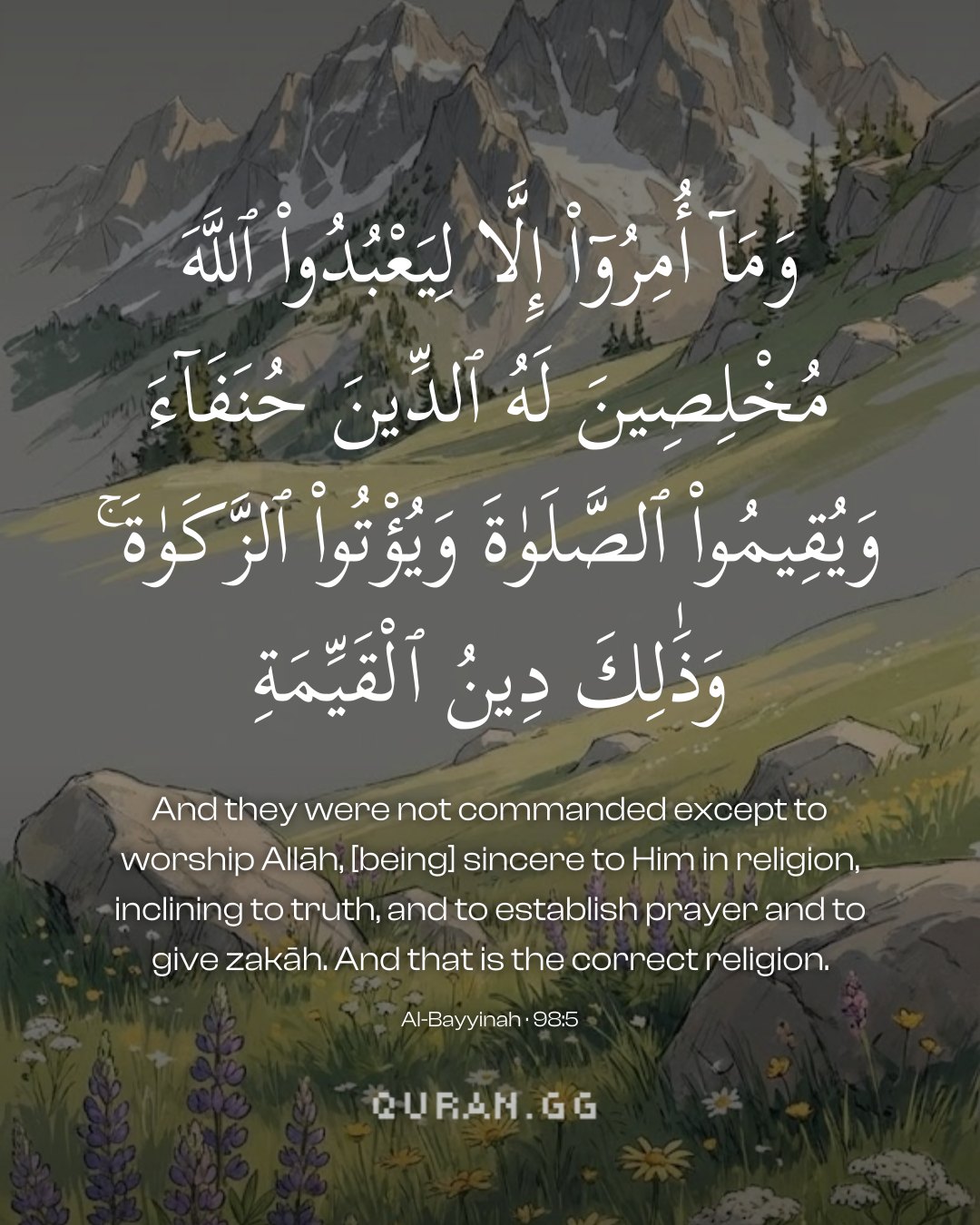
Verse [ 5] وَذَٰلِكَ دِينُ الْقَيِّمَةِ (And that is the way of the straight religion.) The word qayyimah [ the straight ] is apparently the qualifier of the noun kutub [ Books ] which occurred earlier. Some treat the adjective as qualifying the noun millah [ religion ]. The verse purports to say that Allah commanded the People of the former Scriptures that they should render full and sincere obedience to Divine commandments, that is, to worship Allah alone. They should also establish the regular prayers and pay the obligatory alms. Then the Qur'an reminds them that this is not their distinctive feature exclusively. All former religions that are upright and received Books from Allah have the same features. This is the true religion of all the Prophets (علیہم السلام) that they preached to their respective people. It would appear that the phrase hutubun qayyimah [(right and) straight writings ], contextually, refers to the Qur'anic ordinances and injunctions. From this point of view, the verse would signify that the ordinances and injunctions of the Shari` ah of the Holy Prophet Muhammad ﷺ are exactly the same as those that were given to them in their revealed Scriptures. They were not divergent so that they could find a pretext to oppose.
The Arab pagans and the followers of Divine scriptures (i.e. followers of previous prophets) used to ask the Prophet Muhammad to show them some miracles, as clear evidence, or demanded that an angel should descend from heaven and talk to them. Only then would they accept his prophethood. But those who make such demands are inevitably frivolous. Such demands had already been made by their forebears, but in spite of their demands being conceded to, they could not become believers.
Uthmani text of the Madinah mushaf (King Fahd Complex). Translation: Saheeh International. Tafsir via Quran.com.