Surah Al-Fath Ayah 14 (48:14) — Meaning & Tafsir | Quran.GG

Surah Al-Fath, Ayah 14

48:14 · Meaning and tafsir

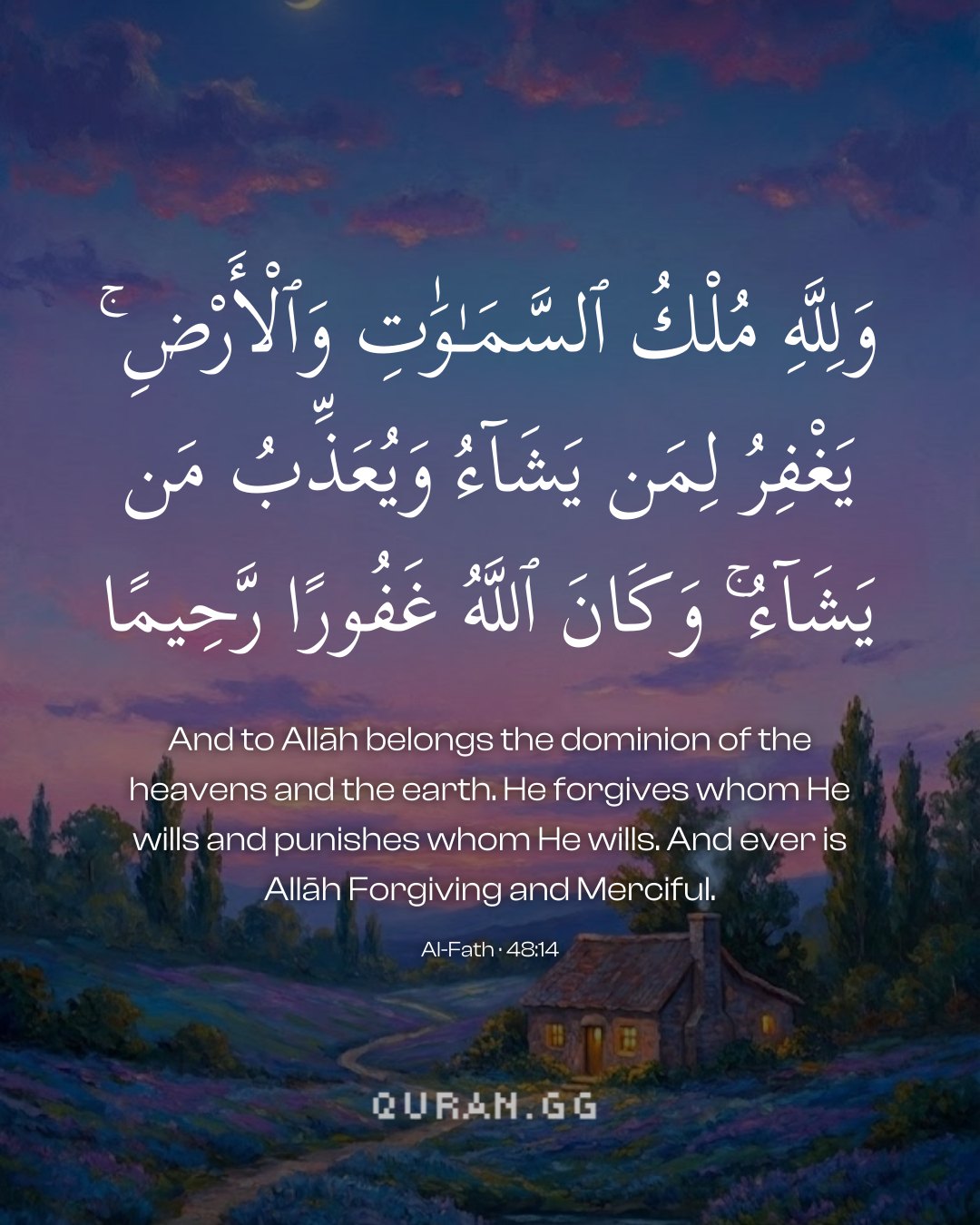
وَلِلَّهِ مُلْكُ ٱلسَّمَـٰوَٰتِ وَٱلْأَرْضِ ۚ يَغْفِرُ لِمَن يَشَآءُ وَيُعَذِّبُ مَن يَشَآءُ ۚ وَكَانَ ٱللَّهُ غَفُورًا رَّحِيمًا ١٤

And to Allāh belongs the dominion of the heavens and the earth. He forgives whom He wills and punishes whom He wills. And ever is Allāh Forgiving and Merciful.

Surah Al-Fath 48:14 in Arabic with its translation: “And to Allāh belongs the dominion of the heavens and the earth. He forgives whom He wills and punishes whom…”

Make something with this ayah

Turn it into a video for Stories, Reels or TikTok, recited by the reciter you pick, or an image on a background you choose. Free, in your browser.

Download this image

Tafsir Ibn Kathir (abridged)

The Fabricated Excuse offered by Those Who lagged behind and did not participate in Al-Hudaybiyyah

Allah informs His Messenger of the excuses that the bedouins who lagged behind would offer him, those bedouins who preferred to remain in their homes and possessions and did not join the Messenger of Allah ﷺ. They offered an excuse for lagging behind, as that of being busy -- in their homes and with their wealth! They asked the Messenger of Allah ﷺ to invoke Allah to forgive them, not because they had faith in the Prophet and his invocation, but to show off and pretend. This is why Allah the Exalted said about them,

يَقُولُونَ بِأَلْسِنَتِهِمْ مَّا لَيْسَ فِى قُلُوبِهِمْ قُلْ فَمَن يَمْلِكُ لَكُمْ مِّنَ اللَّهِ شَيْئاً إِنْ أَرَادَ بِكُمْ ضَرّاً أَوْ أَرَادَ بِكُمْ نَفْعاً

Continue reading the tafsir of ayahs 11–14

Ma'arif al-Qur'an

Related Considerations

Reference in this passage is to those Bedouin tribes who were invited by Allah's Messenger ﷺ to join the party of 1400 Muslims who were marching to Hudaibiyah but on one pretext or another, they requested to be excused. This was narrated in part [ 1] of the story of Hudaibiyah. According to some versions, some of those people later repented and became sincere Muslims.

Tazkirul Quran

The Prophet Muhammad had a dream in Madinah that he was undertaking a journey to Makkah for the purpose of performing ‘umrah. In accordance with this, he left for Makkah along with his companions. But at that time, the conditions were very adverse. There was a great fear that there would be a clash with the Quraysh and that the Muslims would be killed in large numbers. As they approached Makkah, the Quraysh did indeed start pelting the Muslim group with stones and attempted to provoke them in different ways, so that they would become overwrought and start fighting, and the Quraysh would thus have an excuse to do battle with them. But the unilateral tolerance shown and the overlooking of these acts on the part of the Muslims deprived the Quraysh of the occasion to fight them. Many weak Muslims belonging to the areas surrounding Madinah did not join the pilgrims on their journey due to the fears mentioned above. When the Prophet had safely returned, these people came to him to profess their loyalty and started asking his pardon. But they were not pardoned, because their excuse was lame and false. Before God, a proper reason is acceptable at all times, while a false pretext is inevitably rejected outright. They had no real excuse for their non-participation in the journey along with God’s Prophet, except for their own feelings of uncertainty. They thought that they were protecting their interests by refusing to go on such a dangerous journey. They did not know that God is the Lord of all benefits and all harm. If God does not protect an individual, no protective armour can save him. Destruction will be the lot of such people in this world as well as in the Hereafter.

Continue reading the tafsir of ayahs 13–14

Uthmani text of the Madinah mushaf (King Fahd Complex). Translation: Saheeh International. Tafsir via Quran.com.