Allah has indeed fulfilled the True Vision which He showed to His Prophet
In a dream, the Messenger of Allah ﷺ saw himself entering Makkah and performing Tawaf around the House. He told his Companions about this dream when he was still in Al-Madinah. When they went to Makkah in the year of Al-Hudaybiyyah, none of them doubted that the Prophet's vision would come true that year. When the treaty of peace was conducted and they had to return to Al-Madinah that year, being allowed to return to Makkah the next year, some of the Companions disliked what happened. `Umar bin Al-Khattab asked about this, saying, "Haven't you told us that we will go to the House and perform Tawaf around it" The Prophet said,
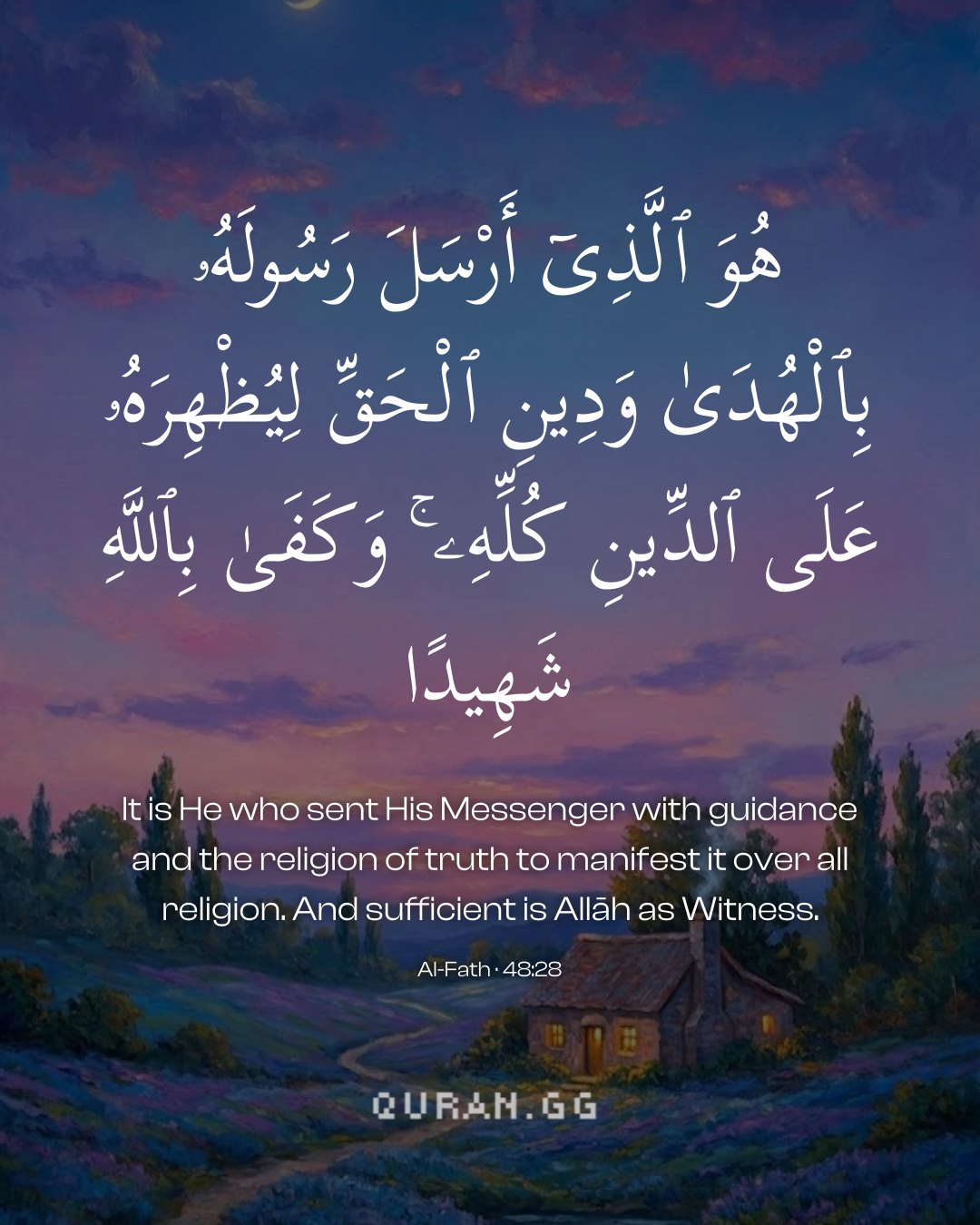
هُوَ الَّذِي أَرْسَلَ رَسُولَهُ بِالْهُدَىٰ وَدِينِ الْحَقِّ (He is the One who has sent His Messenger ﷺ with Guidance and the religion of truth, so that He makes it prevail over all religions....48:28). In the preceding verses, promises were made about conquests and spoils of war; reference was made to the special merits of the participants of Hudaibiyah and general merits of all the noble Companion ؓ ; and glad tidings were given to them. Now at the conclusion of the Surah all these themes are summarized and emphasized. Because these blessings were showered and the glad tidings were given as a result of accepting and obeying the Holy Prophet ﷺ ، the verse lays further stress on strengthening the acceptance and obedience of the Holy Prophet ﷺ . It also denounces those who reject the messenger-ship of the Holy Prophet ﷺ and allays suspicions of those Muslims who were dissatisfied with the terms and provisions of the Treaty of Hudaibiyah. The verse in addition confirms the messenger-ship of the Holy Prophet ﷺ and, giving glad tidings, makes a very bold prophecy to the effect that not only would Islam prevail in Arabia but would also eventually triumph over all other religions.
Tazkirul Quran
Maulana Wahiduddin Khan
The Prophet Muhammad had to play dual roles: one was that of a prophet (who strives to spread the message of God) and the other was that of the final Prophet, i.e. no other prophet was to appear after him. In his former capacity he had to do the same work as other prophets, namely to declare the oneness of God, to warn and to give good news about the Hereafter. The latter role was different in that it required him to create those historical conditions which would be conducive to and a guarantee of the protection of both the Book of God and the prophetic traditions. No situation should occur which would necessitate the appointment of another prophet. It was thus a requirement of this second role that his dawah work should not end with a simple ‘declaration’ but should reach the stage of ‘revolution’—revolution in the sense that change should be brought about in the history of the world. Those conditions should come to an end under which, time and again, God’s guidance had been obliterated or distorted, thereby necessitating the selection of a new prophet to restore the divine guidance to its original form.
Uthmani text of the Madinah mushaf (King Fahd Complex). Translation: Saheeh International. Tafsir via Quran.com.