Surah Al-Fatihah Ayah 3 (1:3) — Meaning & Tafsir | Quran.GG

Surah Al-Fatihah, Ayah 3

1:3 · Meaning and tafsir

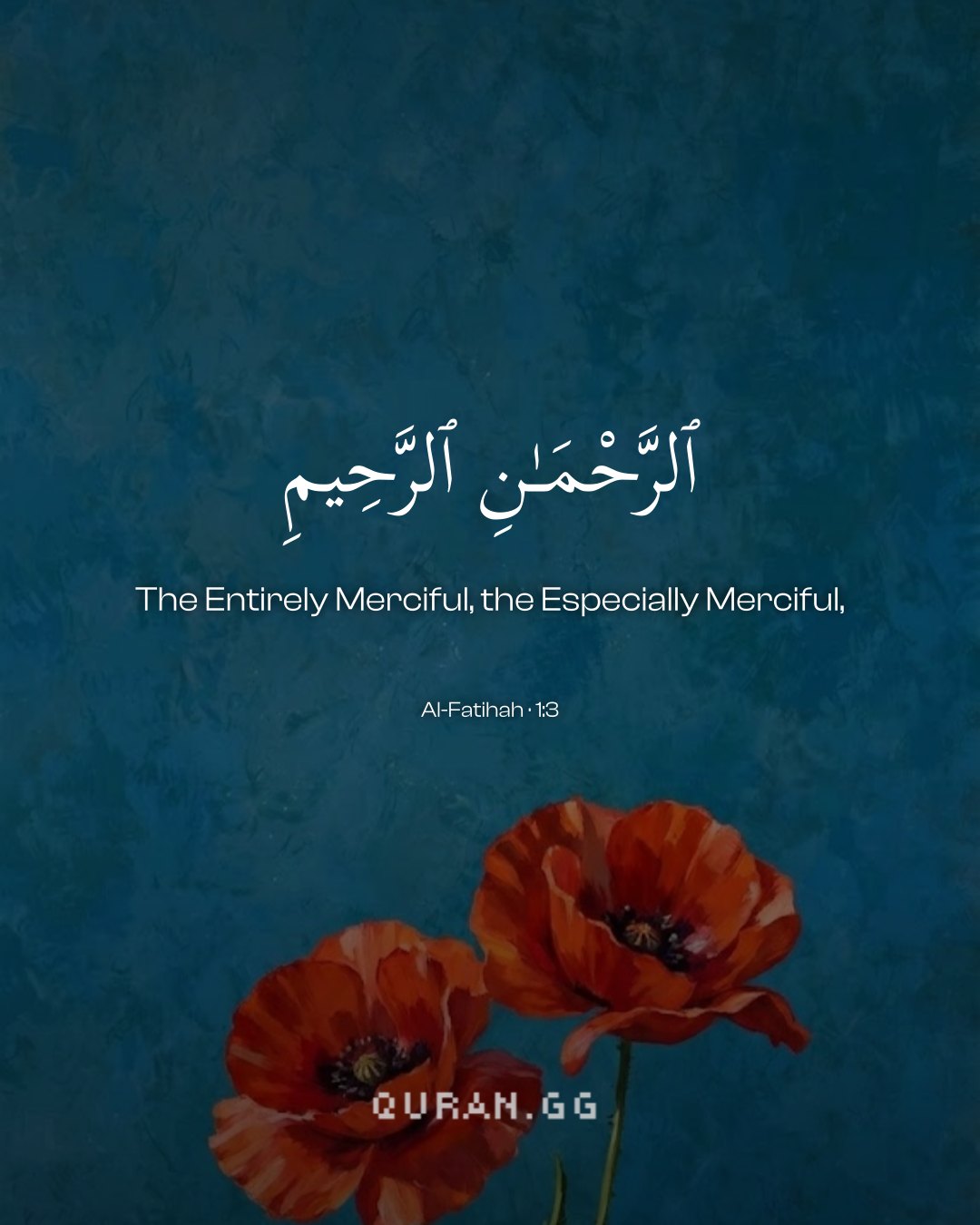
ٱلرَّحْمَـٰنِ ٱلرَّحِيمِ ٣

The Entirely Merciful, the Especially Merciful,

Surah Al-Fatihah 1:3 in Arabic with its translation: “The Entirely Merciful, the Especially Merciful,”

Make something with this ayah

Turn it into a video for Stories, Reels or TikTok, recited by the reciter you pick, or an image on a background you choose. Free, in your browser.

Download this image

Tafsir Ibn Kathir (abridged)

Allah said next,

الرَّحْمَـنِ الرَّحِيمِ

(Ar-Rahman (the Most Gracious), Ar-Rahim (the Most Merciful)) We explained these Names in the Basmalah. Al-Qurtubi said, "Allah has described Himself by `Ar-Rahman, Ar-Rahim' after saying `the Lord of the Alamin', so His statement here includes a warning, and then an encouragement. Similarly, Allah said,

نَبِّىءْ عِبَادِى أَنِّى أَنَا الْغَفُورُ الرَّحِيمُ - وَأَنَّ عَذَابِى هُوَ ٱلْعَذَابُ ٱلْأَلِيمُ

(Declare (O Muhammad ﷺ) unto My servants, that truly, I am the Oft-Forgiving, the Most Merciful. And that My torment is indeed the most painful torment.) (15:49-50) Allah said,

إِنَّ رَبَّكَ سَرِيعُ الْعِقَابِ وَإِنَّهُ لَغَفُورٌ رَّحِيمٌ

(Surely, your Lord is swift in retribution, and certainly He is Oft-Forgiving, Most Merciful.) (6:165)

Hence, Rabb contains a warning while Ar-Rahman Ar-Rahim encourages. Further, Muslim recorded in his Sahih that the Messenger of Allah ﷺ said,

«لَوْ يَعْلَمُ الْمُؤْمِنُ مَا عِنْدَ اللهِ مِنَ الْعُقُوبَةِ مَا طَمِعَ فِي جَنَّتِهِ أَحَدٌ، وَلَوْ يَعْلَمُ الْكَافِرُ مَا عِنْدَ اللهِ مِنَ الرَّحْمَةِ مَا قَنَطَ مِنْ رَحْمَتِهِ أَحَدٌ»

(If the believer knew what punishment Allah has, none would have hope in acquiring His Paradise, and if the disbeliever knew what mercy Allah has, none will lose hope of earning His earning.)

Ma'arif al-Qur'an

The second verse speaks of the Divine quality of mercy, employing two adjectives Rahman and Rahim of which are hyperbolic terms in Arabic, and respectively connote the superabundance and perfection of Divine mercy. The reference to this particular attribute in this situation is perhaps intended to be a reminder of the fact that it is not through any external compulsion or inner need or any kind of necessity whatsoever that Allah has assumed the responsibility of nurturing the whole of His creation, but in response to the demand of His own quality of mercy. If this whole universe did not exist, He would suffer no loss; if it does exist, it is no burden to Him.

Tazkirul Quran

The best way to begin any task is in the name of God, the Lord, the Being who is the source of all blessings, and whose blessings and mercy are continually pouring upon His creation. To commence any undertaking in His name is to pray that God, in His infinite mercy, should come to one’s assistance and bring one’s work to a successful conclusion. This is man’s acknowledgement of the fact that he is God’s servant, and also brings divine assurance of success.

Uthmani text of the Madinah mushaf (King Fahd Complex). Translation: Saheeh International. Tafsir via Quran.com.