The Terrors of the Day of Resurrection, and how the Wrongdoers will wish that They had taken a Path with the Messenger
Here Allah tells us about the terror of the Day of Resurrection and the tremendous events that will happen, including the splitting of heavens when they are pierced by the clouds, that is the shadow of the magnificent light which dazzles all sight. The angels of heaven will come down on that Day and surround all creatures at the place of gathering, then the Lord, may He be blessed and exalted, will come to pass judgement. Mujahid said, "This is as Allah says:
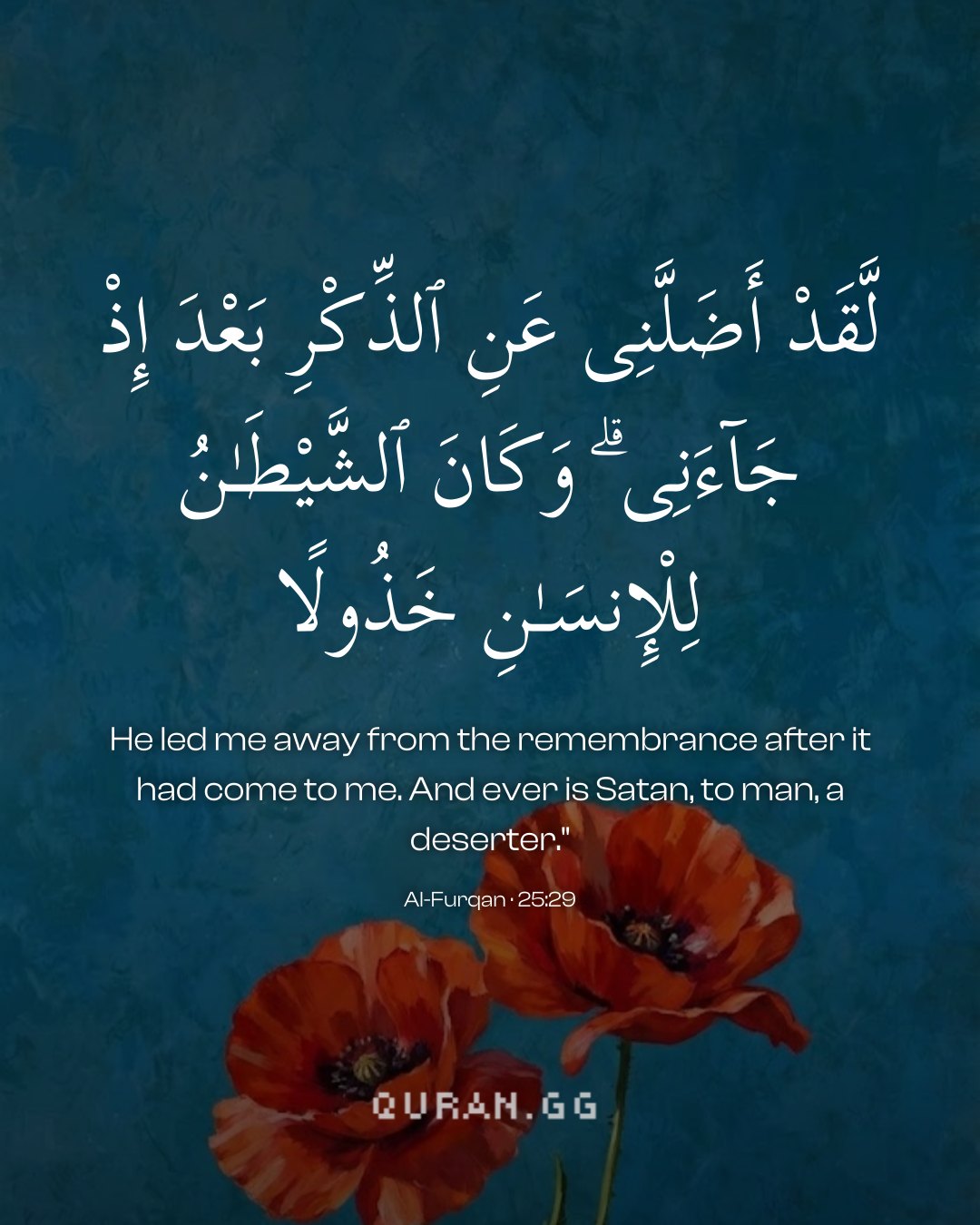
يَا وَيْلَتَىٰ لَيْتَنِي لَمْ أَتَّخِذْ فُلَانًا خَلِيلًا (Woe to me! would that I had not taken so-and-so for my friend - 25:28). This verse was revealed on an especial occasion, but its implication is universal. The background is that 'Uqbah Ibn Abi Mu` ait was one of the chieftains of polytheists in Makkah. It was customary with him that whenever he would return after an expedition, he used to invite the nobility of the city to dinner. He also used to call on the Holy Prophet ﷺ frequently. When he presented the food to the Holy Prophet ﷺ he said "I cannot eat your food until you proclaim that Allah is one and no one can be associated with Him in worship and that I am His Rasul." 'Uqbah recited this sentence and then the Holy Prophet ﷺ ate the dinner according to his promise, 'Ubayy Ibn Khalaf was a close friend of 'Uqbah. When he learnt that 'Uqbah has accepted Islam and has recited the Kalimah Tayyabah he was very crossed with him. 'Uqbah tried to defend himself by explaining that Muhammad ﷺ was an eminent person of Quraysh and if he had returned without having his meal at his house, it would have been very degrading for 'Uqbah. Therefore, in order to please him, he repeated the sentence (کلمہ). 'Ubayy Ibn Khalaf did not accept this explanation and asked 'Uqbah to go and spit on Holy Prophet's ﷺ face if he was really ashamed. The wretched man obliged his depraved friend and did as he had suggested. Allah Ta’ ala disgraced them both in this world as well, as both were killed in the battle of Badr (Baghawi). The torment he will face on the Dooms day is described in this verse that when he will see the torment before him, he will bite his fingers in distress and repentance and say "would that he had not made 'Ubayy Ibn Khalaf his friend in the world". (Mazhari Qurtubi)
Those who demand, as a precondition, the physical appearance of God and His angels, before they accept a missionary’s message, are not really sincere about it. Frivolous in their attitude, they do not know the implication or meaning of the appearance of God and His angels. The fact is that it is only when the Truth is revealed through a preacher of truth that they will have an opportunity to accept it. The moment Truth shows itself by the appearance of God and His angels, it will be the time for reckoning and judgement, and not the time for acceptance. Many people labour under the misapprehension that on Judgement Day, when God asks them about their deeds, they will escape His verdict by showing off some good deed of theirs and by saying that they have the patronage of some saint or the other. But, on Judgement Day, all this wishful thinking will vanish into thin air, as if a drop of water had fallen on a red hot iron sheet and disappeared. On that Day, only righteous deeds will be of avail, and not false hopes.
Uthmani text of the Madinah mushaf (King Fahd Complex). Translation: Saheeh International. Tafsir via Quran.com.