Surah Al-Furqan Ayah 41 (25:41) — Meaning & Tafsir | Quran.GG

Surah Al-Furqan, Ayah 41

25:41 · Meaning and tafsir

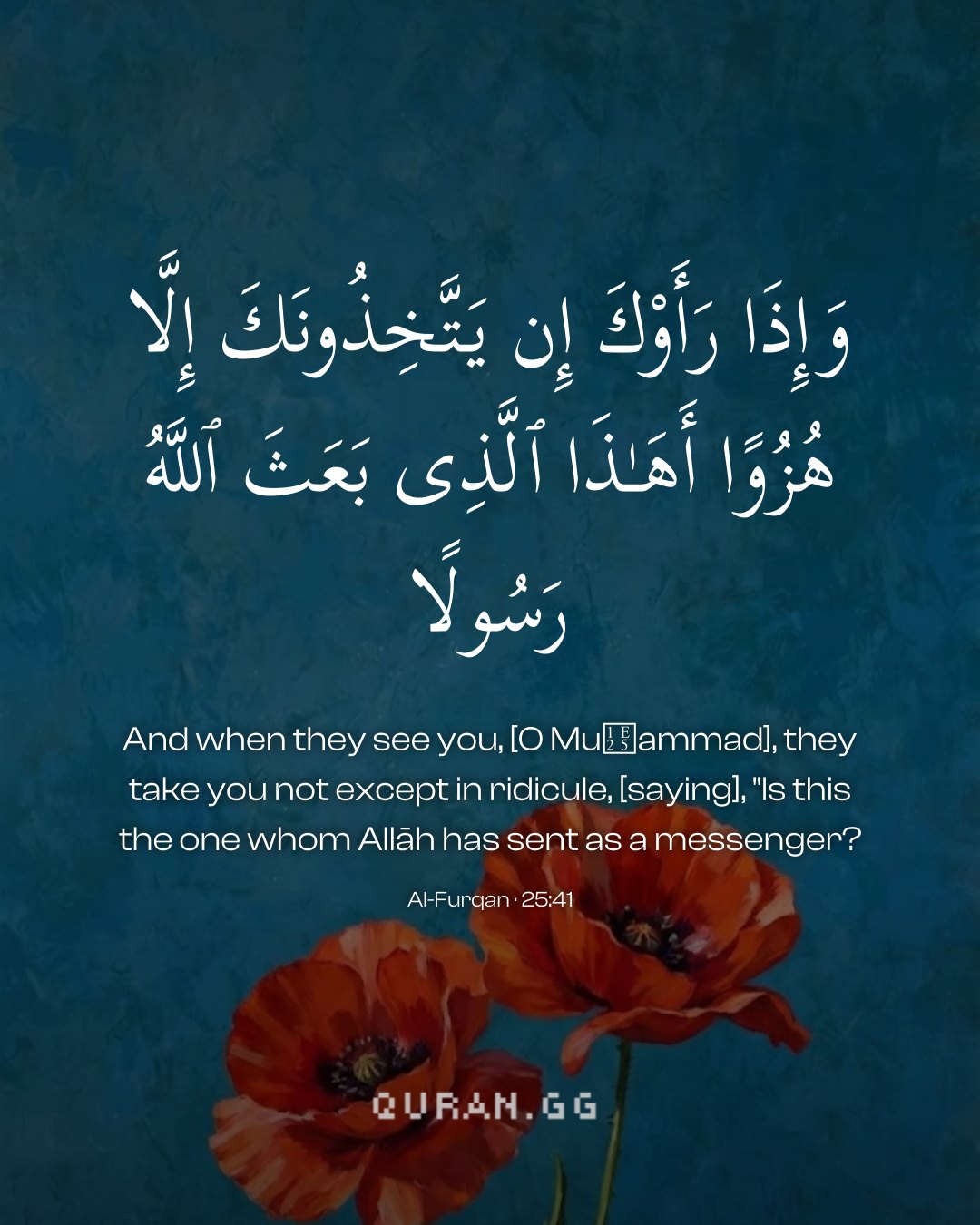
وَإِذَا رَأَوْكَ إِن يَتَّخِذُونَكَ إِلَّا هُزُوًا أَهَـٰذَا ٱلَّذِى بَعَثَ ٱللَّهُ رَسُولًا ٤١

And when they see you, [O Muḥammad], they take you not except in ridicule, [saying], "Is this the one whom Allāh has sent as a messenger?

Surah Al-Furqan 25:41 in Arabic with its translation: “And when they see you, [O Muḥammad], they take you not except in ridicule, [saying], "Is this the one whom…”

Make something with this ayah

Turn it into a video for Stories, Reels or TikTok, recited by the reciter you pick, or an image on a background you choose. Free, in your browser.

Download this image

Tafsir Ibn Kathir (abridged)

How the Disbelievers mocked the Messenger

Allah tells us how the disbelievers mocked the Messenger when they saw him. This is like the Ayah,

وَإِذَا رَآكَ الَّذِينَ كَفَرُواْ إِن يَتَّخِذُونَكَ إِلاَّ هُزُواً

(And when the disbelievers see you, they take you not except for mockery) (21:36), which means that they tried to find faults and shortcomings in him. Here Allah says:

وَإِذَا رَأَوْكَ إِن يَتَّخِذُونَكَ إِلاَّ هُزُواً أَهَـذَا الَّذِى بَعَثَ اللَّهُ رَسُولاً

(And when they see you, they treat you only in mockery (saying): "Is this the one whom Allah has sent as a Messenger") i.e., they said this by way of belittling and trying to undermine him, so Allah put them in their place, and said:

وَلَقَدِ اسْتُهْزِىءَ بِرُسُلٍ مِّن قَبْلِكَ

(And indeed Messengers before you were mocked at) (6:10)

إِن كَادَ لَيُضِلُّنَا عَنْ ءَالِهَتِنَا

(He would have nearly misled us from our gods,) They meant: `he nearly turned us away from worshipping idols, and he would have done so, had we not been patient and persevered in our ways.' So Allah said, warning and threatening them:

وَسَوْفَ يَعْلَمُونَ حِينَ يَرَوْنَ الْعَذَابَ

(And they will know, when they see the torment...)

They took Their Desires as their gods and were more astray than Cattle

Then Allah tells His Prophet that if Allah decrees that someone will be misguided and wretched, then no one can guide him except Allah, glory be to Him:

أَرَءَيْتَ مَنِ اتَّخَذَ إِلَـهَهُ هَوَاهُ

(Have you seen him who has taken as his god his own vain desire) meaning, whatever he admires and sees as good in his own desires becomes his religion and his way. As Allah says:

أَفَمَن زُيِّنَ لَهُ سُوءَ عَمَلِهِ فَرَءَاهُ حَسَناً فَإِنَّ اللَّهَ يُضِلُّ مَن يَشَآءُ

(Is he then, to whom the evil of his deeds is made fair seeming. So that he consider it as good. Verily, Allah sends astray whom he wills.) 35:8

أَفَأَنتَ تَكُونُ عَلَيْهِ وَكِيلاً

(Would you then be a guardian over him) Ibn `Abbas said: "During the Jahiliyyah, a man would worship a white rock for a while, then if he saw another that looked better, he would worship that and leave the first." Then Allah said:

أَمْ تَحْسَبُ أَنَّ أَكْثَرَهُمْ يَسْمَعُونَ أَوْ يَعْقِلُونَ

(Or do you think that most of them hear or understand) meaning, they are worse than grazing cattle. Cattle only do what they were created to do, but these people were created to worship Allah Alone without associating partners with Him, but they worship others with Him, even though evidence has been established against them and Messengers have been sent to them.

Ma'arif al-Qur'an

Commentary

In the above verses it is mentioned that it had been the common practice of the people through the ages to rebuff the prophets and the message they had brought. In order to give weight to this assertion a few of the well known prophets are mentioned who were rejected by their people and then they were subjected to Allah's wrath and were annihilated completely. By drawing a parallel with the past generations it is elucidated that the pagans of Makkah would not listen to any reason as they were no better than the animals or even worse than that.

It is stated about the people of Sayyidna Nuh (علیہ السلام) that they had rejected the prophets, although they had neither seen the past prophets nor had they rejected them. at is actually meant here is that while denying Sayyidna Nuh (علیہ السلام) they had by implication rejected all the prophets, because the principals of religion expounded by all prophets are essentially the same. Hence rejection of one prophet is tantamount to rejection of all.

أَصْحَابَ الرَّ‌سِّ (People of Rass - 25:38). In Arabic رَس (Rass) means unlined well. Neither Qur'an nor any authentic tradition describes these people in any detail. Whatever information is available about them is through Israelite traditions, which differ from one another. It is more likely that the remaining people of Thamud had settled down near a well. It is not mentioned in the Qur'an or any tradition as to how they were tormented. (Bayan u1-Qur'an)

Tazkirul Quran

The names of many of the prophets to whom the Quran refers again and again do not find a place in the recorded history of humanity. This shows that the scholars who were their contemporaries did not attach any importance to them. They wrote zealously about kings and military heroes, because there was political colour in their lives, but they ignored the prophets, because there was nothing in their lives to feed their political tastes. Surprisingly, this attitude is prevalent even today. Those who attain prominence on the political platform, immediately find a place in the media. Those who work in non-political fields are not considered either mentionable or memorable. The most important thing required of a man is that he should learn lessons from events, but this is exactly what he fails to do. This is as true now as it was in the past.

Uthmani text of the Madinah mushaf (King Fahd Complex). Translation: Saheeh International. Tafsir via Quran.com.