Ordering Faith and encouraging spending
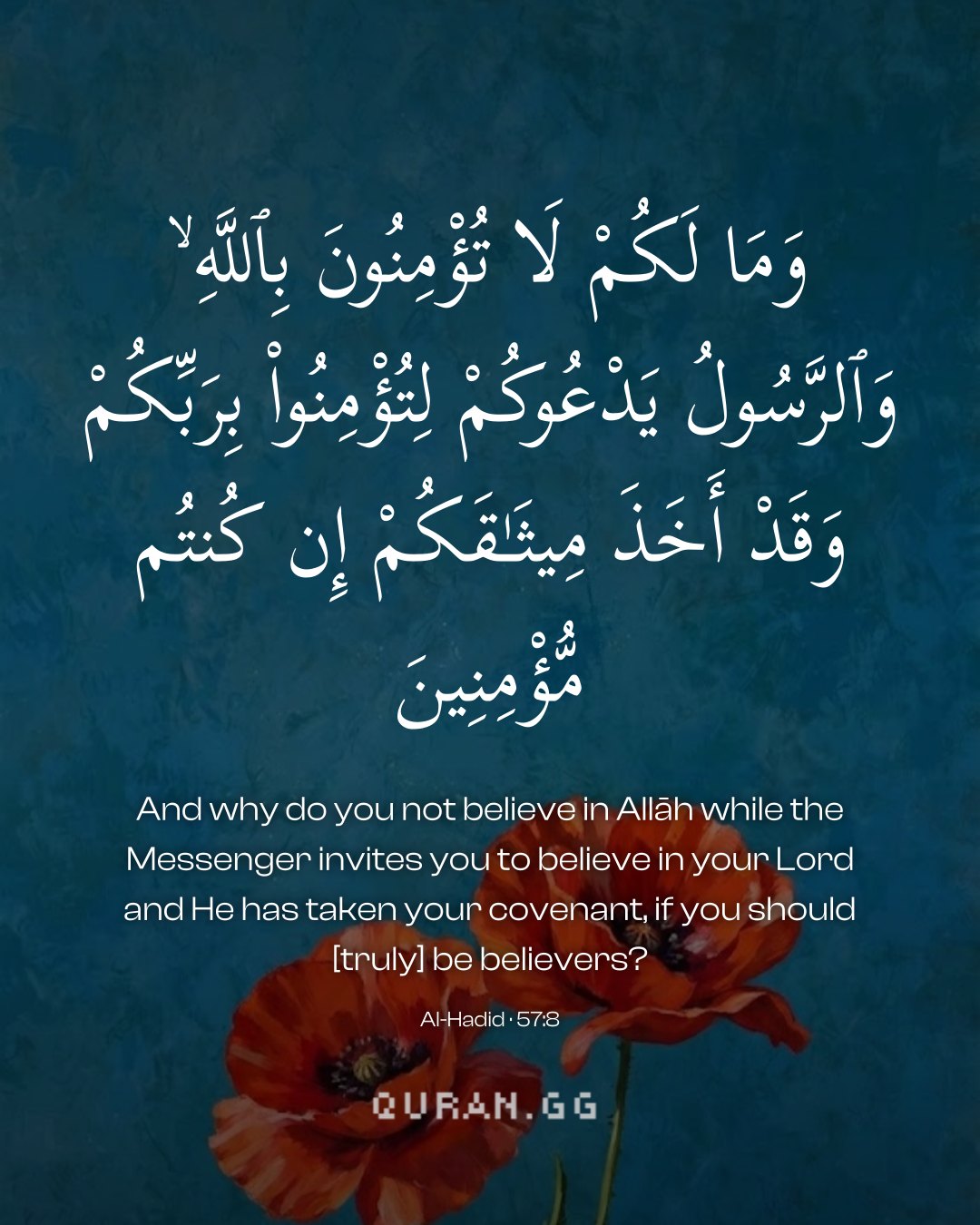
Allah the Exalted and Blessed orders having perfect faith in Him and in His Messenger, and that one should persist on this path adhereing firmly to it. Allah encourages spending from what He has made mankind trustees of, the wealth that you - mankind - have, that He has lent you. This wealth was in the hands of those before you and was later transferred to you. Therefore, O mankind, spend as Allah commanded you from the wealth that He entrusted to you for His obedience. Otherwise, He will hold you accountable and punish you for your ignoring what He ordained on you in this regard. Allah's statement,
Continue reading the tafsir of ayahs 7–11 Ordering Faith
وَقَدْ أَخَذَ مِيثَاقَكُمْ (...and He has taken your covenant ....57:8) This could refer to the covenant taken in ` anal' (pre-eternity). According to verses 172-174 of Surah Al-A'raf, Allah gathered all the souls even before they took the form of their existence, and took the covenant of 'alast' [ the pre-eternal covenant ]. He asked them: اَلَستُ بِرَبِّکُم ("Am I not your Lord?" ) They replied: بَلیٰ (Of course You are, we affirm). Another possibility is that this covenant could refer to the pledge taken from the previous prophets and their followers to believe in the final Prophet Muhammad ﷺ and support him. This covenant is mentioned by the Holy Qur'an in the following words:
ثُمَّ جَاءَكُمْ رَسُولٌ مُّصَدِّقٌ لِّمَا مَعَكُمْ لَتُؤْمِنُنَّ بِهِ وَلَتَنصُرُنَّهُ ۚ قَالَ أَأَقْرَرْتُمْ وَأَخَذْتُمْ عَلَىٰ ذَٰلِكُمْ إِصْرِي ۖ قَالُوا أَقْرَرْنَا ۚ قَالَ فَاشْهَدُوا وَأَنَا مَعَكُم مِّنَ الشَّاهِدِينَ
"...then comes to you a messenger verifying what is with you; you shall have to believe in him and you shall have to support him. He said: 'Do you affirm and accept my covenant in this respect?' They said: 'We affirm.' He said: 'Then, bear witness, and I am with you among the witnesses." (3:81)
إِن كُنتُم مُّؤْمِنِينَ (...if you are believers - 57:8). A question may arise here: In the earlier part of this very verse [ 8], the infidels and idolaters were reprimanded in the following words, "And what is wrong with you that you do not believe in Allah" This goes to show that the addressees of this phrase are 'non-believers', then how is it appropriate to say 'if you are believers'?
The answer to this question is that the unbelievers did not deny the existence of the Creator. In point of fact, they claimed to believe in God, and thus they used to say مَا نَعْبُدُهُمْ إِلَّا لِيُقَرِّبُونَا إِلَى اللَّـهِ زُلْفَىٰ (We only worship them [ the idols ] that they may bring us nearer to Allah in position....39:3) In this context, the concluding phrase of verse [ 8] implies that 'If your claim [ that you believe in God ] is true, then go about the perfect and right way in "believing in God" which is not only to believe in God but also to believe in His Messenger ﷺ .
The universe, in its silent language, sings the praises of and describes the attributes of its Creator. In the Quran, those same attributes have been put into words. When a thing comes into being here, it has manifestly been brought into existence by the Supreme Being. Its end itself announces its termination by the Supreme Being. The fact is the universe is the vehicle of God’s praises, while the Quran is their verbal recitation.
Uthmani text of the Madinah mushaf (King Fahd Complex). Translation: Saheeh International. Tafsir via Quran.com.