Tafsir Ibn Kathir (abridged)
Ismail ibn Kathir
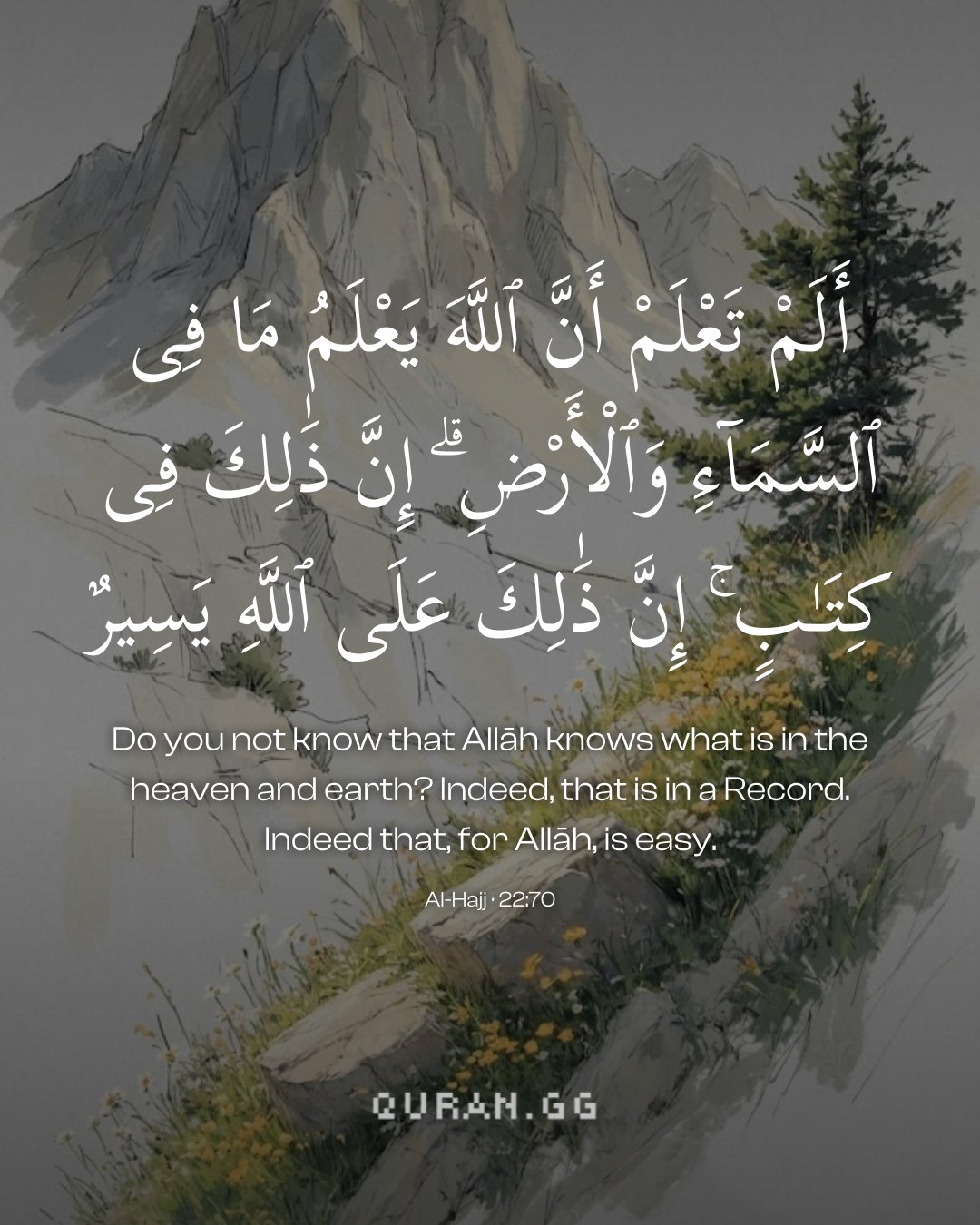
Allah tells us how perfect is His knowledge of His creation, and that He encompasses all that is in the heavens and on earth
Not even the weight of a speck of dust, or less than that or greater escapes His knowledge in the heavens or in the earth. He knows all things even before they happen, and He has written that in His Book, Al-Lawh Al-Mahfuz, as was reported in Sahih Muslim from `Abdullah bin `Amr, who said, "The Messenger of Allah ﷺ said:
«إِنَّ اللهَ قَدَّرَ مَقَادِيرَ الْخَلَائِقِ قَبْلَ خَلْقِ السَّموَاتِ وَالْأَرْضِ بِخَمْسِينَ أَلْفَ سَنَةٍ، وَكَانَ عَرْشُهُ عَلَى الْمَاء»
(Allah issued His decrees concerning the measurement and due proportion of the creatures fifty thousand years before He created the heavens and the earth, and His Throne was over the water.) In the Sunan, it was reported from a group of the Companions that the Messenger of Allah ﷺ said:
«أَوَّلُ مَا خَلَقَ اللهُ الْقَلَمُ، قَالَ لَهُ: اكْتُبْ، قَالَ: وَ مَا أَكْتُبُ؟ قَالَ: اكْتُبْ مَا هُوَ كَائِنٌ، فَجَرَى الْقَلَمُ بِمَا هُوَ كَائِنٌ إِلَى يَوْمِ الْقِيَامَة»
(The first thing that Allah created was the Pen. He said to it, "Write!" It said, "What should I write" He said, "Write what will happen," so the Pen wrote everything that will happen until the Day of Resurrection.) Allah says:
إِنَّ ذلِكَ فِى كِتَـبٍ إِنَّ ذلِكَ عَلَى اللَّهِ يَسِيرٌ
(Verily, it is (all) in the Book. Verily, that is easy for Allah.)
Commentary
لِّكُلِّ أُمَّةٍ جَعَلْنَا مَنسَكًا (For every ummah (religious community) We have appointed a way of worship - 22:67). This sentence has come earlier in almost identical words in verse number 34 of this Surah, but the word مَنسَكً (mansak) conveys a different meaning in each verse. In the earlier verse the words مَنسَكً and نسَكً have been used in the context of the rites of Hajj and mean sacrifice of animals, while in the present verse the word مَنسَكً has been used in the sense of the rules of slaughter or general rules of worship. That is why, unlike the verse 34, the present verse does not have the conjunctive letter ' وَ ' (i.e. 'and' ) in the beginning.
Continue reading the tafsir of ayahs 67–72 There are two aspects of prayer—one is its spirit, i.e. its true inner aspect, and the other its outward ritual aspect. Inner reality is the true essence of prayer, and the outward form is extraneous. But when a group follows the outward form for a long period, it forgets the aforesaid difference. It gradually comes to consider carrying out only the outward formalities, as if they were the real prayer. This means that the group has reached the stage of mental stagnation. Hence, it has been the way of God Almighty that when He sends a new prophet, He makes some changes in his shariah (i.e. outward ritual forms). His purpose is to shake the people out of their inertia, to break their addiction to outward formalities and to make them active and live worshippers in spirit. Now, those who think that outward formality and ritual in prayer are everything, refuse to obey the prophet. On the contrary, those who know the true spirit underlying prayer start to follow the prophet’s instructions. This change infuses a new spirit into their prayers. It removes them from inert and frozen faith and takes them towards active and live faith. This is the wisdom which accounts for the rites of prayer or worship having differed from one prophet to the next. When a prophet introduced new rites, those who were sunk in inertia would raise serious objections to them. But the prophets were instructed not to allow these matters to become the subject of serious discussions and to devote their full attention to the real and basic teachings.
Uthmani text of the Madinah mushaf (King Fahd Complex). Translation: Saheeh International. Tafsir via Quran.com.