Tafsir Ibn Kathir (abridged)
The Accusation that the Prophet was a Madman and Demands for Him to bring down Angels
Allah tells us about the disbelief, arrogance and stubbornness of the disbelievers as reflected in their words:
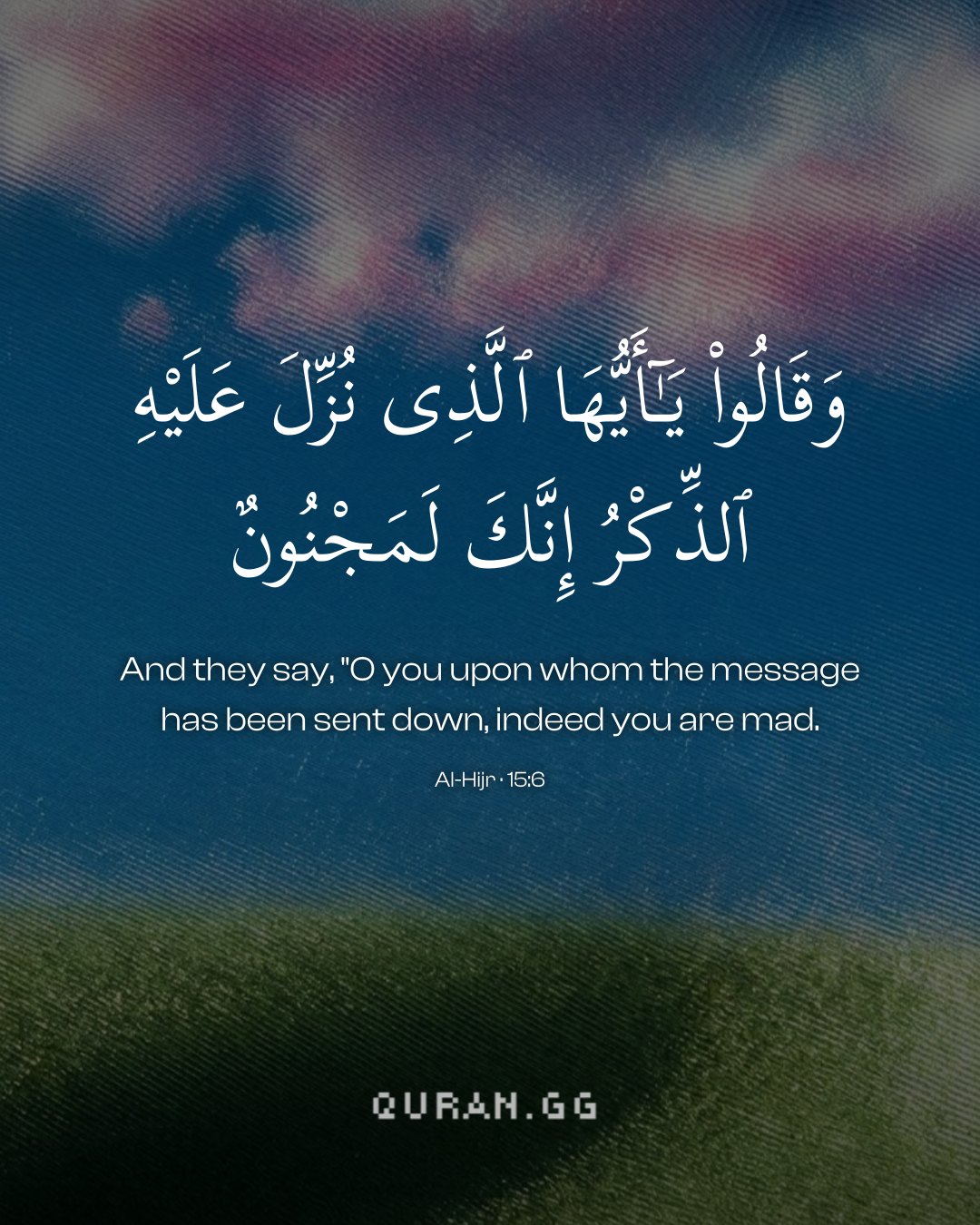
يأَيُّهَا الَّذِى نُزِّلَ عَلَيْهِ الذِّكْرُ
(O you (Muhammad) to whom the Dhikr (the Qur'an) has been revealed!) i.e., the one who claims to receive it.
إِنَّكَ لَمَجْنُونٌ
(Verily, you are a mad man!) i.e., by your invitation to us to follow you and leave the way of our forefathers.
لَّوْ مَا تَأْتِينَا بِالْمَلَـئِكَةِ
(Why do you not bring angels to us) i.e., to bear witness to the accuracy of what you have brought to us is true, if you are really telling the truth This is similar to what Pharaoh said:
فَلَوْلاَ أُلْقِىَ عَلَيْهِ أَسْوِرَةٌ مِّن ذَهَبٍ أَوْ جَآءَ مَعَهُ الْمَلَـئِكَةُ مُقْتَرِنِينَ
(Why then are not golden bracelets bestowed on him, or angels sent along with him)(43:53). And Allah said:
وَقَالَ الَّذِينَ لاَ يَرْجُونَ لِقَآءَنَا لَوْلاَ أُنزِلَ عَلَيْنَا الْمَلَـئِكَةُ أَوْ نَرَى رَبَّنَا لَقَدِ اسْتَكْبَرُواْ فِى أَنفُسِهِمْ وَعَتَوْا عُتُوّاً كَبِيراً - يَوْمَ يَرَوْنَ الْمَلَـئِكَةَ لاَ بُشْرَى يَوْمَئِذٍ لِّلْمُجْرِمِينَ وَيَقُولُونَ حِجْراً مَّحْجُوراً
(And those who do not expect a meeting with Us (i. e., those who deny the Day of Resurrection and the life of the Hereafter), say: "Why are not the angels sent down to us, or why do we not see our Lord" Indeed they think too highly of themselves, and are scornful with great pride. On the Day that they do see the angels - there will be no good news given on that day to the guilty. And they (angels) will say: "All kinds of glad tidings are forbidden for you.") (25:21-22) For this reason Allah said:
مَا نُنَزِّلُ الْمَلَـئِكَةَ إِلاَّ بِالحَقِّ وَمَا كَانُواْ إِذًا مُّنظَرِينَ
(We do not send the angels down except with the truth, and in that case, they (the disbelievers) would have no respite!) Mujahid said in this Ayah:
مَا نُنَزِّلُ الْمَلَـئِكَةَ إِلاَّ بِالحَقِّ
(We do not send the angels down except with the truth) "i.e., with the Message and the punishment." Then Allah, may He be exalted, stated that He is the One Who revealed the Dhikr to him, which is the Qur'an, and He is protecting it from being changed or altered.