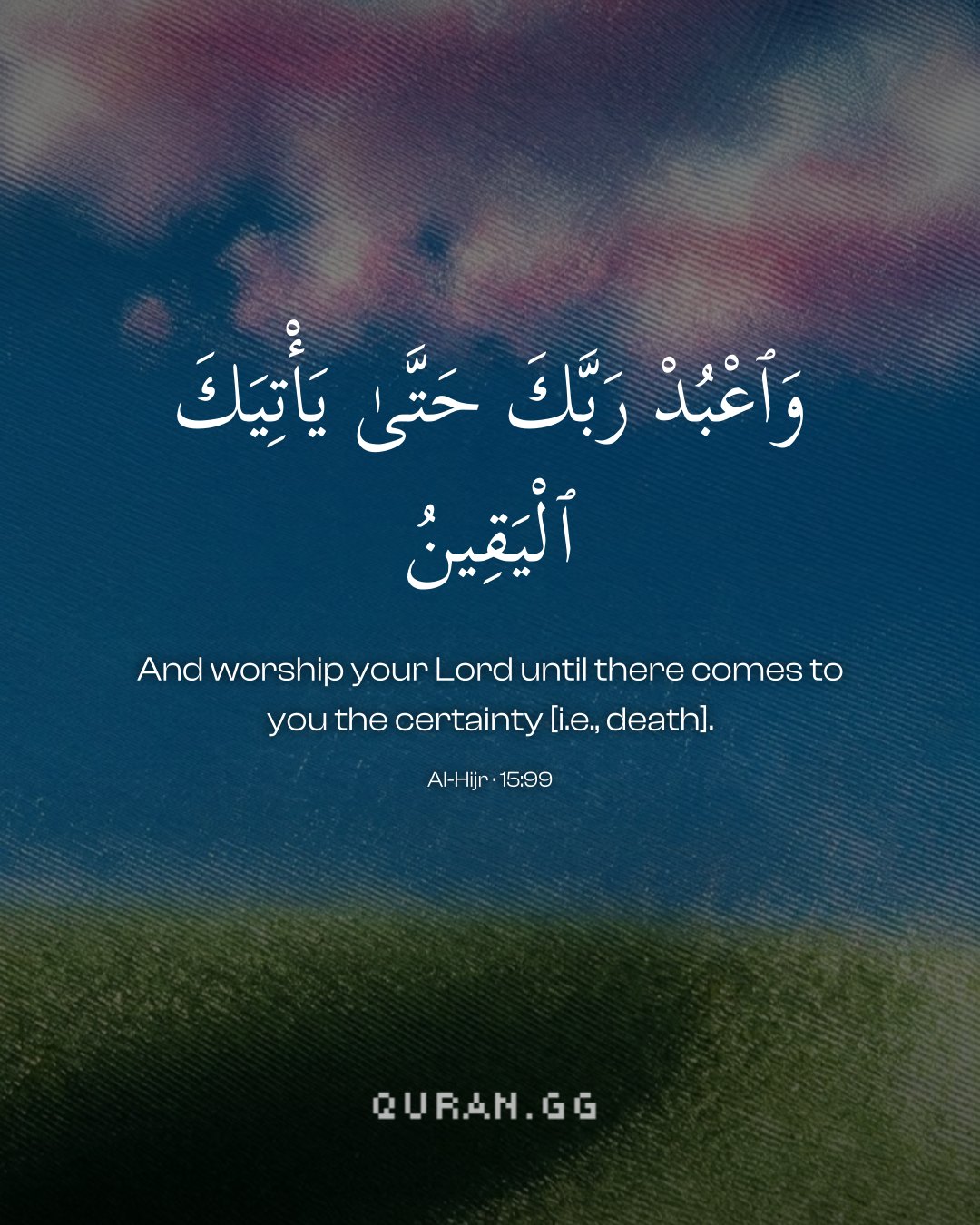
Allah commanded His Messenger to convey what He sent him with, to proclaim and spread the Message, which means confronting the idolators with it. Ibn `Abbas said that the Ayah,
فَاصْدَعْ بِمَا تُؤْمَرُ
(Therefore openly proclaim that what you have been commanded,) means, "Go ahead with it." According to another report it means, (افْعَلْ مَا تُؤْمَرُ) "Therefore proclaim that which you commanded." Mujahid said, "It is reciting the Qur'an aloud during prayer." Abu `Ubaydah reported that `Abdullah bin Mas`ud said, "The Prophet was still practicing and preaching Islam secretly until this Ayah was revealed:
From verses 97 and 98, we learn that should one face heart-rending sayings and doings of enemies the anxiety from which bothers him, then, there is a spiritual cure for that condition: Let him or her get busy with Tasbih and ` Ibadah, praising Allah Ta’ ala and praying before Him. Allah Taala will Himself remove this pain and anxiety.
Tazkirul Quran
Maulana Wahiduddin Khan
In the present world, every man has been given the liberty to say or do as he likes. So, when the preacher starts urging his hearers to bow to God, many meaningless points are raised. People bring up different types of irrelevant issues to confuse the preacher (da‘i). On such occasions, it is necessary, for the preacher to turn away without taking any notice. If, on such occasions, he starts picking quarrels with people, he will not be able in any positive way to perform the tasks relating to his divine call of Truth. There is only one positive way for the preacher of Truth to follow and that is not to become involved with the mischief makers, but to announce in full detail the Truth as revealed to him. He should entrust to God every matter for which he himself has not enough strength to tackle. When the unfavourable conditions of the world trouble him, he should divert his attention towards the Hereafter. When the heedlessness of human beings annoys him, he should occupy himself with the remembrance of God. The way of a true preacher of God’s word, when he is overcome by woeful conditions, is to devote himself body and soul to God. Whatever he cannot get from human beings, he tries to obtain from God. He derives satisfaction or consolation from standing before God in prayer (salat). The burden on his heart is lightened by the shedding of tears. By engaging himself in whispers with God, he feels that he has gained whatever he wanted to gain.
Uthmani text of the Madinah mushaf (King Fahd Complex). Translation: Saheeh International. Tafsir via Quran.com.