The Reason for the Revelation of this Surah and its Virtues
Imam Ahmad recorded from Ubayy bin Ka`b that the idolators said to the Prophet , "O Muhammad! Tell us the lineage of your Lord." So Allah revealed
بِسْمِ اللَّهِ الرَّحْمَـنِ الرَّحِيمِ
In the name of Allah, the Beneficent, the Merciful
Similar was recorded by At-Tirmidhi and Ibn Jarir and they added in their narration that he said,
الصَّمَدُ
(As-Samad) is One Who does not give birth, nor was He born, because there is nothing that is born except that it will die, and there is nothing that dies except that it leaves behind inheritance, and indeed Allah does not die and He does not leave behind any inheritance.
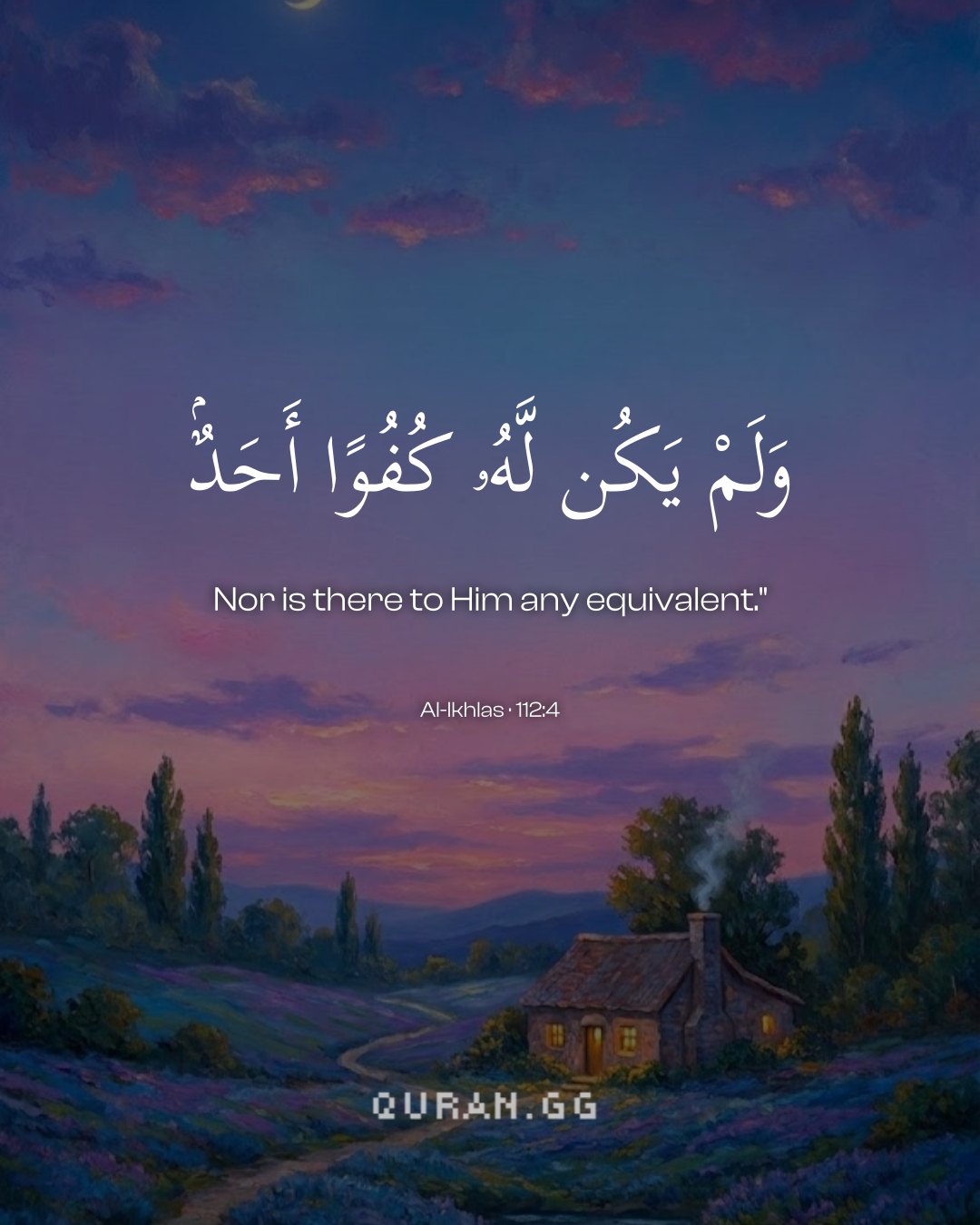
Verse [ 4] وَلَمْ يَكُن لَّهُ كُفُوًا أَحَدٌ (And equal to Him has never been any one.) The word kufuwan, as used in the original, means an 'example', a 'similar thing', 'one equal in rank and position'. Thus this verse means that there is no one in the entire universe, nor ever was, nor ever can be, who is similar to Allah, or equal in rank with Him, or resembling Him in His attributes, works and powers in any degree whatsoever.
Surah Al-Ikhlas: A Comprehensive Concept of Allah's Oneness and a complete Negation of Shirk
There were many types of people who denied the Divine Oneness, and set up partners or rivals to Allah. Surah Al-Ikhlas negates all types of such wrong belief systems, and imparts a comprehensive lesson of Divine Oneness. Among the unbelievers, several types may be identified. There is a group that denies the very existence of God [ the atheists ]. Another group believes in the existence of God, but denies that His existence is 'Necessary'. A third group believes in God's existence and in His existence as 'Necessary' but denies His attributes of perfection. A fourth group believes in God's Necessary Existence and in His attributes of perfection, but denies Oneness of God and believes in and worship more than one gods and goddesses, and thus practices polytheism. Verse [ 1] refutes vehemently all such false belief systems. Verse [ 2] refers to the practices of those who do worship Allah alone, but believe that there are also other helpers who can fulfill their needs, desires and ambitions. The Divine attribute As-samad denounces outright any such notion. A fifth group ascribes children to Allah and the phrase lam yalid [ He neither begot anyone ] repudiates this notion of theirs in the strongest terms. Allah, the Pure and Exalted, knows best!
Al-Hamdulillah
The Commentary on
Surah Al-Ikhlas
Ends here
Tazkirul Quran
Maulana Wahiduddin Khan
The subject of the chapter is monotheism, or the oneness of God. The concept of God has been presented here in its purest form, ridding it of all polluting associations which people of every age have brought to it. There is no plurality of gods. There is only one God. All are dependent upon Him, but He is not dependent on anybody. He Himself has power over everything. He is far above being the progeny of anybody or having any offspring. He is such a unique Being that there is nobody like Him or equal to Him in any manner whatsoever. This is an early Makkan chapter. The doctrine of God’s pure unity, or the Divine oneness, is clearly stated here: God is not many, He is only one. Everyone is in need of Him, but He is not in need of anyone. He reigns over all things of the heavens and the earth. Unlike human beings, He has no son or father. He is eternal, without beginning or end, and is thus a Unique Being who has no equal. This chapter has been called the essence of the Quran. The Prophet Muhammad once described this chapter as ‘equivalent to one-third of the whole of the Quran.’ (Bukhari, Muslim)
Uthmani text of the Madinah mushaf (King Fahd Complex). Translation: Saheeh International. Tafsir via Quran.com.