Which was revealed in Makkah
The Virtues of Surat Al-Infitar
An-Nasa'i recorded from Jabir that Mu`adh stood and lead the people in the Night prayer, and he made the recitation of his prayer long. So the Prophet said,
«أَفَتَّانٌ أَنْتَ يَا مُعَاذُ؟ أَيْنَ كُنْتَ عَنْ
سَبِّحِ اسْمَ رَبِّكَ الاّعْلَى
وَالضُّحَى
وَ
إِذَا السَّمَآءُ انفَطَرَتْ »
(Are you putting the people to trial O Mu`adh Why don't you recite (Glorify the Name of your Lord the Most High) (87), (By the forenoon) (93), and (When the heaven is cleft asunder) (82))" The basis of this Hadith is found in the Two Sahihs, however the mentioning of
إِذَا السَّمَآءُ انفَطَرَتْ
(When the heaven is cleft asunder.) has only been mentioned by An-Nasa'i. It has been previously mentioned in a narration from `Abdullah bin `Umar that the Prophet said,
Continue reading the tafsir of ayahs 1–12Ma'arif al-Qur'an
Mufti Muhammad Shafi
Commentary
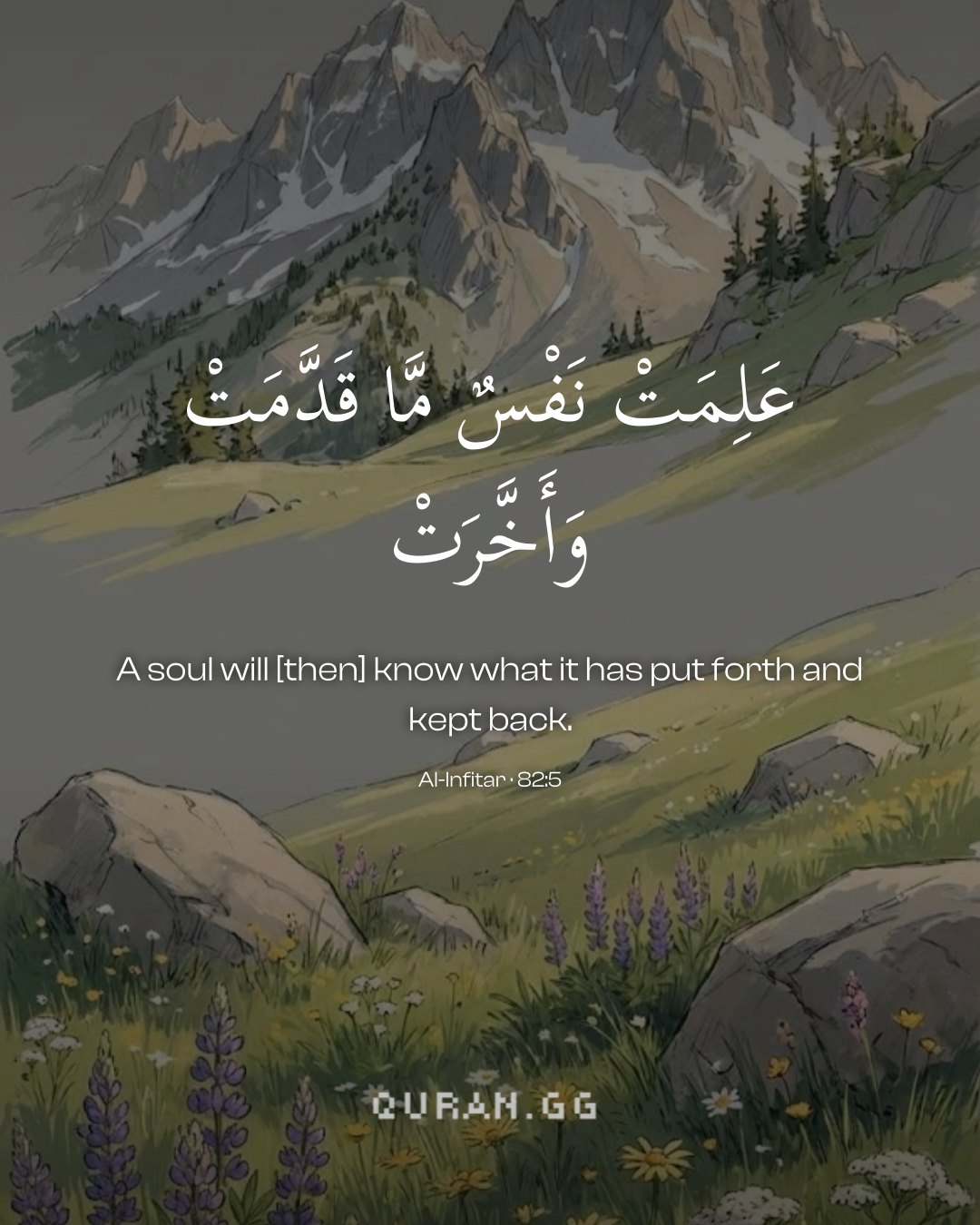
عَلِمَتْ نَفْسٌ مَّا قَدَّمَتْ وَأَخَّرَتْ (...then one will know what he sent ahead and what he left behind....82:5) In the preceding verses [ 1-4] of the Surah, Allah depicts the scene of the Day of Judgment that when the sky splits, the stars fall, the seas are poured forth [ i.e. the fresh and salt water bodies will merge to form one mass of water ] and the graves are overturned [ i.e. corpses will emerge from their graves ], every soul shall come to know what it had sent ahead and what it had left behind. The phrase 'what he sent ahead' means the good or evil act which he has done in his life; and the phrase 'what he left behind' means what he failed to do or refrained from doing. It is also possible that 'what he sent ahead' refers to the acts he has done himself, and 'what he left behind' refers to the acts one has not done himself, but he has laid down a custom in the society. The Holy Prophet ﷺ is reported to have said: "If anyone establishes a good tradition in Islam, he will have a reward for it and the equivalent of the rewards of those who act upon it after him, without theirs being diminished in any respect; but he who establishes a bad custom in Islam will bear the responsibility of it and the responsibility of those who act upon it after him, without theirs being diminished in any respect." This subject was dealt with earlier under the following verse: يُنَبَّأُ الْإِنسَانُ يَوْمَئِذٍ بِمَا قَدَّمَ وَأَخَّرَ 'Man will be informed of what he sent ahead and what he left behind. [ 75:13] '
Uthmani text of the Madinah mushaf (King Fahd Complex). Translation: Saheeh International. Tafsir via Quran.com.