(And come not near to the orphan's property except to improve it, until he attains the age of full strength.) meaning, do not dispose of the orphan's wealth except in a proper manner.
(but consume it the orphan's property not wastefully and hastily fearing that they should grow up, and whoever (among guardians) is rich, he should take no wages, but if he is poor, let him have for himself what is just and reasonable (according to his labor).) 4:6 In Sahih Muslim it is recorded that the Messenger of Allah ﷺ said to Abu Dharr:
The prohibition of giving weights and measures short: Ruling
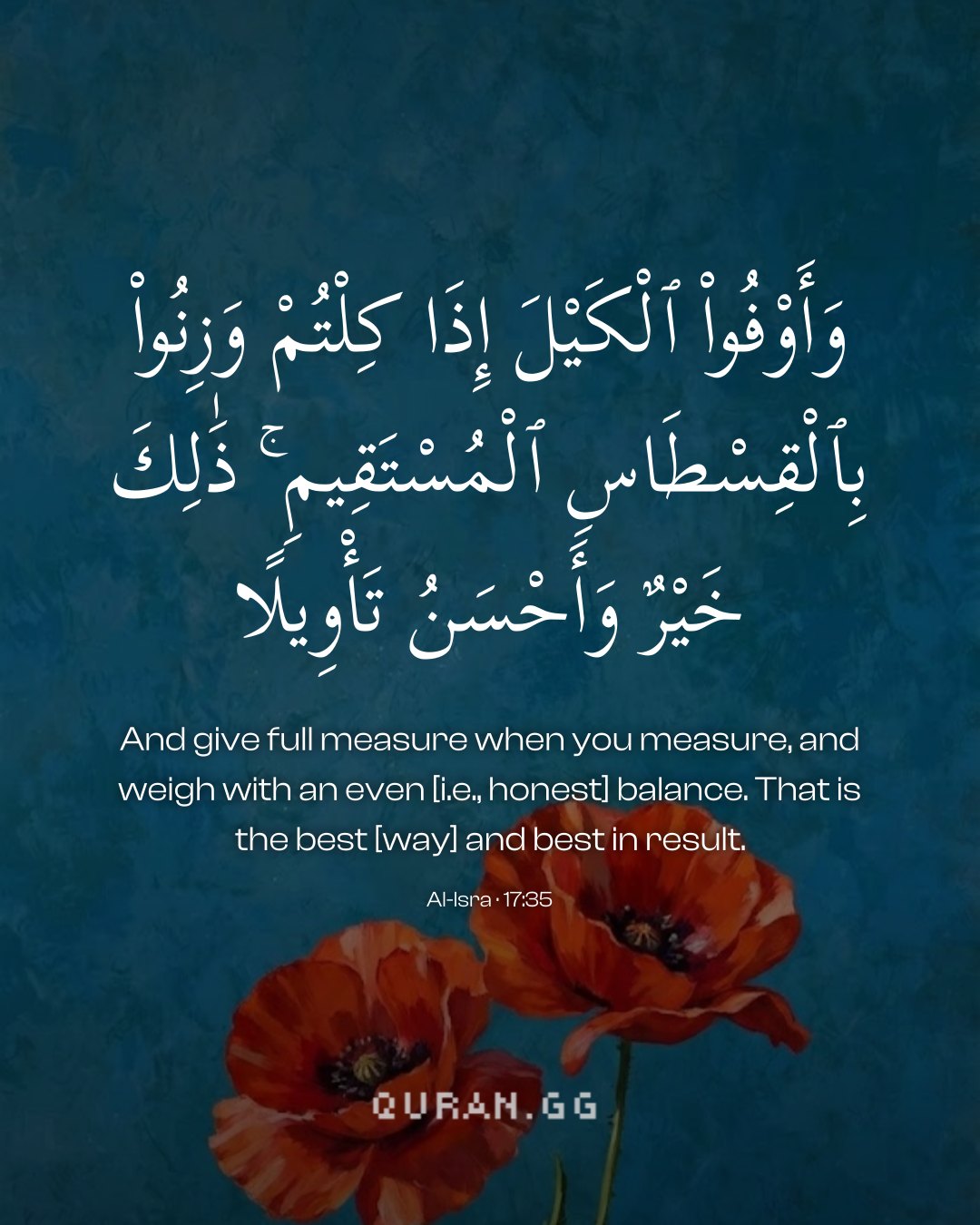
Regarding the verse: أَوْفُوا الْكَيْلَ إِذَا كِلْتُمْ (And give full measure when you measure - 35), Abu Hayyan says in Tafsir al-Bahr al-Muhit that the responsibility of giving full weight and measure in this verse has been placed on the seller (بَأِع : ba'i`) which tells us that it is the seller who is responsible for weighing, measuring and seeing that it is full as due.
At the end of verse 35, it was said about the fulfillment of weight and measure: ذَٰلِكَ خَيْرٌ وَأَحْسَنُ تَأْوِيلًا (That is good, and better in the end). As for making the weight and measure correct and even, two things have been said here: (1) Firstly, the rule is good. It means that it is intrinsically good. No normal and decent person is going to take weighing less and measuring short as something nice, neither religiously, nor rationally, nor naturally. (2) Secondly, it is better in the end. The end includes the consequent success of the Hereafter, reward of deeds and the blessing of Paradise as well as the happy outcome of the very life in this world. This is suggestive of the fact that no business can prosper until its goodwill stands recognized in the market - and that cannot happen without this commercial honesty.
Tazkirul Quran
Maulana Wahiduddin KhanOn ayahs 35–37
Every kind of business in the world is based on weights and measures. Therefore, it has been ordained that weights and measures should be accurate. There are two aspects to this. First, it is in accordance with human dignity, for the giving of short weight is a debasement of character. The second great merit is that it gives a stimulus to business, as total trust is the foundation of commercial progress. Proper weight and measurement are a sine qua non for the establishment of good business relations in any given society.
Uthmani text of the Madinah mushaf (King Fahd Complex). Translation: Saheeh International. Tafsir via Quran.com.