Surah Al-Isra Ayah 83 (17:83) — Meaning & Tafsir | Quran.GG

Surah Al-Isra, Ayah 83

17:83 · Meaning and tafsir

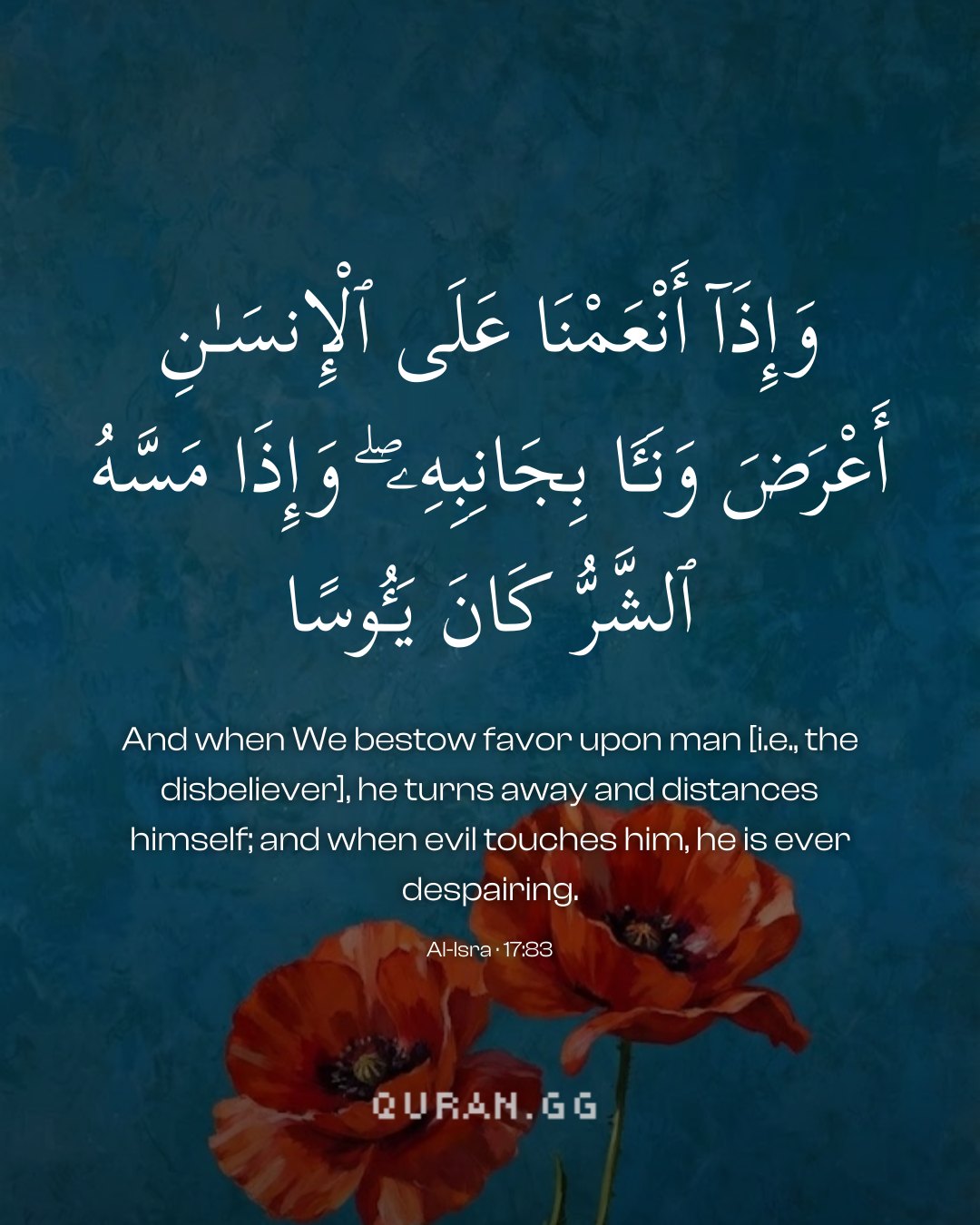
وَإِذَآ أَنْعَمْنَا عَلَى ٱلْإِنسَـٰنِ أَعْرَضَ وَنَـَٔا بِجَانِبِهِۦ ۖ وَإِذَا مَسَّهُ ٱلشَّرُّ كَانَ يَـُٔوسًا ٨٣

And when We bestow favor upon man [i.e., the disbeliever], he turns away and distances himself; and when evil touches him, he is ever despairing.

Surah Al-Isra 17:83 in Arabic with its translation: “And when We bestow favor upon man [i.e., the disbeliever], he turns away and distances himself; and when evil…”

Make something with this ayah

Turn it into a video for Stories, Reels or TikTok, recited by the reciter you pick, or an image on a background you choose. Free, in your browser.

Download this image

Tafsir Ibn Kathir (abridged)

Turning away from Allah at Times of Ease and despairing at Times of Calamity

Allah tells us about the weakness that is inherent in man, except for those whom He protects at both times of ease and calamity. If Allah blesses a man with wealth, good health, ease, provision and help, and he gets what he wants, he turns away from the obedience and worship of Allah, and becomes arrogant. Mujahid said, "(It means) he goes away from Us." I say, this is like the Ayah:

فَلَمَّا كَشَفْنَا عَنْهُ ضُرَّهُ مَرَّ كَأَن لَّمْ يَدْعُنَآ إِلَى ضُرٍّ مَّسَّهُ

(But when We have removed his harm from him, he passes on as if he had never invoked Us for a harm that touched him!) 10:12 and;

فَلَمَّا نَجَّـكُمْ إِلَى الْبَرِّ أَعْرَضْتُمْ

(But when He brings you safe to land, you turn away.) When man is stricken with evil, which means disasters, accidents and calamities,

كَانَ يَئُوساً

(he is in great despair.), meaning that he thinks he will never have anything good again. As Allah says,

وَلَئِنْ أَذَقْنَا الإِنْسَـنَ مِنَّا رَحْمَةً ثُمَّ نَزَعْنَاهَا مِنْهُ إِنَّهُ لَيَئُوسٌ كَفُورٌ - وَلَئِنْ أَذَقْنَاهُ نَعْمَآءَ بَعْدَ ضَرَّآءَ مَسَّتْهُ لَيَقُولَنَّ ذَهَبَ السَّيِّئَاتُ عَنِّي إِنَّهُ لَفَرِحٌ فَخُورٌ - إِلاَّ الَّذِينَ صَبَرُواْ وَعَمِلُواْ الصَّـلِحَاتِ أُوْلَـئِكَ لَهُمْ مَّغْفِرَةٌ وَأَجْرٌ كَبِيرٌ

(And if We give man a taste of mercy from Us, and remove it from him, verily, He is despairing, ungrateful. But if We let him taste good after evil has touched him, he is sure to say: "Ills have departed from me." Surely, he is exultant, and boastful. Except those who show patience and do righteous good deeds: those, theirs will be forgiveness and a great reward.) (11:9-11)

قُلْ كُلٌّ يَعْمَلُ عَلَى شَاكِلَتِهِ

(Say: "Each one does according to Shakilatihi...") Ibn `Abbas said, "According to his inclinations." Mujahid said, "According to his inclinations and his nature." Qatadah said, "According to his intentions." Ibn Zayd said, "According to his religion." All these suggestions are close in meaning. This Ayah - and Allah knows best - is a threat and a warning to the idolators, like the Ayah:

وَقُل لِّلَّذِينَ لاَ يُؤْمِنُونَ اعْمَلُواْ عَلَى مَكَانَتِكُمْ

(And say to those who do not believe: "Act according to your ability and way") (11:121) So Allah says:

قُلْ كُلٌّ يَعْمَلُ عَلَى شَاكِلَتِهِ فَرَبُّكُمْ أَعْلَمُ بِمَنْ هُوَ أَهْدَى سَبِيلاً

(Say: "Each one does according to Shakilatihi, and your Lord knows best of him whose path is right.") meaning either us or you. Everyone will be rewarded in accordance with his deeds, for nothing whatsoever is hidden from Allah.

Ma'arif al-Qur'an

We can now move to the last verse (82) cited above: وَنُنَزِّلُ مِنَ الْقُرْ‌آنِ مَا هُوَ شِفَاءٌ (And We reveal the Qur'an which is a cure). That the Holy Qur'an cures hearts and delivers people from shirk and kufr, low morals and spiritual ailments is no secret. The entire Muslim ummah agrees with it. And according to some ` Ulama', the way the Qur’ an is a cure for spiritual ailments, it is also a cure for physical diseases. The sense is that reciting the verses of the Qur'an and blowing the breath on the body of the sick person or to write its words on an amulet and putting it around the neck is also expected to be a cure for physical diseases. Hadith narratives bear testimony to it. The Hadith of Sayyidna Abu Said al-Khudri ؓ can be seen in all books of Ahadith. It says that a party of the noble Companions ؓ was in travel. In a village on their way, a scorpion had bitten the chief. The village people asked the Companions if they could suggest some treatment for it. They recited the Surah al-Fatihah seven times, blew their breath on him and the ailing patient stood cured. Later, when this incident was mentioned before the Holy Prophet ﷺ ، he declared this action of the Companions to be permissible.

Continue reading the tafsir of ayahs 82–83

Tazkirul Quran

The Quran is a declaration of pure truth. The communication of the pure truth amounts to adversely affecting the interests of all those who follow such ‘truth’ as has been vitiated by human interpolation. But when the pure truth is laid before those whose thinking is realistic, it is accepted by them as their absolute standard or criterion, as opposed to following their own instincts. They mould themselves to the truth instead of moulding the truth to themselves. Owing to their sincerity and realistic thinking, the Quran becomes a blessing for them. Unlike them are the arrogant ones who think that they are great, because of their particular mindset. When the truth comes to them in its pure form, their minds function in the wrong direction. They fail to understand that, if they adopted the truth, they would become right-minded persons. On the contrary, they believe that if they accepted the truth presented by someone else, they would become diminished in stature. So, in order to satisfy their egos, they are ready to belittle the truth by refusing to accept it, and attempting to show that it is not worth accepting.

Uthmani text of the Madinah mushaf (King Fahd Complex). Translation: Saheeh International. Tafsir via Quran.com.