(Not equal are the dwellers of the Fire and the dwellers of the Paradise. It is the dwellers of Paradise that will be successful.) (59:20) Allah said here,
أَمْ حَسِبَ الَّذِينَ اجْتَرَحُواْ السَّيِّئَـتِ
(Or do those who earn evil deeds think) those who commit and practice evil,
(that We shall hold them equal with those who believe and do righteous good deeds, in their life and their death) treat them equally in the present life of the world and in the Hereafter
The Hereafter: Divine Requital is Rationally Necessary
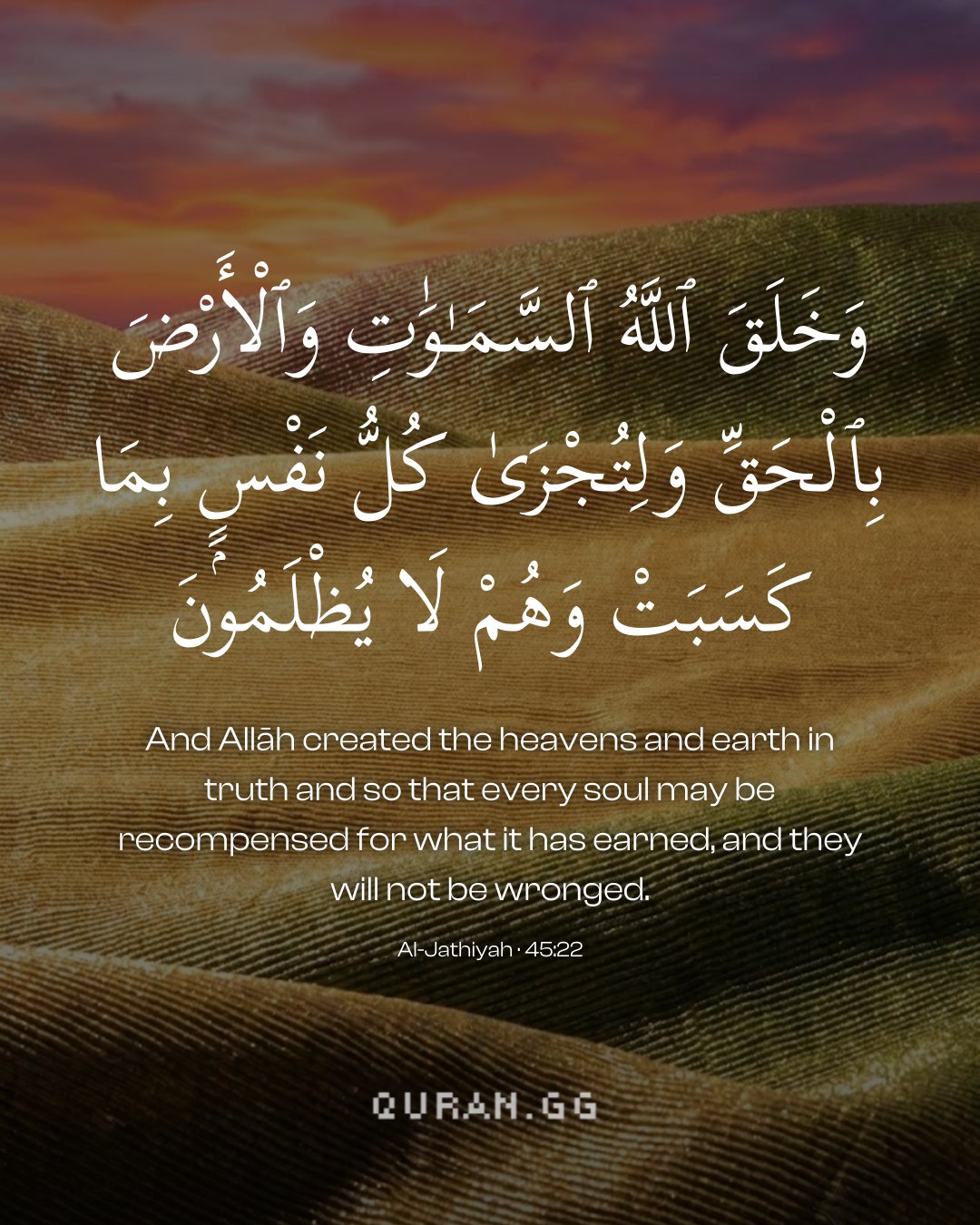
Of the two verses mentioned, the first one argues rationally that Divine reward and punishment are necessary. Every person is a witness to the fact that no one receives his full measure of reward or punishment for the good or bad deeds he does in this world. Generally, the unbelievers and evil-doers wallow in wealth and lead a life of luxury. The obedient servants of Allah, on the other hand, live in poverty, hardship and misery. In the first place, the crimes of the wicked criminals are often not detected. Even if they are detected, more often than not, they are not apprehended. If they are apprehended, they swear oaths - lawfully or unlawfully, truthfully or falsely - and try to find loopholes to escape punishment. In this way, one in a million might be punished and that too not fully. As a result, the rebels, who follow their selfish and base desires, move about in high spirits and without any hindrance, enjoying full powers in this world. The believers, on the other hand, who follow the Shari'ah strictly, do not touch many kinds of wealth and give up many pleasures because they treat them as unlawful. They only adopt the lawful ways of gaining anything in order to avoid calamities and afflictions. Thus they are deprived of many a comfort and pleasure in this world. Since this is the state of affairs where people are not rewarded or punished in this world in commensurate with their actions, it follows necessarily that there must be another world - the Hereafter and life after death - where people will be recompensed fully for their deeds. Otherwise, it would be absurd to refer to stealing, robbery, adultery, fornication, murder and so on as crimes, in this world. These people often lead a very successful life in this world. A thief or a robber acquires so much of wealth in a night that a university graduate might not be able to acquire it in years of employment and hard work. If there is no such world as the Hereafter and accountability, then the thief or the robber would be thought to be better than the respectable university graduate. No reasonable person would ever accept this position. If it be pointed out that every government in the world has legislated severe punishments for criminals, then we would respond that experience shows that only the foolish criminals get caught. The clever habitual criminals always find loopholes, and ways and means of escaping punishment. For instance, the escape-door of bribery is always open for them and that is sufficient for them.
One who thinks that it is all the same whether a man leads a virtuous life or a life of evil—since either way he ultimately has to die and perish—is nurturing an extremely erroneous idea. This way of thinking runs counter to the consciousness of justice which is found in the very nature of every man right from his birth. Moreover, this amounts to denying the meaningfulness of the universe, which is immanent in it to the ultimate degree. The fact is that man’s inherent nature and the vast universe around him both completely nullify the concept by which life is treated as being so purposeless as not to lead to any significant outcome.
Uthmani text of the Madinah mushaf (King Fahd Complex). Translation: Saheeh International. Tafsir via Quran.com.