Tafsir Ibn Kathir (abridged)
The Command to recite the Qur'an and to patiently keep Company with the Believers
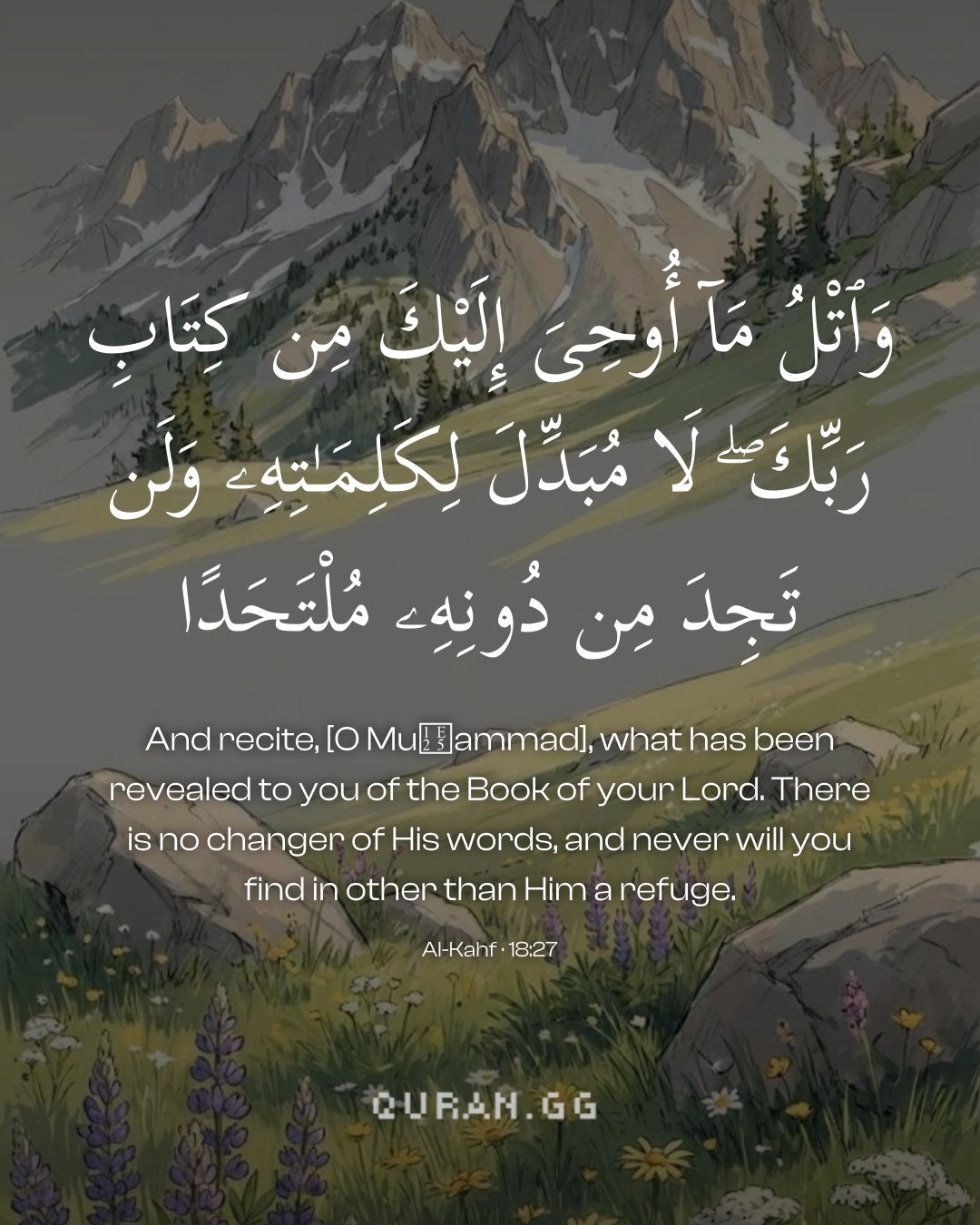
Commanding His Messenger to recite His Holy Book and convey it to mankind, Allah says,
لاَ مُبَدِّلَ لِكَلِمَـتِهِ
(None can change His Words,) meaning, no one can alter them, distort them or misinterpret them.
وَلَن تَجِدَ مِن دُونِهِ مُلْتَحَدًا
(and none will you find as a refuge other than Him.) It was reported that Mujahid said, "A shelter," and that Qatadah said, "A helper or supporter." Ibn Jarir said: "Allah is saying, `if you O Muhammad, do not recite what is revealed to you of the Book of your Lord, then you will have no refuge from Allah."' As Allah says:
يَـأَيُّهَا الرَّسُولُ بَلِّغْ مَآ أُنزِلَ إِلَيْكَ مِن رَّبِّكَ وَإِن لَّمْ تَفْعَلْ فَمَا بَلَّغْتَ رِسَالَتَهُ وَاللَّهُ يَعْصِمُكَ مِنَ النَّاسِ
(O Messenger! Proclaim (the Message) which has been sent down to you from your Lord. And if you do not, then you have not conveyed His Message. Allah will protect you from mankind.)5:67
إِنَّ الَّذِى فَرَضَ عَلَيْكَ الْقُرْءَانَ لَرَآدُّكَ إِلَى مَعَادٍ
(Verily, He Who has given you the Qur'an, will surely bring you back to the place of return.) 28:85 meaning, `He will call you to account for the duty of conveying the Message which He entrusted you with. '
وَاصْبِرْ نَفْسَكَ مَعَ الَّذِينَ يَدْعُونَ رَبَّهُم بِالْغَدَاةِ وَالْعَشِىِّ يُرِيدُونَ وَجْهَهُ
(And keep yourself patiently with those who call on their Lord morning and afternoon, seeking His Face;) meaning, sit with those who remember Allah, who say "La Ilaha Illallah", who praise Him, glorify Him, declare His greatness and call on Him, morning and evening, all the servants of Allah, whether rich or poor, strong or weak. It was said that this was revealed about the nobles of Quraysh when they asked the Prophet to sit with them on his own, and not to bring his weak Companions with him, such as Bilal, `Ammar, Suhayb, Khabbab and Ibn Mas`ud. They wanted him to sit with them on his own, but Allah forbade him from doing that, and said,
وَلاَ تَطْرُدِ الَّذِينَ يَدْعُونَ رَبَّهُمْ بِالْغَدَاةِ وَالْعَشِىِّ
(And turn not away those who invoke their Lord, morning and afternoon.) Allah commanded him to patiently content himself with sitting with those people (the weak believers), and said:
وَاصْبِرْ نَفْسَكَ مَعَ الَّذِينَ يَدْعُونَ رَبَّهُم بِالْغَدَاةِ وَالْعَشِىِّ
(And keep yourself patiently with those who call on their Lord morning and afternoon...) Imam Muslim recorded in his Sahih that Sa`d bin Abi Waqqas who said: "There was a group of six of us with the Prophet . The idolators said, `Tell these people to leave so they will not offend us.' There was myself, Ibn Mas`ud, a man from Hudayl, Bilal and two other men whose names I have forgotten. Allah's Messenger ﷺ thought to himself about whatever Allah willed he should think about, then Allah revealed:
وَلاَ تَطْرُدِ الَّذِينَ يَدْعُونَ رَبَّهُمْ بِالْغَدَاةِ وَالْعَشِىِّ يُرِيدُونَ وَجْهَهُ
(And turn not away those who invoke their Lord, morning and afternoon.) Only Muslim reported this; excluding Al-Bukhari.
وَلاَ تَعْدُ عَيْنَاكَ عَنْهُمْ تُرِيدُ زِينَةَ الْحَيَوةِ الدُّنْيَا
(and let not your eyes overlook them, desiring the pomp and glitter of the life of the world;) Ibn `Abbas said, `(this means) do not favor others over them, meaning do not seek the people of nobility and wealth instead of them.'
وَلاَ تُطِعْ مَنْ أَغْفَلْنَا قَلْبَهُ عَن ذِكْرِنَا
(and obey not him whose heart We have made heedless of Our remembrance) means, those who are distracted by this world from being committed to the religion and from worshipping their Lord.
وَكَانَ أَمْرُهُ فُرُطًا
(and whose affair (deeds) has been lost.) means, his actions and deeds are a foolish waste of time. Do not obey him or admire his way or envy what he has. As Allah says elsewhere:
وَلاَ تَمُدَّنَّ عَيْنَيْكَ إِلَى مَا مَتَّعْنَا بِهِ أَزْوَجاً مِّنْهُمْ زَهْرَةَ الْحَيَوةِ الدُّنْيَا لِنَفْتِنَهُمْ فِيهِ وَرِزْقُ رَبِّكَ خَيْرٌ وَأَبْقَى
(And strain not your eyes in longing for the things We have given for enjoyment to various groups of them, the splendor of the life of this world, that We may test them thereby. But the provision of your Lord is better and more lasting.) 20:131