Tafsir Ibn Kathir (abridged)
The Evil Results of Kufr
Allah says:
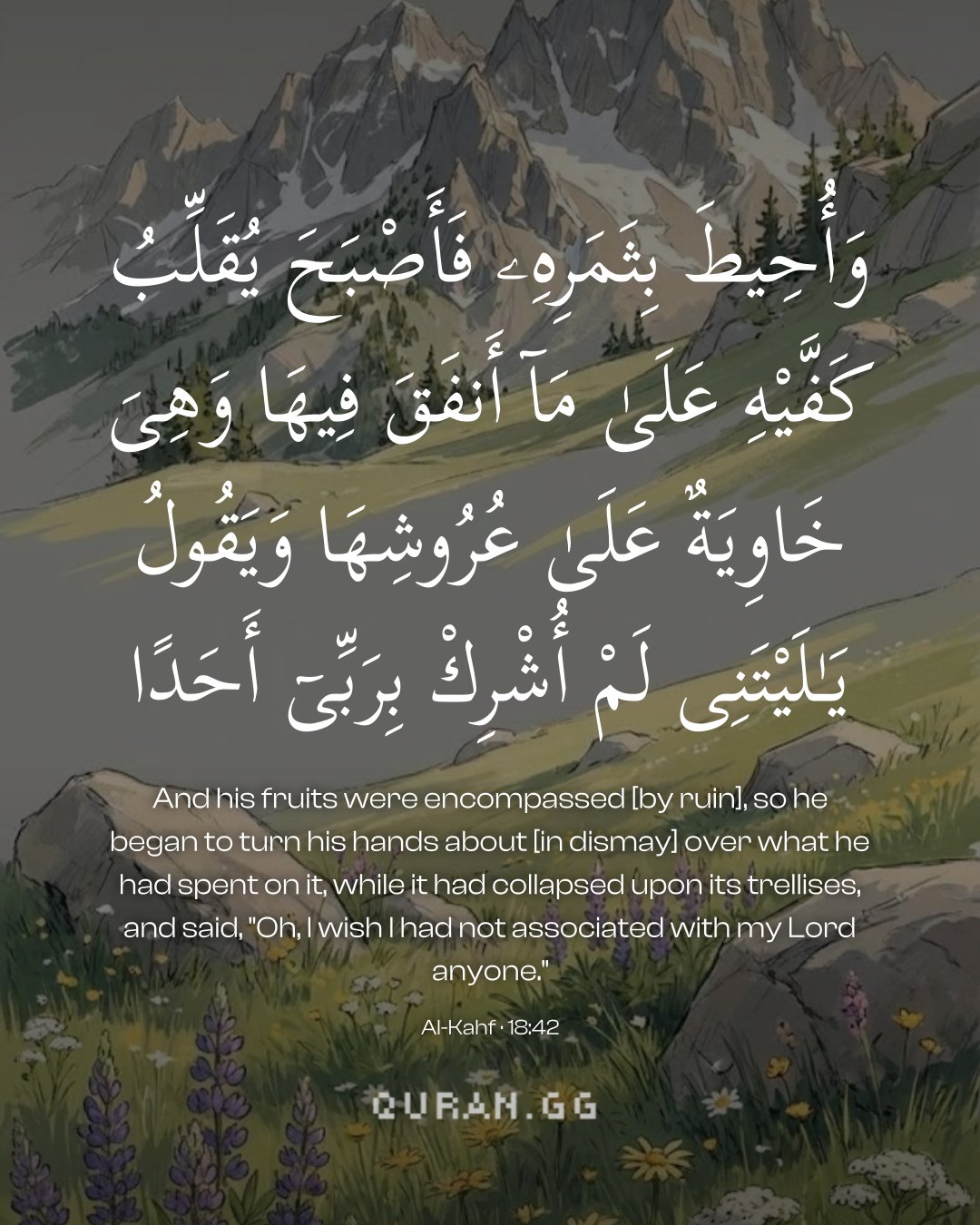
وَأُحِيطَ بِثَمَرِهِ
(So his fruits were encircled), meaning his wealth, or according to the other opinion, his crops. What is meant is that what this disbeliever was afraid of and what the believer had terrified him actually had happened. A storm struck his garden, a garden which he had erroneously thought would last forever, distracting him from thoughts of Allah, may He be glorified.
فَأَصْبَحَ يُقَلِّبُ كَفَّيْهِ عَلَى مَآ أَنْفَقَ فِيهَا
(And he began Yuqallibu his hands over what he had spent upon it,) Qatadah said: "He was clasping his hands together in a gesture of regret and grief for the wealth he had lost."
وَيَقُولُ يلَيْتَنِى لَمْ أُشْرِكْ بِرَبِّى أَحَدًاوَلَمْ تَكُن لَّهُ فِئَةٌ
(and he could only say: "Would that I had ascribed no partners to my Lord!" And he had no group of men) meaning a clan or children, as he had vainly boasted,
يَنصُرُونَهُ مِن دُونِ اللَّهِ وَمَا كَانَ مُنْتَصِراًهُنَالِكَ الْوَلَـيَةُ لِلَّهِ الْحَقِّ
(to help him against Allah, nor could he defend himself. There, Al-Walayah will be for Allah, the True God.) Here there are differences in recitation. Some of the reciters pause at the word there,
وَمَا كَانَ مُنْتَصِراًهُنَالِكَ
(nor could he defend himself there. ), i.e., at that time, when Allah sends the punishment upon him, there will be no one to save him. Then they start the next phrase with Al-Walayah;
الْوَلَـيَةُ لِلَّهِ الْحَقِّ
(Al-Walayah will be for Allah, the True God.) Some of them pause at the phrase
وَمَا كَانَ مُنْتَصِراً
(nor could he defend himself) and start the next phrase;
هُنَالِكَ الْوَلَـيَةُ لِلَّهِ الْحَقِّ
(There, Al-Walayah will be for Allah, the True God.) There is a further difference in the recitation of the word Al-Walayah. Some read it as Al-Walayah, which gives the meaning that all allegiance will be to Allah, i.e., on that Day everyone, believer or disbeliever, will return to Allah, for allegiance and submission to Him when the punishment comes to pass. This is like the Ayah:
فَلَمَّا رَأَوْاْ بَأْسَنَا قَالُواْ ءَامَنَّا بِاللَّهِ وَحْدَهُ وَكَـفَرْنَا بِمَا كُنَّا بِهِ مُشْرِكِينَ
(So when they saw Our punishment, they said: "We believe in Allah Alone and reject (all) that we used to associate with Him as partners.") 40:84 and Allah says concerning the Fir`awn;
وَجَاوَزْنَا بِبَنِى إِسْرَءِيلَ الْبَحْرَ فَأَتْبَعَهُمْ فِرْعَوْنُ وَجُنُودُهُ بَغْيًا وَعَدْوًا حَتَّى إِذَآ أَدْرَكَهُ الْغَرَقُ قَالَ ءَامَنتُ أَنَّهُ لا إِلِـهَ إِلاَّ الَّذِى ءَامَنَتْ بِهِ بَنواْ إِسْرَءِيلَ وَأَنَاْ مِنَ الْمُسْلِمِينَ - ءَالَنَ وَقَدْ عَصَيْتَ قَبْلُ وَكُنتَ مِنَ الْمُفْسِدِينَ
(Till when drowning overtook him, he said: "I believe that none has the right to be worshipped but He in Whom the Children of Israel believe, and I am one of the Muslims." Now! While you refused to believe before and you were one of the mischief-makers.) 10:90-91 Some others read it as Al-Wilayah, meaning that on that Day the rule will belong to Allah, the True God. Some read Haqqu (True) refering to Al-Wilayah, as in the Ayah;
الْمُلْكُ يَوْمَئِذٍ الْحَقُّ لِلرَّحْمَـنِ وَكَانَ يَوْماً عَلَى الْكَـفِرِينَ عَسِيراً
(The sovereignty on that Day will be the true (sovereignty), belonging to the Most Gracious (Allah), and it will be a hard Day for the disbelievers) 25:26. Others it read Haqqi referring to Allah, may He be glorified, as in the Ayah:
ثُمَّ رُدُّواْ إِلَى اللَّهِ مَوْلَـهُمُ الْحَقِّ
(Then they are returned to Allah, their True Protector.) 6:62 So Allah says:
هُوَ خَيْرٌ ثَوَابًا وَخَيْرٌ عُقْبًا
(He (Allah) is the best to reward and the best for the final end.) for deeds that were done for the sake of Allah, their reward is good and their consequences are all good.