The Parable of the Worldly Life
Allah says:
وَاضْرِبْ لَهُم
(And mention) O Muhammad, to the people,
مَثَلُ الْحَيَوةِ الدُّنْيَا
(the parable of the worldly life), its transient nature and how it will eventually cease and come to an end.
كَمَآءٍ أَنزَلْنَاهُ مِنَ السَّمَآءِ فَاخْتَلَطَ بِهِ نَبَاتُ الاٌّرْضِ
(it is like the water which We send down from the sky, and the vegetation of the earth mingles with it,) It mingles with the seeds that are in the earth, so they grow and become good, producing bright, fresh flowers, then after that,
فَأَصْبَحَ هَشِيمًا
(it becomes dry and broken pieces,) withered up,
تَذْرُوهُ الرِّياحُ
(which the winds scatter.) tossing them about right and left.
Continue reading the tafsir of ayahs 45–46 Commentary
The meaning of 'everlasting virtues' ('al-baqyat al-salilhat'- 34)
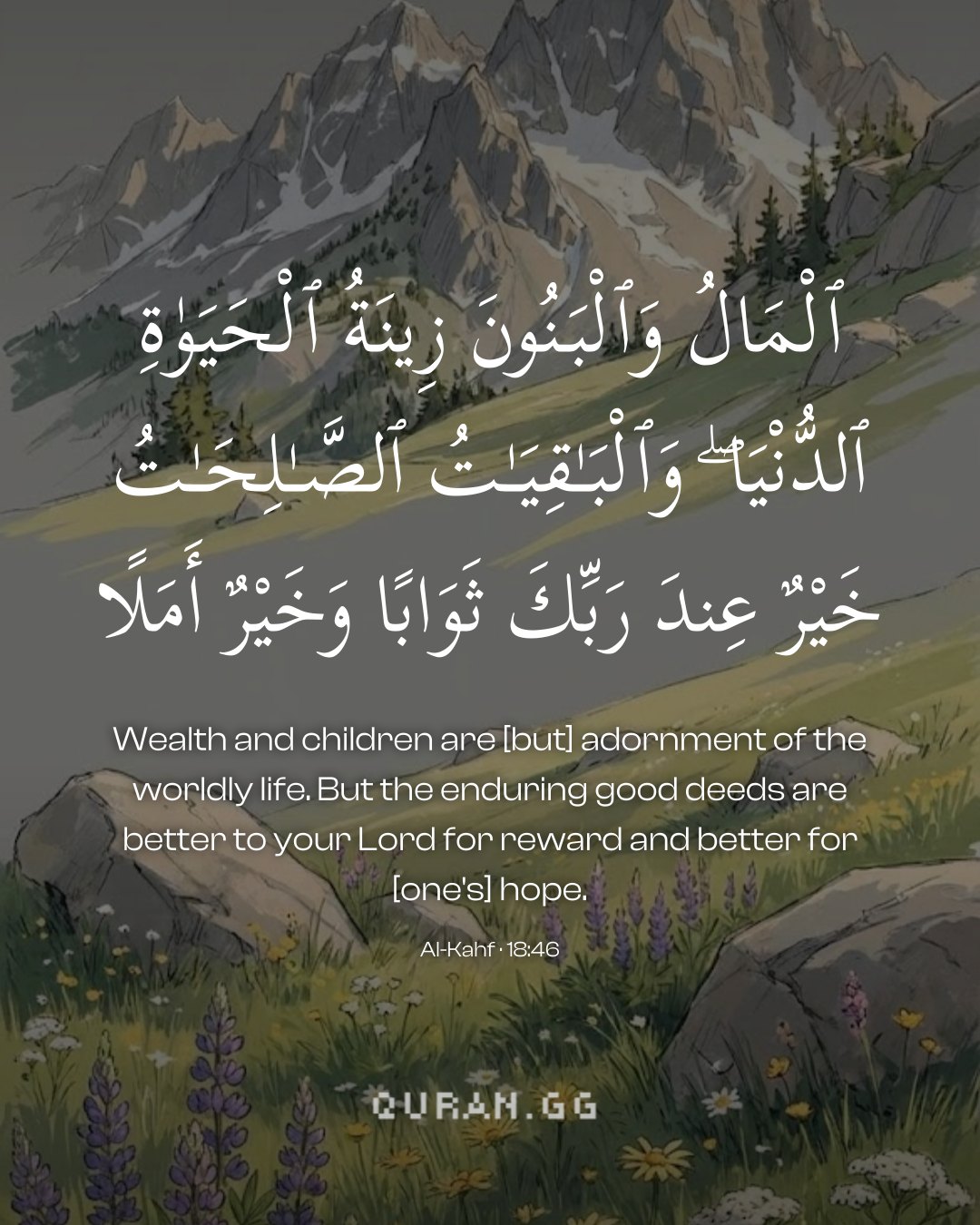
The Musnad of Ahmad, Ibn Hibban and Hakim have reported on the authority of Sayyidna Abu Said al-Khudri ؓ that the Holy Prophet ﷺ said, "Accumulate 'everlasting virtues' as much as you can." It was said, "What are they?" He said, "Saying: سُبحَانَ اللہِ لَآ اللہُ ، الحَمدُ للہِ اللہُ اَکبَر وَلَاحولَ وَلَا قُوَّۃَ اِلَّا بِاللہِ (Pure is Allah. There is no god but Allah. All praise belongs to Allah. Allah is great and there is no power and no strength except with Allah). Hakim has called this Hadith - Sahih. And al-'Uqaili reports on the authority of Sayyidna Nu` man ibn Bashir ؓ that the Holy Prophet ﷺ said, سُبحَانَ اللہِ ٓ والحَمدُ للہِ وَ لَا الہ الا اللہ وَ اللہُ اَکبَر (Pure is Allah and all praise belongs to Allah and there is no god but Allah and Allah is great): These are the 'everlasting virtues.'" The same has been reported by al-Tabarani from Sayyidna Sa'd ibn ` Ubadah ؓ . And the Sahih of Muslim and Tirmidhi have reported on the authority of Sayyidna Abu Hurairah ؓ that the Holy Prophet ﷺ said, "I like saying: سُبحَانَ اللہِ ٓ والحَمدُ للہِ قَ لَا الہُ و اللہُ اَکبَر (Pure is Allah and all praise belongs to Allah and there is no god but Allah and Allah is great) better than everything under the Sun."
Sayyidna Jabir ؓ said, "Recite: لَاحولَ وَلَا قُوَّۃَ اِلَّا بِاللہِ (la haula wala quwwata illa bil-lah: There is no power and there is no strength except with Allah) a lot, because it removes ninety nine types of ailments out of which anxiety is the least painful."
Thus, according to the Tafsir of 'everlasting virtues' in this verse by Sayyidna Ibn ` Abbas ؓ ، ` Ikrimah and Mujahid, it means the very recitation of these words. And Said ibn Jubayr, Masruq and Ibrahim said that 'everlasting virtues' denote five daily prayers.
And there is another report from Sayyidna Ibn ` Abbas ؓ which says that 'al-baqyat al-salihat' or 'everlasting virtues' in this verse means righteous deeds in a general sense. Included therein are the words mentioned above, and the five prayers, and all other righteous deeds as well. This explanation has also been reported from early commentator Qatadah. (Mazhari)
This also happens to be the drive of the meaning in terms of the words of the Qur'an for these words literally convey the sense of the righteous deeds that are to keep surviving. And it is obvious that all deeds that qualify as righteous and sincere are abiding and everlasting in the sight of Allah. Ibn Jarir and al-Qurtubi have preferred this particular Tafsir.
Sayyidna ` Ali ؓ said, 'Cultivation is of two kinds. Wealth and children are the cash crops of the mortal world while 'everlasting virtues' are the deferred crops of the Hereafter.' Hasan al-Basri (رح) said, 'Everlasting virtues are one's intention as the acceptance of righteous deeds depends on it.'
` Ubaid ibn ` Umair ؓ said, 'Everlasting virtues are righteous daughters for they are, for their parents, the greatest treasure-troves of reward from Allah.' This is supported by a narration of Sayyidah ` A'ishah ؓ according to which the Holy Prophet ﷺ has been reported to have said, "I saw a man from my ummah under orders to be taken to Hell. Thereupon, his righteous daughters clung to him and started wailing and crying and plaintively supplicating: 0 Allah, spare him for he was very kind to us in the mortal world and he worked very hard to raise us in our family. Allah Ta` ala, in His mercy, forgave him. (Qurtubi)
Things in this present world make the world hereafter understandable to us. When the earth, after getting water, becomes fresh and green, it appears as if it will remain like this for ever. But thereafter the weather changes and all the greenery dries up and withers away. The glamour of this world is no different. The charms of the world attract a man, but they are all quite ephemeral. Doomsday (the Day of Judgement) will soon destroy them in such a manner that it will appear as if they never existed. The attraction of the world will not last, but here there is one thing that is going to endure forever and that is the good and pious deeds of a man. Just as plants in the garden grow by seeds being sown in the earth, so also there is a garden which flourishes by God being remembered and obeyed. This garden never has a winter season. Unlike the garden of the world, this garden grows in the life hereafter but it will be available there only to the sower of seeds.
Uthmani text of the Madinah mushaf (King Fahd Complex). Translation: Saheeh International. Tafsir via Quran.com.