Surah Al-Ma'idah Ayah 57 (5:57) — Meaning & Tafsir | Quran.GG

Surah Al-Ma'idah, Ayah 57

5:57 · Meaning and tafsir

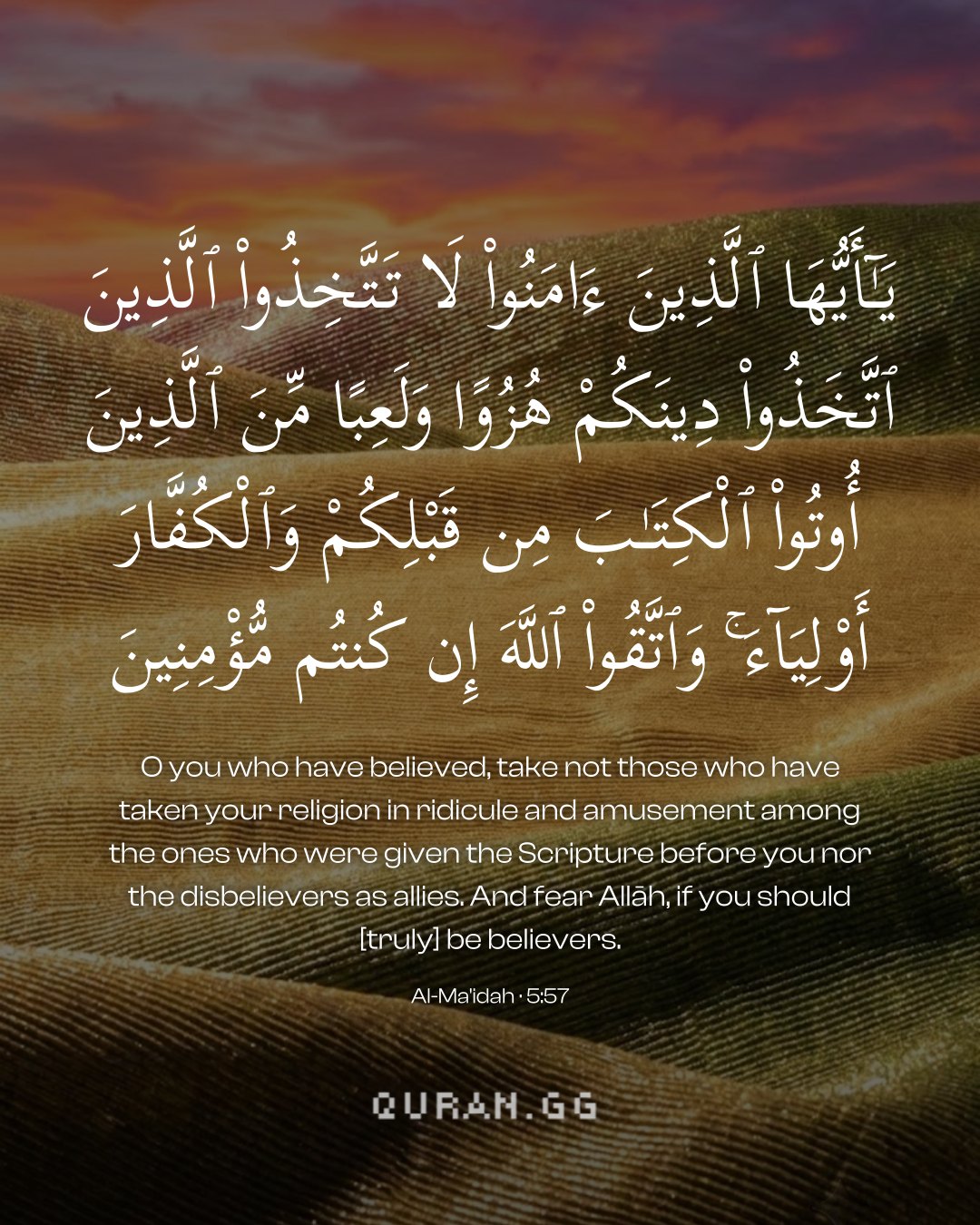
يَـٰٓأَيُّهَا ٱلَّذِينَ ءَامَنُوا۟ لَا تَتَّخِذُوا۟ ٱلَّذِينَ ٱتَّخَذُوا۟ دِينَكُمْ هُزُوًا وَلَعِبًا مِّنَ ٱلَّذِينَ أُوتُوا۟ ٱلْكِتَـٰبَ مِن قَبْلِكُمْ وَٱلْكُفَّارَ أَوْلِيَآءَ ۚ وَٱتَّقُوا۟ ٱللَّهَ إِن كُنتُم مُّؤْمِنِينَ ٥٧

O you who have believed, take not those who have taken your religion in ridicule and amusement among the ones who were given the Scripture before you nor the disbelievers as allies. And fear Allāh, if you should [truly] be believers.

Surah Al-Ma'idah 5:57 in Arabic with its translation: “O you who have believed, take not those who have taken your religion in ridicule and amusement among the ones…”

Make something with this ayah

Turn it into a video for Stories, Reels or TikTok, recited by the reciter you pick, or an image on a background you choose. Free, in your browser.

Download this image

Tafsir Ibn Kathir (abridged)

The Prohibition of Being Loyal Friends with Disbelievers

This Ayah discourages and forbids taking the enemies of Islam and its people, such as the People of the Book and the polytheists, as friends. These disbelievers mock the most important acts that any person could ever perform, the honorable, pure acts of Islam which include all types of good for this life and the Hereafter. They mock such acts and make them the subject of jest and play, because this is what these acts represent in their misguided minds and cold hearts. Allah said;

مِّنَ الَّذِينَ أُوتُواْ الْكِتَـبَ مِن قَبْلِكُمْ وَالْكُفَّارَ

(from those who received the Scriptures before you and (nor) the disbelievers...) This is to clarify the particular category (of disbelievers). As Allah said,

فَاجْتَنِبُواْ الرِّجْسَ مِنَ الاٌّوْثَـنِ

(So shun the evil of the idols...) 22:30 So some recited it "Kuffari", making it an object of the preposition, and others recited it "Kuffara", making it a predicate noun;

لاَ تَتَّخِذُواْ الَّذِينَ اتَّخَذُواْ دِينَكُمْ هُزُواً وَلَعِباً مِّنَ الَّذِينَ أُوتُواْ الْكِتَـبَ مِن قَبْلِكُمْ

(Take not as friends those who take your religion for a mockery and fun from those who received the Scriptures before you...) with the meaning of "nor",

وَالْكُفَّارَ أَوْلِيَآءَ

(nor the disbelievers as friends) That is, do not take these people nor those people as friends. The meaning here of "Kuffar" disbelievers is idolators. Similarly, Ibn Jarir recorded that in the recitation of Ibn Mas`ud in place of "Kuffar" he recited it: "and those who commit Shirk. Allah's statement,

وَاتَّقُواْ اللَّهَ إِن كُنتُم مُّؤْمِنِينَ

(And have Taqwa of Allah if you indeed are true believers.) means, fear Allah and do not take the enemies of you and your religion as friends, if you believe in Allah's Law and religion that these people mocked and jested about. Allah said in another Ayah,

لاَّ يَتَّخِذِ الْمُؤْمِنُونَ الْكَـفِرِينَ أَوْلِيَآءَ مِن دُونِ الْمُؤْمِنِينَ وَمَن يَفْعَلْ ذَلِكَ فَلَيْسَ مِنَ اللَّهِ فِي شَىْءٍ إِلاَ أَن تَتَّقُواْ مِنْهُمْ تُقَـةً وَيُحَذِّرْكُمُ اللَّهُ نَفْسَهُ وَإِلَى اللَّهِ الْمَصِيرُ

(Let not the believers take the disbelievers as friends instead of the believers, and whoever does that, will never be helped by Allah in any way, except if you indeed fear a danger from them. And Allah warns you against Himself, and to Allah is the final return.)

The Disbelievers Mock the Prayer and the Adhan

Allah said,

وَإِذَا نَـدَيْتُمْ إِلَى الصَّلَوةِ اتَّخَذُوهَا هُزُواً وَلَعِباً

(And when you proclaim the call for the Salah, they take it (but) as a mockery and fun;) When you proclaim the Adhan for the prayer, which is the best action there is, for those who have sound minds and good comprehension,

اتَّخَذُوهَا

(they take it...) also,

هُزُواً وَلَعِباً ذلِكَ بِأَنَّهُمْ قَوْمٌ لاَّ يَعْقِلُونَ

(as a mockery and fun; that is because they are a people who understand not.) the acts of worship and Allah's Law. These are the characteristics of the followers of Shaytan who,

«إِذَا سَمِعَ الْأَذَانَ أَدْبَرَ وَلَهُ حُصَاصٌ، أَيْ ضُرَاطٌ، حَتَّى لَا يَسْمَعَ التَّأْذِينَ فَإِذَا قُضِيَ التَّأْذِينُ، أَقْبَلَ فَإِذَا ثُوِّبَ لِلصَّلَاةِ أَدْبَرَ، فَإِذَا قُضِيَ التَّثْوِيبُ أَقْبَلَ حَتَّى يَخْطُرَ بَيْنَ الْمَرْءِ وَقَلْبِهِ، فَيَقُولُ: اذْكُرْ كَذَا اذْكُرْ كَذَا، لِمَا لَمْ يَكُنْ يَذْكُرُ حَتَّى يَظَلَّ الرَّجُلُ لَا يَدْرِي كَمْ صَلَّى، فَإِذَا وَجَدَ أَحَدُكُمْ ذلِكَ، فَلْيَسْجُدْ سَجْدَتَيْنِ قَبْلَ السَّلَام»

(When the call for prayer is made, Shaytan takes to his heels passing wind so that he may not hear the Adhan. When the call is finished he comes back, and when the Iqamah is pronounced, Shaytan again takes to his heels. When the Iqamah is finished he comes back again and tries to interfere with the person and his thoughts and to say, `Remember this and that,' which he has not thought of before the prayer, until the praying person forgets how much he has prayed. If anyone of you does not remember, then he should perform two prostrations before pronouncing the Salam.) This Hadith is agreed upon. Az-Zuhri said, "Allah mentioned the Adhan in His Book,

وَإِذَا نَـدَيْتُمْ إِلَى الصَّلَوةِ اتَّخَذُوهَا هُزُواً وَلَعِباً ذلِكَ بِأَنَّهُمْ قَوْمٌ لاَّ يَعْقِلُونَ

(And when you proclaim the call for the Salah, they take it (but) as a mockery and fun; that is because they are a people who understand not.)" Ibn Abi Hatim recorded this statement.

اتَّخَذُوهَا

(they take it...) also,

... هُزُوًا وَلَعِبًا ذَلِكَ بِأَنَّهُمْ قَوْمٌ لاَّ يَعْقِلُونَ ٥٨

as a mockery and fun; that is because they are a people who understand not.the acts of worship and Allah's Law.These are the characteristics of the followers of Shaytan who,

إِذَا سَمِعَ الْأَذَانَ أَدْبَرَ وَلَهُ حُصَاصٌ، أَيْ ضُرَاطٌ، حَتَّى لَا يَسْمَعَ التَّأْذِينَ فَإِذَا قُضِيَ التَّأْذِينُ، أَقْبَلَ فَإِذَا ثُوِّبَ لِلصَّلَاةِ أَدْبَرَ، فَإِذَا قُضِيَ التَّثْوِيبُ أَقْبَلَ حَتَّى يَخْطُرَ بَيْنَ الْمَرْءِ وَقَلْبِهِ، فَيَقُولُ: اذْكُرْ كَذَا اذْكُرْ كَذَا، لِمَا لَمْ يَكُنْ يَذْكُرُ حَتَّى يَظَلَّ الرَّجُلُ لَا يَدْرِي كَمْ صَلَّى، فَإِذَا وَجَدَ أَحَدُكُمْ ذلِكَ، فَلْيَسْجُدْ سَجْدَتَيْنِ قَبْلَ السَّلَام

When the call for prayer is made, Shaytan takes to his heels passing wind so that he may not hear the Adhan. When the call is finished he comes back, and when the Iqamah is pronounced, Shaytan again takes to his heels. When the Iqamah is finished he comes back again and tries to interfere with the person and his thoughts and to say, `Remember this and that,' which he has not thought of before the prayer, until the praying person forgets how much he has prayed. If anyone of you does not remember, then he should perform two prostrations before pronouncing the Salam.This Hadith is agreed upon.Az-Zuhri said, "Allah mentioned the Adhan in His Book,

وَإِذَا نَادَيْتُمْ إِلَى الصَّلاَةِ اتَّخَذُوهَا هُزُوًا وَلَعِبًا ذَلِكَ بِأَنَّهُمْ قَوْمٌ لاَّ يَعْقِلُونَ

And when you proclaim the call for the Salah, they take it (but) as a mockery and fun; that is because they are a people who understand not."Ibn Abi Hatim recorded this statement.

Ma'arif al-Qur'an

The Prohibition of Friendship with those who make fun of Islam

In the sixth verse (57), Allah Almighty has again stressed upon the injunction mentioned in verse 51 at the beginning of the Section, the sense of which is that the Muslims should not seek close friendship with people who make fun of their religion. They can be divided in two groups: The People of the Book, that is, the Jews and the Christians; and the disbelievers and non-Muslims in general. In al-Bahr al-Muhit, Imam Abu Hayyan (رح) says that the People of the Book were already included under the word, Kuffar or disbelievers, still, the People of the Book have been mentioned here particularly perhaps, because the People of the Book were, though, closer to Islam as compared with other disbelievers, yet, experience bears that very few from among them embraced Islam. This is the reason why a look into the statistics of those who embraced Islam after the age of prophethood and during the period later to it, will reveal that the majority of them were from among the common disbelievers. The number of those who became Muslims from among the People of the Book will be much lower.

Why would that be so? The reason is simple. The People of the Book take pride in being adherents to Divine Faith and Divine Scripture. This proud partisanship made them opt for not accepting the Truth. The attitude of mockery against Muslims was something that they displayed most. When mockery becomes wickedness, things much lower can happen, as would be illustrated by an episode mentioned in the eighth (58) verse in the following words: وَإِذَا نَادَيْتُمْ إِلَى الصَّلَاةِ اتَّخَذُوهَا هُزُوًا وَلَعِبًا (And when you call for Salah, they take it in jest and fun). Tafsir Mazhari, with reference to Ibn Abi Hatim, reports the event itself by saying that there was a Christian in Madinah al-tayyibah. When he heard the words : اَشھَدُ اَنَّ مُحَمَّدَاً رَّسُولُ اَلله (I testify that Muhammad is the Messenger of Allah) in the Adhan (call for prayer), he used to say: اَحرَقَ اَللہُ الکَذِبَ (May Allah burn the liar). At last, this very remark made by him became the cause of his entire family burn to ashes. How this happened was commonplace. When he was sleeping, his servant entered the house with a little fire for some purpose. A speck from it flew out and fell down on some piece of cloth. When everybody was fast asleep, the speck had turned into a blaze and everybody was burnt to death.

The Tragedy of People who do not Understand

At the end of the verse (58), it was said ذَٰلِكَ بِأَنَّهُمْ قَوْمٌ لَّا يَعْقِلُونَ (That is be-cause they are a people who do not understand). It means that the reason for their jest and fun being directed against what is True Faith could be no other but that they do not understand.

Qadi Thanaullah of Panipat has said in Tafsir Mazhari that Allah Almighty calls them devoid of understanding although their reason and intelligence in worldly matters is well known. From here we learn that it is possible that one could be very smart and quick-witted in certain kinds of jobs, but when it comes to doing some other things, he either does not use his mind or his mind does not work in that direction. Therefore, he turns out to be dumb in it, like one who does not under-stand. The Holy Qur'an has referred to this subject in another verse as follows:

يَعْلَمُونَ ظَاهِرً‌ا مِّنَ الْحَيَاةِ الدُّنْيَا وَهُمْ عَنِ الْآخِرَ‌ةِ هُمْ غَافِلُونَ ﴿7﴾

These people do know outward matters of the present life while they are heedless to the Hereafter. (30:7)

Tazkirul Quran

If after embracing the Faith, one does not fulfill the requirements of Faith, one has, in the eyes of God, turned away from religion. The truly faithful people are those whose entire beings are so pervaded by Faith that they develop a relation with God at the level of love. Fulfillment of Islamic objectives should be so dear to them that there should be nothing but sympathy and kindness in their hearts for their brothers in Islam. They should become so kind-hearted towards Muslims that their powers and talents should never be used against them. Islamic life is a purposeful life and is therefore a life of struggle. It is the mission of a Muslim to convey the religion of God to all God’s subjects, guiding the world to keep away from the path leading to hell and to tread the path leading to paradise. In the course of carrying out this task, one has naturally to face different types of difficulties and suffer ignominy. Ultimately, two groups are formed—one consisting of those whose hearts are set in this world and the other whose focus is the Hereafter. A regular tug-of-war starts between these two groups. The test of man is that in all moments of difficulty and strife, he proves to be one who places complete reliance on God and, without caring for anybody except God, continues his spiritual journey, until that Day arrives when he shall stand accountable before God. The attention of such people centres almost entirely on God. They are steadfast in observing salat (prayer); they offer zakat (prescribed alms), and their relations with others are based on mutual well-wishing. Their bowing down before God shows that in their worldly affairs there is no egoism or arrogance. They invariably adopt an attitude of humility and on all occasions do as God desires. When people of this type come together at any one place in considerable numbers, they are destined to become dominant in that region.

Continue reading the tafsir of ayahs 56–58

Uthmani text of the Madinah mushaf (King Fahd Complex). Translation: Saheeh International. Tafsir via Quran.com.