Tafsir Ibn Kathir (abridged)
Rebuking the People of Hell, their admission of Their Wretchedness and their Request to be brought out of Hell
This is a rebuke from Allah to the people of Hell for the disbelief, sins, unlawful deeds and evil actions that they committed, because of which they were doomed. Allah says:
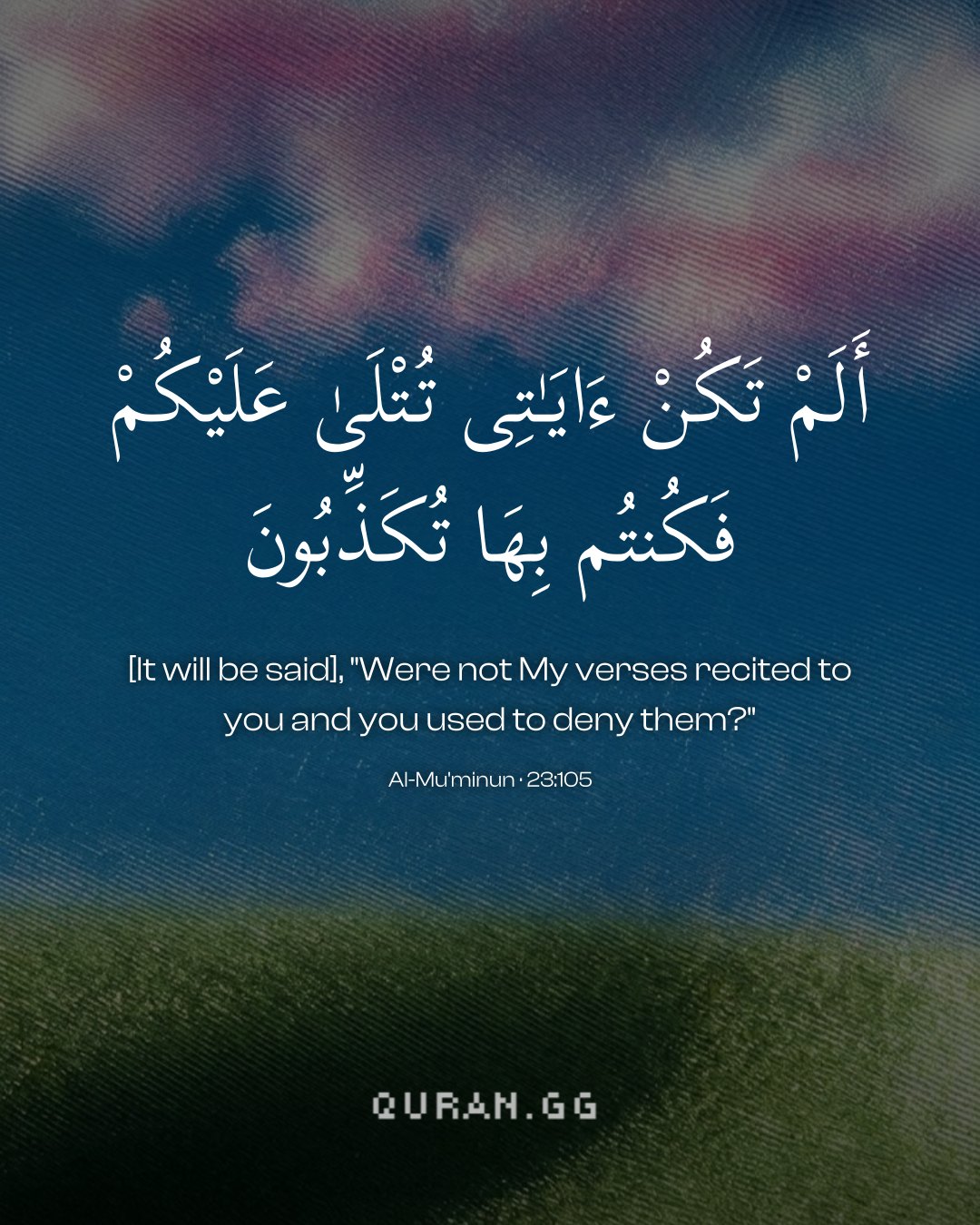
أَلَمْ تَكُنْ ءَايَـتِى تُتْلَى عَلَيْكُمْ فَكُنْتُمْ بِهَا تُكَذِّبُونَ
("Were not My Ayat recited to you, and then you used to deny them") meaning, `I sent Messengers to you, and revealed Books, and cleared the confusion for you, so you have no excuse.' This is like the Ayat:
لِئَلاَّ يَكُونَ لِلنَّاسِ عَلَى اللَّهِ حُجَّةٌ بَعْدَ الرُّسُلِ
(in order that mankind should have no plea against Allah after the Messengers) 4:165
وَمَا كُنَّا مُعَذِّبِينَ حَتَّى نَبْعَثَ رَسُولاً
(And We never punish until We have sent a Messenger) 17:15.
كُلَّمَا أُلْقِىَ فِيهَا فَوْجٌ سَأَلَهُمْ خَزَنَتُهَآ أَلَمْ يَأْتِكُمْ نَذِيرٌ
(Every time a group is cast therein, its keeper will ask: "Did no warner come to you") Until His saying;
فَسُحْقًا لاًّصْحَـبِ السَّعِيرِ
(So, away with the dwellers of the blazing Fire!) They will say:
رَبَّنَا غَلَبَتْ عَلَيْنَا شِقْوَتُنَا وَكُنَّا قَوْماً ضَآلِّينَ
(Our Lord! Our wretchedness overcame us, and we were (an) erring people.) meaning, evidence has been established against us, but we were so doomed that we could not follow it, so we went astray and were not guided. Then they will say:
رَبَّنَآ أَخْرِجْنَا مِنْهَا فَإِنْ عُدْنَا فَإِنَّا ظَـلِمُونَ
(Our Lord! Bring us out of this. If ever we return (to evil), then indeed we shall be wrongdoers.) meaning, send us back to the world, and if we go back to what we used to do before, then we will indeed be wrongdoers who deserve punishment. This is like the Ayat:
فَاعْتَرَفْنَا بِذُنُوبِنَا فَهَلْ إِلَى خُرُوجٍ مِّن سَبِيلٍ
(Now we confess our sins, then is there any way to get out) Until His statement:
فَالْحُكْمُ للَّهِ الْعَلِـىِّ الْكَبِيرِ
(So the judgment is only with Allah, the Most High, the Most Great!") 40:11-12 meaning, there will be no way out, because you used to associate partners in worship with Allah whereas the believers worshipped Him Alone.