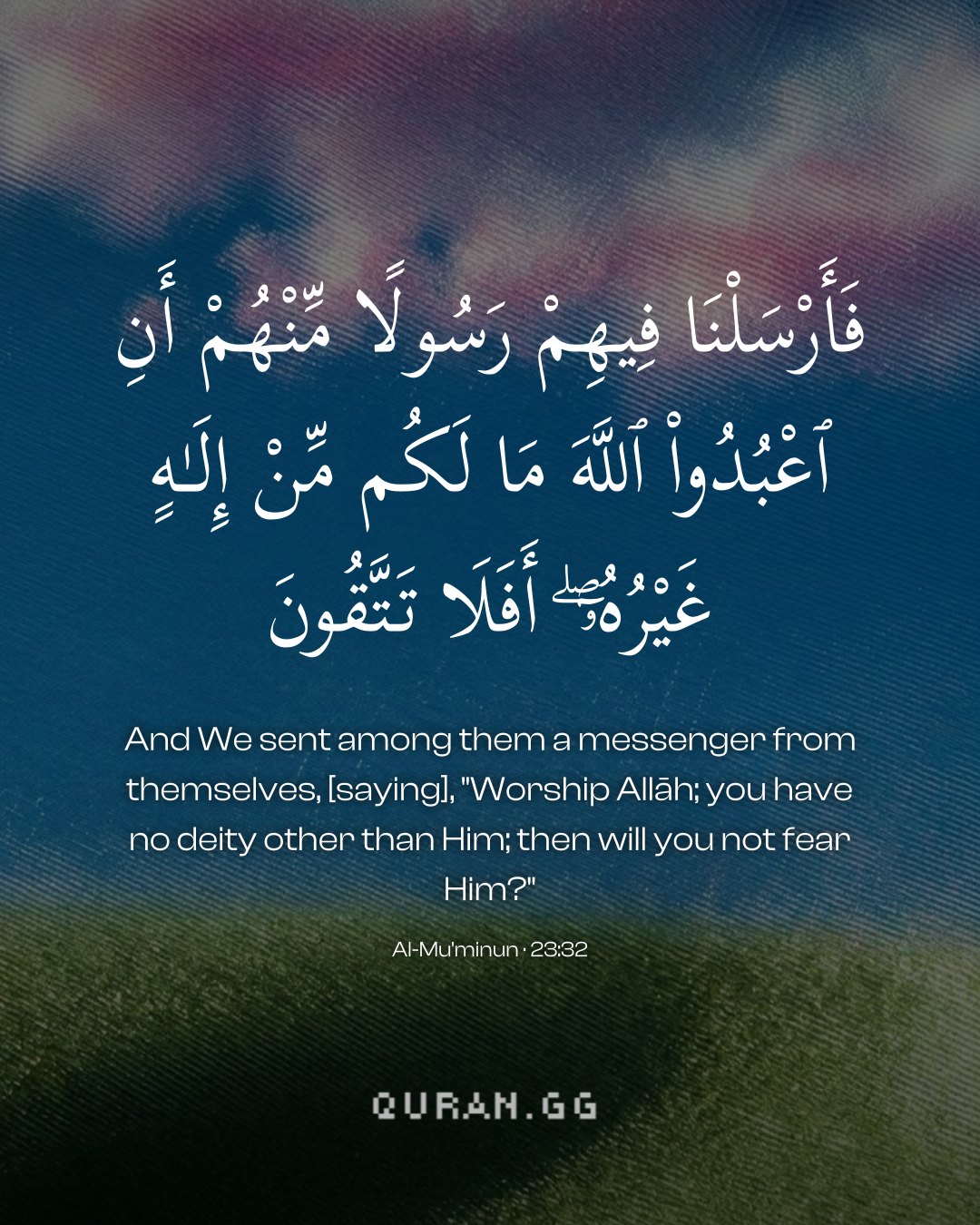
Allah tells us that after the people of Nuh, He created another nation. It was said that this was `Ad, because they were the successors of the people of Nuh. Or it was said that they were Thamud, because Allah says:
فَأَخَذَتْهُمُ الصَّيْحَةُ بِالْحَقِّ
(So, the Sayhah overtook them in truth.) Allah sent to them a Messenger from among themselves, and he called them to worship Allah Alone with no partner or associate, but they belied him, opposed him and refused to follow him because he was a human being like them, and they refused to follow a human Messenger. They did not believe in the meeting with Allah on the Day of Resurrection and they denied the idea of physical resurrection. They said:
In the earlier verses the story of Sayyidna Nuh (علیہ السلام) was told who was sent to his people to guide them along the path of righteousness and the following verses contain a brief account of some other prophets without mentioning their names and the people for whose guidance they were sent. From certain references and allusions the commentators have concluded that the verses refer to Sayyidna Hud (علیہ السلام) or Sayyidna Salih (علیہ السلام) who were sent for the guidance of the tribes of 'Ad and Thamud respectively. In the present story both these tribes are reported to have perished as a result of صَیحَہ (Cry) from an unseen source, whereas in other verses it has been specifically mentioned that it was the tribe of Thamud which perished from صَیحَہ (Cry) and this had led some scholars to the view that the words قَرناً آخَرِینَ (another generation) refers to Thamud.
An alternative explanation is that the word صَیحَہ (Cry) has been used in the general sense of punishment from Allah in which case it would include the tribe of ` Ad also.
Tazkirul Quran
Maulana Wahiduddin KhanOn ayahs 30–33
In an environment fraught with idolatory, the few who had faith in Noah had that very day, in both the literal and the figurative sense, entered the Divine ark. When they boarded the wooden ship at the time of the storm, it marked the completion of the first stage of their decision. While they had intellectually saved themselves from evil, God saved them from the grim consequences of the Flood which would have been their fate, had they rejected the truth. A man of faith attributes his every success to the blessing of God. Therefore, with each success he thanks God. And the relief afforded from Noah’s flood was clearly an instance of God’s help. At this juncture, the words that spontaneously came out of a believer’s mouth have been recorded in this verse. He admits the grace of God bestowed upon him and solicits His further blessings in future, because he is sure that the present and future are both in the hands of God.
Uthmani text of the Madinah mushaf (King Fahd Complex). Translation: Saheeh International. Tafsir via Quran.com.