(Verily, those who live in awe for fear of their Lord;) means, even though they have reached the level of Ihsan and have faith and do righteous deeds, they are still in awe of Allah and fear Him and His hidden plans for them, as Al-Hasan Al-Basri said, "The believer combines Ihsan with awe, while the disbelievers combine evil deeds with a sense of security."
وَالَّذِينَ هُم بِـَايَـتِ رَبَّهِمْ يُؤْمِنُونَ
(And those who believe in the Ayat of their Lord;) means, they believe in His universal and legislative signs, as Allah says about Maryam, peace be upon her:
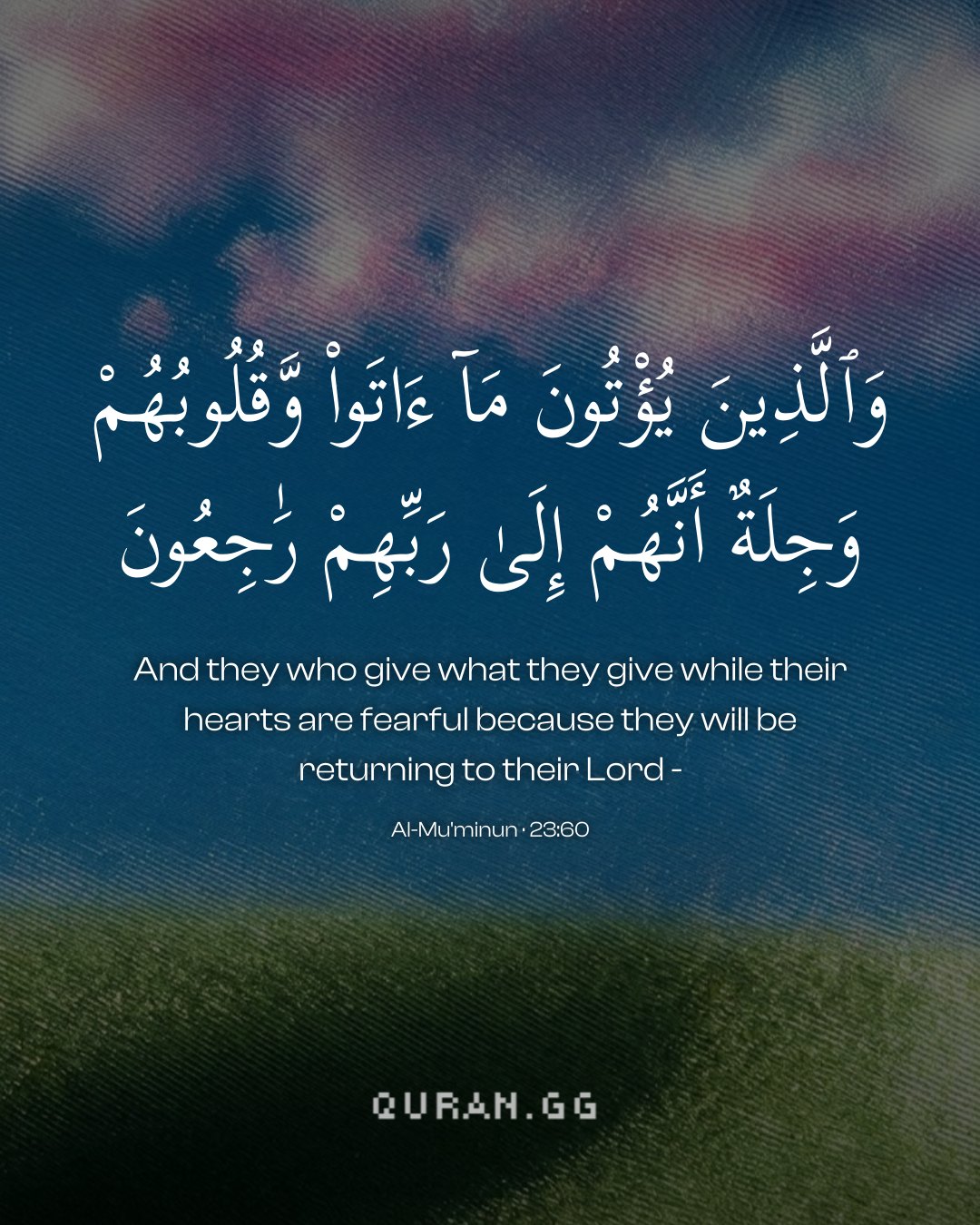
وَالَّذِينَ يُؤْتُونَ مَا آتَوا وَّقُلُوبُهُمْ وَجِلَةٌ (And those who give whatever they give with their hearts full of fear - 23:60.) The word يُؤْتُونَ is derived from اِیتا meaning "to give, to spend", and is used in commentaries in the sense of صَدَقَات (alms to the poor). Another reading of this verse reported from Sayyidah ` A'ishah ؓ is يُؤْتُونَ مَا آتَوا (They do whatever they do - 23:60) and this covers all good deeds such as charity, prayers, fasting etc. As for the generally accepted reading of the verse, although it mentions alms to the poor only, yet it would include all good deeds also as is borne out by a hadith. Sayyidah ` A'ishah ؓ asked the Holy Prophet ﷺ the meaning of this verse whether those who do these deeds are the ones who drink wine and steal things. The Holy Prophet ﷺ replied, "0 daughter of Siddiq! It is not as you say. These are the people who observe fasts, say their prayers and give alms, yet they are apprehensive lest, due to some mind lapse on their part, all their good deeds may not be accepted by Allah. They hasten to do good deeds and are foremost, in accomplishing them." (Ahmad, Tirmidhi, Ibn Majah, Mazhari)
Hasan a1-Basri (رح) says that he knew people who did virtuous deeds, yet were more fearful than people who committed evil deeds. (Qurtubi)
Tazkirul Quran
Maulana Wahiduddin KhanOn ayahs 55–61
When the religion of God is revived in its true spirit, it instills the fear of God in people’s minds but when religion loses its true spirit, it becomes a mere source of boasting and pride for its adherents. This is the time when men of religion split into a number of groups. Each group chooses for itself that aspect which feeds its pride. Groups which feed on pride are always many in number, while the religion of the God-fearing is always one. An absence of fear breeds a diversity of opinions, while a God-fearing mentality leads to uniformity of opinion. In the present world, man is being put to test. During the period of respite allowed to an individual or a group at God’s behest, all the amenities of life are provided. On account of this, negligent people think that whatever they are doing is right and that, if they had been wrong, their possessions and all comfort and convenience would have been snatched away from them. But, by God’s method, a man’s possession are taken away from him, not on his flouting God’s will during the trial period, but in the world hereafter.
Uthmani text of the Madinah mushaf (King Fahd Complex). Translation: Saheeh International. Tafsir via Quran.com.