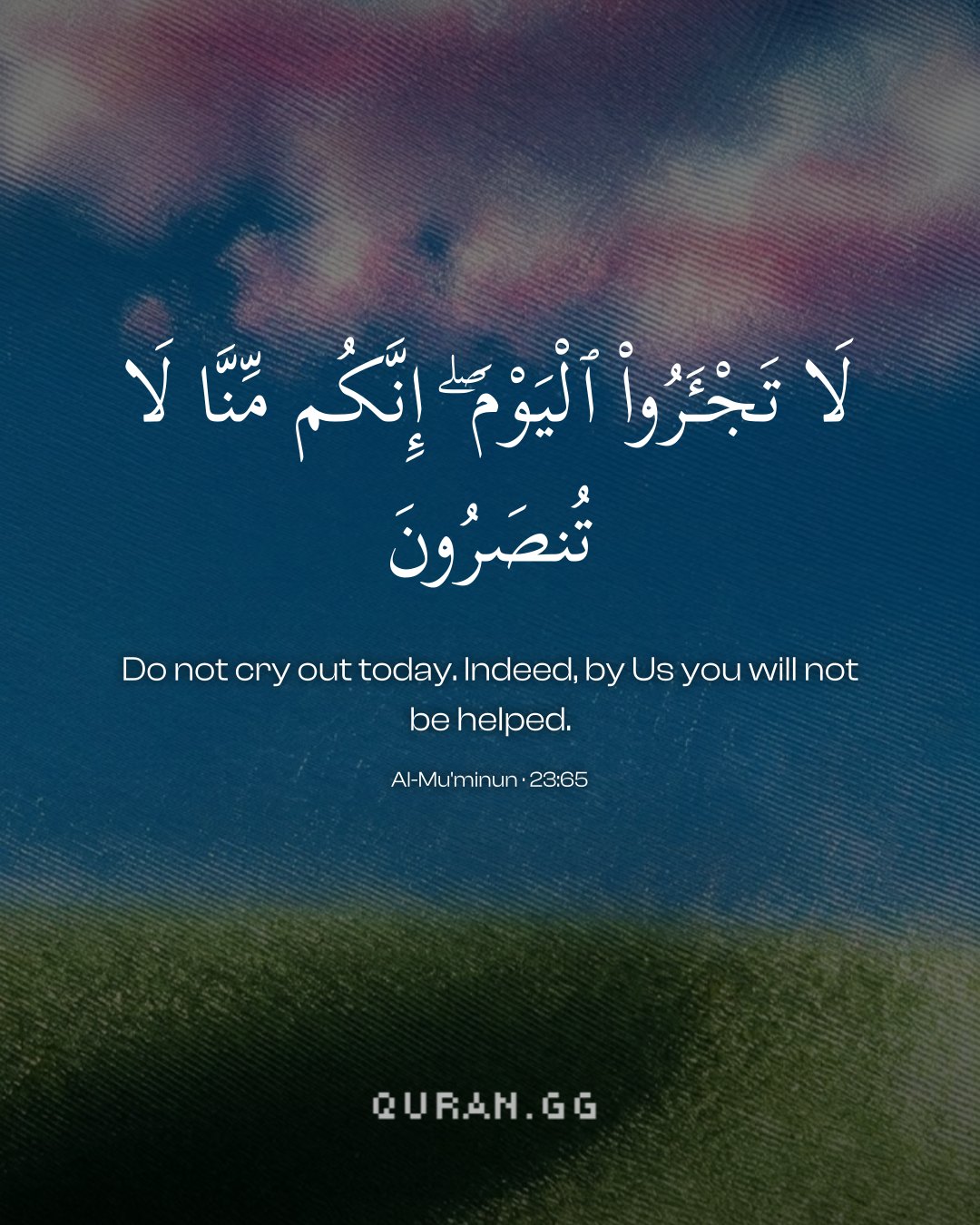
The Justice of Allah and the Frivolity of the Idolators
Allah tells us of His justice towards His servants in this world, in that He does not task any person except according to his capacity, i.e., He does not burden any soul with more than it can bear. On the Day of Resurrection He will call them to account for their deeds, which He has recorded in a written Book from which nothing is omitted. He says:
وَلَدَيْنَا كِتَابٌ يَنطِقُ بِالْحَقِّ
(and with Us is a Record which speaks the truth,) meaning, the Book of deeds
وَهُمْ لاَ يُظْلَمُونَ
(and they will not be wronged.) means, nothing will be omitted from their record of good deeds. As for evil deeds, He will forgive and overlook many of them in the case of His believing servants. Then Allah says, denouncing the disbelievers and idolators of the Quraysh:
مُتْرَفِيهِم (their affluent ones - 23:64). The word مُتْرَفِ is derived from تْرَفِ meaning comfort and prosperity. This verse mentions the Divine punishment which will descend upon the unbelievers whether rich or poor. The rich people have been specially mentioned here because they are the ones who make adequate arrangements to protect themselves against disasters and misfortunes. But when retribution comes from Allah, they find themselves totally helpless. According to Sayyidna Ibn ` Abbas ؓ the punishment which is mentioned in this verse is an allusion to the crushing defeat which the infidels of Makkah suffered at the hands of the Muslims in the Battle of Badr. Some others say that the reference is to the severe famine which afflicted the people of Makkah as a result of the curse laid on them by the Holy Prophet ﷺ ، when they were forced to eat dead animals and cats and dogs.
Although the Holy Prophet ﷺ and his companions, when faced ill-treatment from the infidels, used to remain patient and never complained yet when their suffering and torment became unbearable, the Holy Prophet ﷺ invoked divine punishment for the infidels in the following words:
اللَّھُمَّ اشدد وطأتک علٰی مضر و اجعلھا علیھم سنین کسنی یوسف (رواہ البخاری مسلم) (قرطبی و مظھری)
(0 Lord! Let thy punishment descend hard on the tribe of Mudar and make their land barren like the land of Yusuf.
Tazkirul Quran
Maulana Wahiduddin KhanOn ayahs 62–66
One whose discovery of God is such that he is awe-struck by Him becomes different from other men, in that his God-fearing mentality makes him extremely serious. His seriousness guarantees that he fully realises the weight of divine proofs and he submits to God completely. In the present world, there are two ways in which a man may exert himself — one is the way of the world and the other is the way of the Hereafter. Those who possess the above-mentioned qualities, are exactly those who strive towards the Hereafter. However, in the present world, to strive towards the Hereafter is an extremely difficult task. It is one in which a man is prone to different types of shortcomings. But, Almighty God’s requirement of every man is exactly commensurate with his capacity to fulfill it. Everybody’s capacity and performance are both completely within the knowledge of God and this very fact ensures that, on the Day of Judgement, everyone will receive whatever concession he is justifiably entitled to and everyone will receive the reward which he actually deserves.
Uthmani text of the Madinah mushaf (King Fahd Complex). Translation: Saheeh International. Tafsir via Quran.com.