The Record of the Wicked and some of what happens to Them
Allah says truly,
إِنَّ كِتَـبَ الْفُجَّارِ لَفِى سِجِّينٍ
(Nay! Truly, the Record of the wicked is in Sijjin.) meaning, that their final destination and their abode will be in Sijjin, which is derived from the word prison (Sijn), and here it means straitened circumstances. Thus, Allah expresses the greatness of this matter, saying;
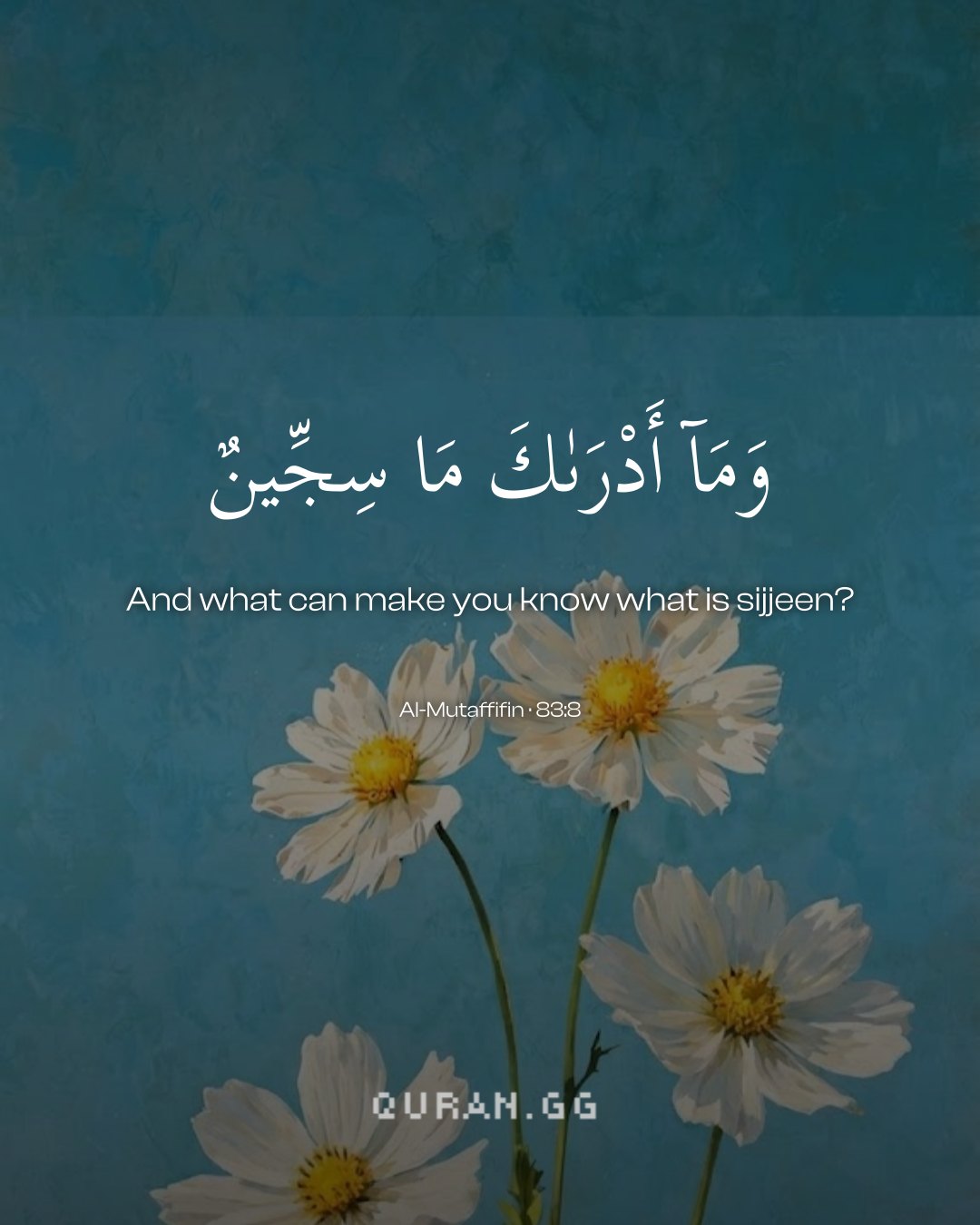
وَمَآ أَدْرَاكَ مَا سِجِّينٌ
(And what will make you know what Sijjin is) meaning, it is a great matter, an eternal prison, and a painful torment. Some have said that it is beneath the seventh earth. It has been mentioned previously in the lengthy Hadith of Al-Bara' bin `Azib that the Prophet said,
كَلَّا إِنَّ كِتَابَ الْفُجَّارِ لَفِي سِجِّينٍ (Never! [ i.e. they should never forget that Day.] Indeed the Record of Deeds of the sinners is in sijjin. [ 83:71' The word sijjin is derived from sajana which means to 'imprison in a narrow place'. According to Qamus, the word sijjin means 'eternal imprisonment'. Traditions indicate that sijjin is a special place where the souls of the non-believers are kept, and in the same place, the Record of the evil deeds of every wicked person is kept separately. It is also possible that in this there is a consolidated book in which the deeds of all the non-believers of the world are recorded.
Every human being wants to have his dues paid in full. But it is only right and proper that, if he is a man of character, he should also take care to give to others their full and rightful dues. He should want for others whatever he wants for himself. Those who take full measure for themselves and give less to others, will reach the Hereafter in such an ill state of grace that they will be doomed to eternal perdition. One who tries to ensure full measure for himself knows that everyone should receive his just deserts. In this context, if he gives less while giving to others, he lessens his realization of or sensitivity to the rights of others. If a man repeats this sort of misdeed again and again, a time will finally come when he will completely lose his sensitivity to others’ rights. His heart will be completely corroded by his sinful actions. In the present world many people are not at all keen to respect the rights of others or to give them their full dues. They are interested solely in recovering in full what is due to them from others. Such people will remain in a state of deprivation in the Hereafter. Wise are those who are eager to discharge others’ rights and dues fully, because they are the ones who will be entitled to the great bounties of God in the Hereafter.
Uthmani text of the Madinah mushaf (King Fahd Complex). Translation: Saheeh International. Tafsir via Quran.com.