How Musa asked for the Support of His Brother and was granted that by Allah
When Allah commanded him to go to Fir`awn, the one who he had run away from and whose vengeance he feared,
قَالَ رَبِّ إِنِّى قَتَلْتُ مِنْهُمْ نَفْساً
( Musa said: My Lord! I have killed a man among them,) meaning, that Coptic,
فَأَخَافُ أَن يَقْتُلُونِ
(and I fear that they will kill me.) i.e., `when they see me.'
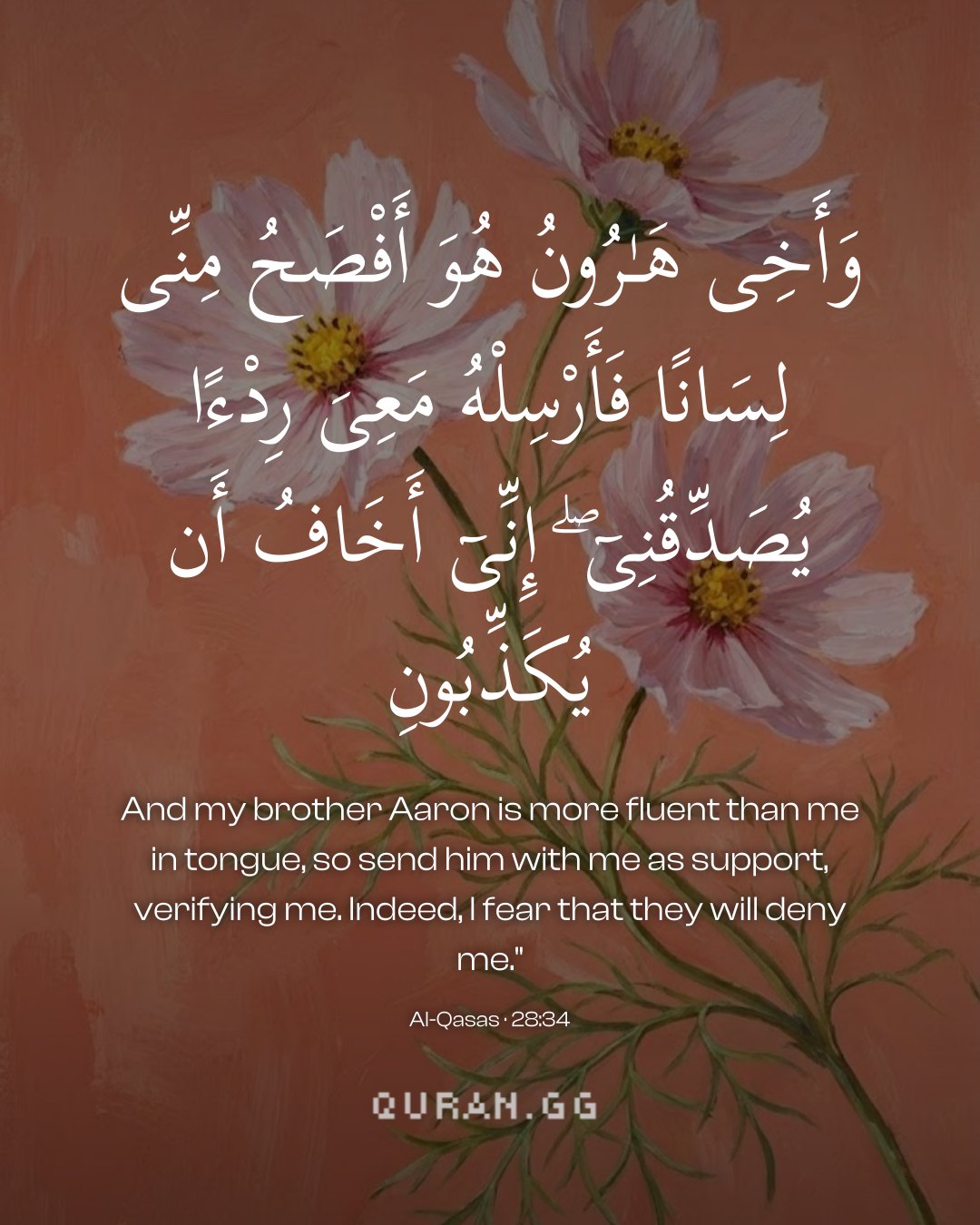
وَأَخِى هَـرُونُ هُوَ أَفْصَحُ مِنِّى لِسَاناً
(And my brother Harun -- he is more eloquent in speech than me,) Musa, peace be upon him, had a speech defect, because when he had been given the choice between a date and a pearl, he mistakenly picked up a coal and placed it on his tongue, so he found it difficult to speak clearly. Musa said:
هُوَ أَفْصَحُ مِنِّي لِسَانًا (He is more fluent in his tongue - 28:34). This verse points out that a high degree of oratory and eloquence is desirable for sermons and preaching, and there is no harm if one takes training in that.
Tazkirul Quran
Maulana Wahiduddin KhanOn ayahs 32–34
Moses was in Midian probably for ten years. During this period the former Pharaoh died and another member of the Pharaoh dynasty ascended the throne of Egypt. Then, Moses along with his wife (and, according to the Torah, with two children) left again for Egypt. On the way, he underwent the divine test on Mount Tur (Mount Sinai). God, who directly talked to a man on Mount Sinai, can also directly address all other human beings and apprise them of His will. But this is not the way of God. Direct address means removal of the curtain, while the considerations of human trial demand that the curtain should remain in place. So God reveals His message only to a selected person and causes this message to be delivered indirectly through him to others.
Uthmani text of the Madinah mushaf (King Fahd Complex). Translation: Saheeh International. Tafsir via Quran.com.