Tafsir Ibn Kathir (abridged)
How Musa's Mother was inspired and shown what to do
It was mentioned that when Fir`awn killed so many of the males of the Children of Israel, the Copts were scared that the Children of Israel would die out, and they themselves would have to do the heavy labor that the Children of Israel used to do. So they said to Fir`awn, "If this continues, and their old men die and the young men are killed, their women will not be able to do the work that the men are doing, and we will end up having to do it." So Fir`awn issued orders that the boys should be killed one year, and left alone the following year. Harun, peace be upon him, was born in a year when the boys were not killed, and Musa was born in a year when the boys were being killed. Fir`awn had people who were entrusted with this task. There were midwives who would go around and check on the women, and if they noticed that any woman was pregnant, they would write her name down. When the time came for her to give birth, no one was allowed to attend her except for Coptic women. If the woman gave birth to a girl, they would leave her alone and go away, but if she gave birth to a boy, the killers would come in with their sharp knives and kill the child, then they would go away; may Allah curse them. When the mother of Musa became pregnant with him, she did not show any signs of pregnancy as other women did, and none of the midwives noticed. But when she gave birth to a boy, she became very distressed and did not know what to do with him. She was extremely scared for him, because she loved him very much. No one ever saw Musa, peace be upon him, but they loved him, and the blessed ones were those who loved him both as a natural feeling and because he was a Prophet. Allah says:
وَأَلْقَيْتُ عَلَيْكَ مَحَبَّةً مِّنِّى
(And I endued you with love from Me) (20:39).
Musa, peace be upon him, in the House of Fir`awn
When Musa's mother became so worried and confused, it was inspired into her heart and mind what she should do, as Allah says:
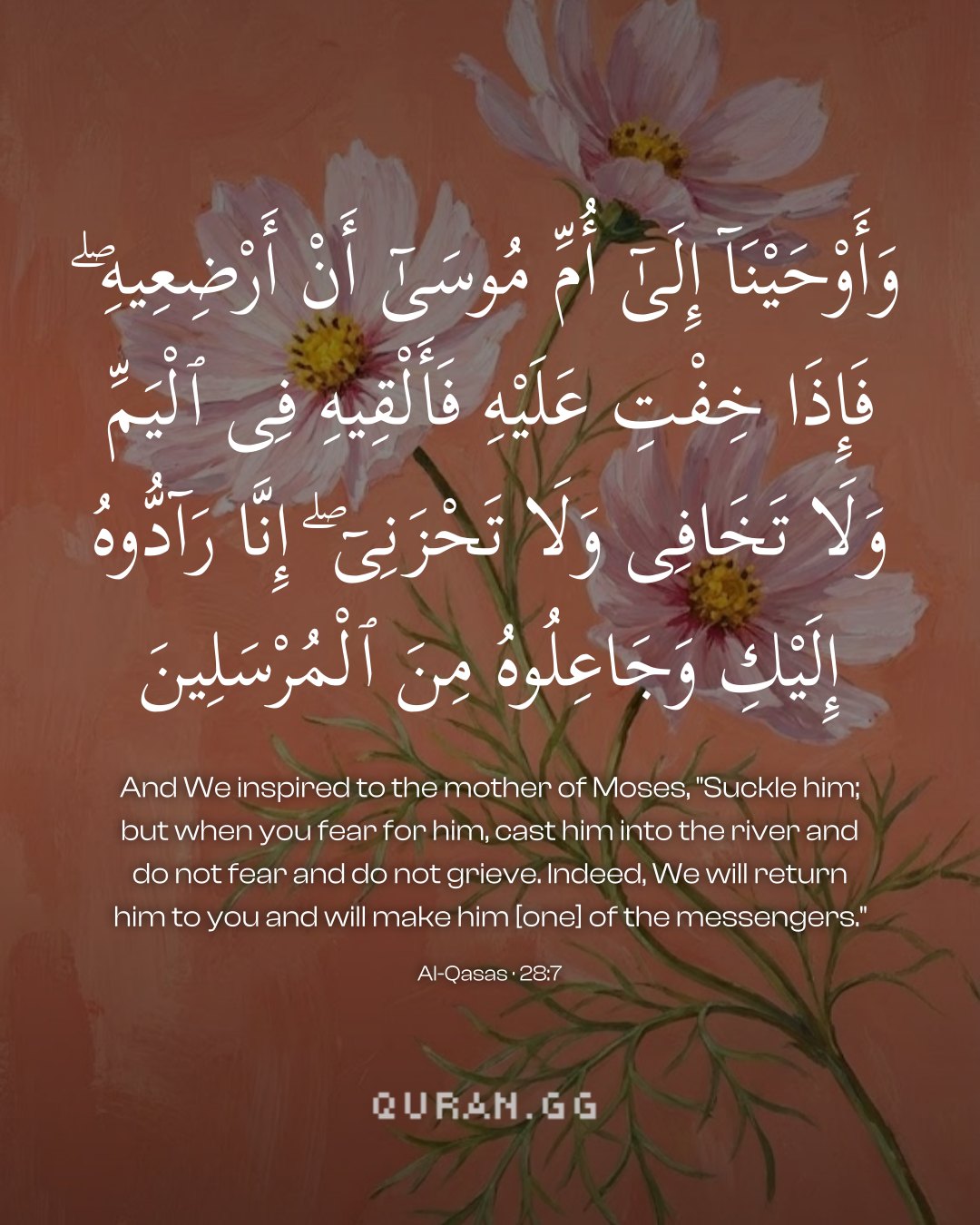
وَأَوْحَيْنَآ إِلَى أُمِّ مُوسَى أَنْ أَرْضِعِيهِ فَإِذَا خِفْتِ عَلَيْهِ فَأَلْقِيهِ فِى اليَمِّ وَلاَ تَخَافِى وَلاَ تَحْزَنِى إِنَّا رَآدُّوهُ إِلَيْكِ وَجَـعِلُوهُ مِنَ الْمُرْسَلِينَ
(And We inspired the mother of Musa (telling): "Suckle him, but when you fear for him, then cast him into the river and fear not, nor grieve. Verily, We shall bring him back to you, and shall make him one of (Our) Messengers.") Her house was on the banks of the Nile, so she took a box and made it into a cradle, and started to nurse her child. When someone came to her that she was afraid of, she would go and put him in that box and put it in the river, and she would tie it with a rope. One day someone that she was afraid of came to the house, so she went and put the child in that box and put it in the river, but she forgot to tie it. The water carried him away, past the house of Fir`awn, where some servant women picked the box up and took it to Fir`awn's wife. They did not know what was inside, and they were afraid that they would be in trouble if they opened it without her. When the box was opened, they saw it was a child with the most beautiful features. Allah filled her heart with love for him when she saw him; this was because she was blessed and because Allah wanted to honor her and cause her husband's doom. Allah says:
فَالْتَقَطَهُ ءَالُ فِرْعَوْنَ لِيَكُونَ لَهُمْ عَدُوّاً وَحَزَناً
(Then the household of Fir`awn picked him up, that he might become for them an enemy and a (cause of) grief.) Allah says:
إِنَّ فِرْعَوْنَ وَهَـمَـنَ وَجُنُودَهُمَا كَانُواْ خَـطِئِينَ
(Verily, Fir`awn, Haman and their armies were sinners.)
وَقَالَتِ امْرَأَتُ فِرْعَوْنَ قُرَّةُ عَيْنٍ لِّى وَلَكَ
(And the wife of Fir`awn said: "A comfort of the eye for me and for you...") means, when Fir`awn saw him, he wanted to kill him, fearing that he was one of the Children of Israel. But his wife Asiyah bint Muzahim came to the child's defence and tried to endear him to Fir`awn, saying,
قُرَّةُ عَيْنٍ لِّى وَلَكَ
(A comfort of the eye for me and for you.) Fir`awn said: "For you he may be, but not for me. And this was indeed the case: Allah guided her because of him, and destroyed him at his hands.
عَسَى أَن يَنفَعَنَآ
(perhaps he may be of benefit to us,) This is indeed what happened in her case, for Allah guided her through him and caused her to dwell in Paradise because of him.
أَوْ نَتَّخِذَهُ وَلَدًا
(or we may adopt him as a son.) She wanted to take him and adopt him as a son, because she had no children from Fir`awn.
وَهُمْ لاَ يَشْعُرُونَ
(And they perceived not.) means, they did not know what Allah planned for them when they picked him up, by His great wisdom and definitive proof.