Surah Al-Qasas Ayah 79 (28:79) — Meaning & Tafsir | Quran.GG

Surah Al-Qasas, Ayah 79

28:79 · Meaning and tafsir

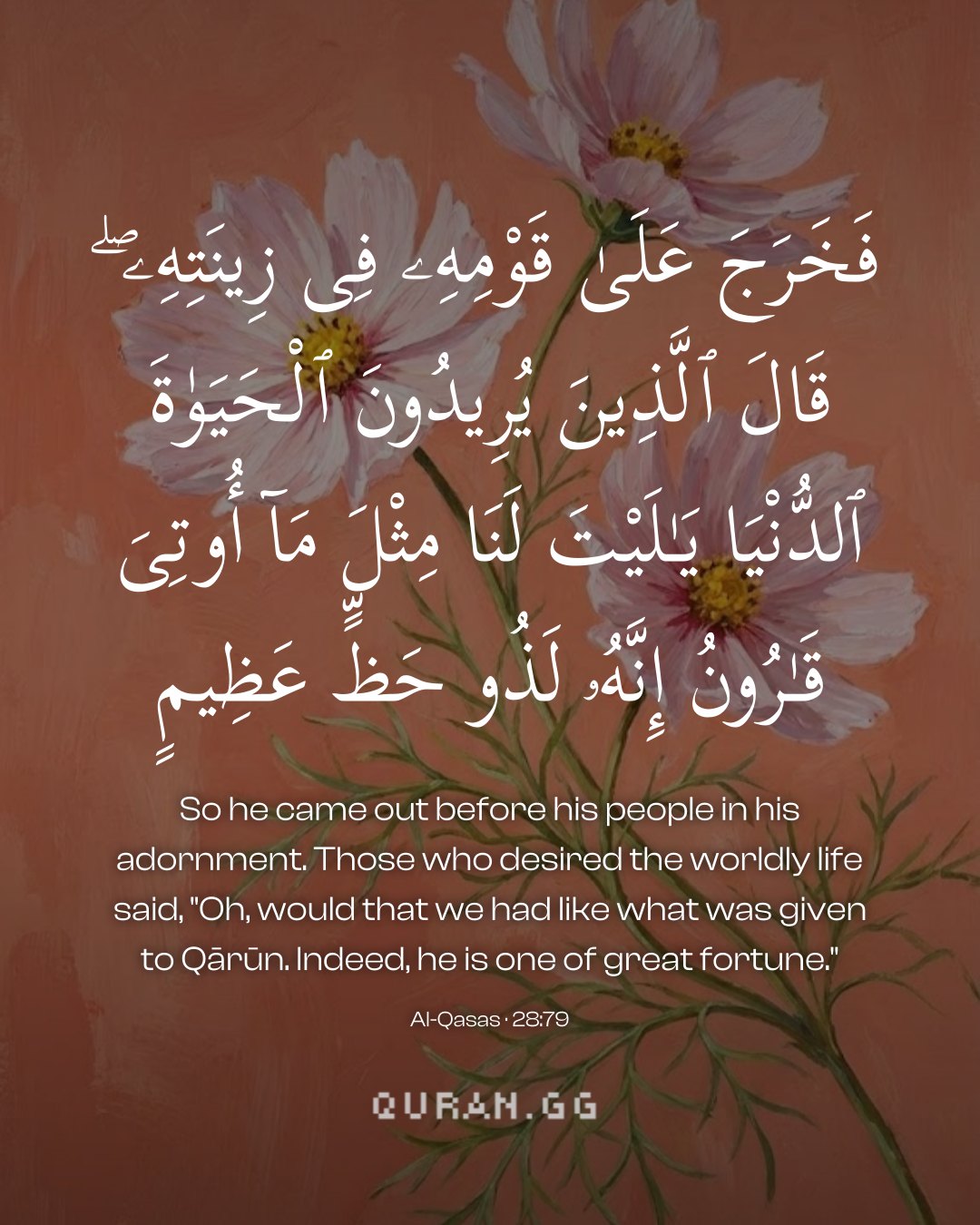
فَخَرَجَ عَلَىٰ قَوْمِهِۦ فِى زِينَتِهِۦ ۖ قَالَ ٱلَّذِينَ يُرِيدُونَ ٱلْحَيَوٰةَ ٱلدُّنْيَا يَـٰلَيْتَ لَنَا مِثْلَ مَآ أُوتِىَ قَـٰرُونُ إِنَّهُۥ لَذُو حَظٍّ عَظِيمٍ ٧٩

So he came out before his people in his adornment. Those who desired the worldly life said, "Oh, would that we had like what was given to Qārūn. Indeed, he is one of great fortune."

Surah Al-Qasas 28:79 in Arabic with its translation: “So he came out before his people in his adornment. Those who desired the worldly life said, "Oh, would that…”

Make something with this ayah

Turn it into a video for Stories, Reels or TikTok, recited by the reciter you pick, or an image on a background you choose. Free, in your browser.

Download this image

Tafsir Ibn Kathir (abridged)

How Qarun went forth in His Finery, and His People's Comments

Allah tells us how Qarun went forth one day before his people with his magnificent regalia; wearing his fine clothes, accompanied by his fine horses, his servants and retinue. When those whose desires and inclinations were for the world saw his adornments and splendor, they wished that they could have the same as he had been given, and said:

يلَيْتَ لَنَا مِثْلَ مَآ أُوتِىَ قَـرُونُ إِنَّهُ لَذُو حَظٍّ عَظِيمٍ

(Ah, would that we had the like of what Qarun has been given! Verily, he is the owner of a great fortune.) meaning, `he is very lucky and has a great share in this world.' When the people of beneficial knowledge heard this, they said to them:

وَيْلَكُمْ ثَوَابُ اللَّهِ خَيْرٌ لِّمَنْ ءَامَنَ وَعَمِلَ صَـلِحاً

(Woe to you! The reward of Allah is better for those who believe and do righteous deeds,) `Allah's reward to His believing, righteous servants in the Hereafter is better than what you see,' as is reported in the authentic Hadith:

«يَقُولُ اللهُ تَعَالَى: أَعْدَدْتُ لِعِبَادِي الصَّالِحِينَ مَا لَا عَيْنٌ رَأَتْ وَلَا أُذُنٌ سَمِعَتْ وَلَا خَطَرَ عَلَى قَلْبِ بَشَرٍ وَاقْرَءُوا إِنْ شِئْتُمْ:

فَلاَ تَعْلَمُ نَفْسٌ مَّآ أُخْفِىَ لَهُم مِّن قُرَّةِ أَعْيُنٍ جَزَآءً بِمَا كَانُواْ يَعْمَلُونَ

(Allah has prepared for His righteous servants what no eye has seen, no ear has heard, and the heart of a human cannot comprehend. Recite, if you wish: (No person knows what is kept hidden for them of joy as a reward for what they used to do.)) (32:17).

وَلاَ يُلَقَّاهَآ إِلاَّ الصَّـبِرُونَ

(and this none shall attain except the patient.) As-Suddi said: "None shall reach Paradise except for the patient" -- as if this were the completion of the statement made by the people of knowledge. Ibn Jarir said, "This applies only to those who patiently forsake the love of this world, seeking the Hereafter. It is as if this is part of what the people of knowledge said, but it is made part of the Words of Allah, stating this fact."

Ma'arif al-Qur'an

إِنَّمَا أُوتِيتُهُ عَلَىٰ عِلْمٍ عِندِي (This is given to me because of knowledge (I have) with me- 28:78). Some commentators are of the view that "knowledge" in this sentence refers to the understanding of Torah. As reported in some narrations, Qarun remembered Torah by heart and was an authority on it. He was one of the seventy scholars whom Sayyidna Musa (علیہ السلام) had selected for Miqat (the appointed time and place for having conversation with Allah). But he became conceited on his knowledge, and regarded it as his personal achievement. The object of his above-referred utterance was to convey that whatever wealth he had possessed was the direct result of his personal skill and intelligence. Hence, he himself had the right on it, and that no one had done any favour to him.

Continue reading the tafsir of ayahs 78–79

Tazkirul Quran

The character of Korah described here is the same as is invariably found in men of wealth. A wealthy man thinks that whatever he has acquired is thanks to his own talents. But with all his knowledge, the rich man never stops to wonder how his wealth is going to save him in this ephemeral world from the same fate as all his rich predecessors met with—namely death and destruction.

Uthmani text of the Madinah mushaf (King Fahd Complex). Translation: Saheeh International. Tafsir via Quran.com.