Which was revealed in Makkah
بِسْمِ اللَّهِ الرَّحْمَـنِ الرَّحِيمِ
In the Name of Allah, the Most Gracious, the Most Merciful.
The Oath about the Final Return on the Day of Resurrection and the Refutation against the Plots
It has been mentioned previously on more than one occasion that if the thing that is being sworn about is something that is being negated, then it is permissible to use the word "La" (Nay) before the oath to emphasize the negation. Here, what is being sworn about is the affirmation of the final abode and the refutation against the claim of the ignorant that the resurrection of bodies will not occur. This is why Allah says,
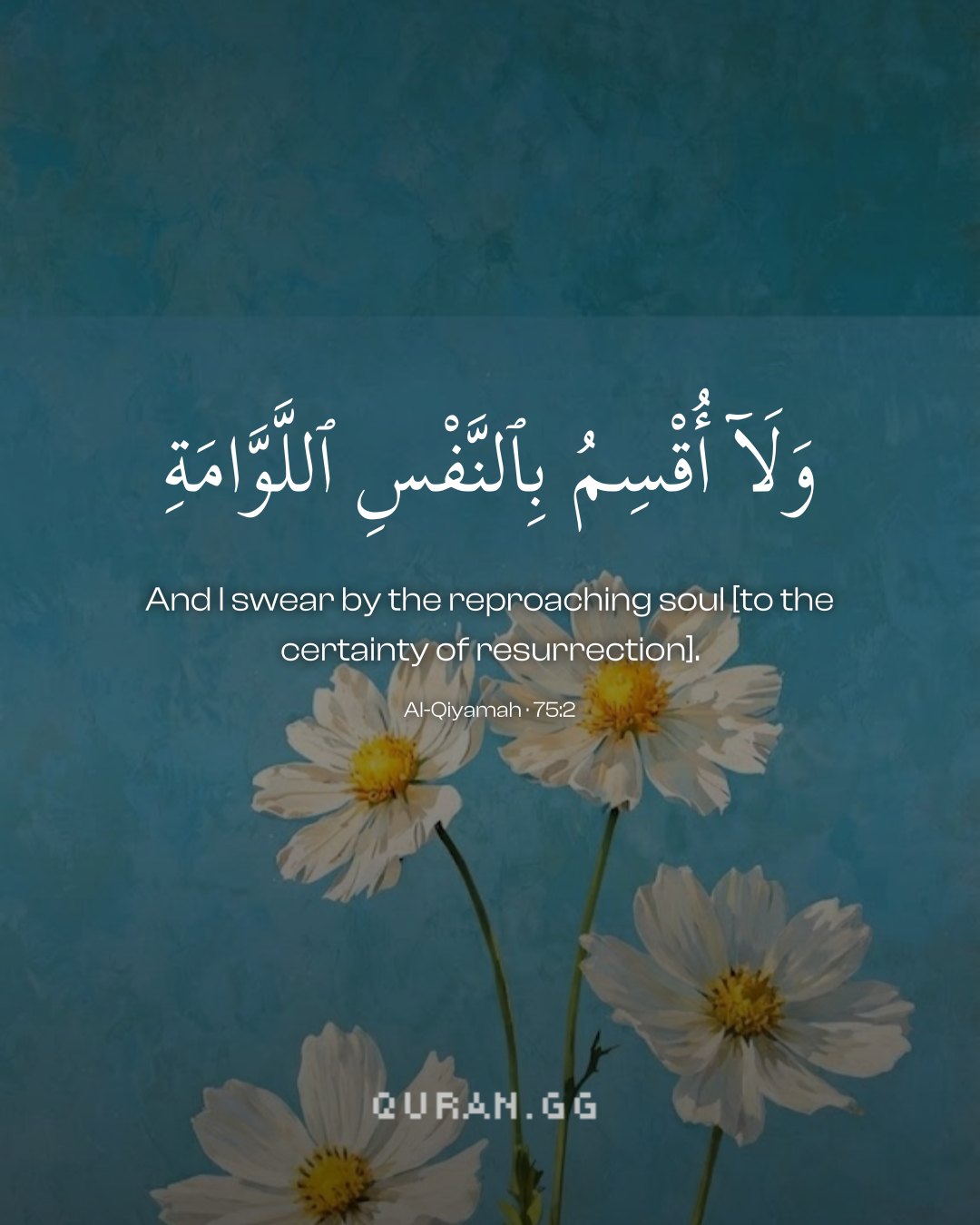
لاَ أُقْسِمُ بِيَوْمِ الْقِيَـمَةِ - وَلاَ أُقْسِمُ بِالنَّفْسِ اللَّوَّامَةِ
Continue reading the tafsir of ayahs 1–15 Interpretation of Lawwarnah
Sayyidna Ibn ` Abbas, Hasan al-Basri and others have expressed the view that Allah has sworn an oath by the self-reproaching conscience in order to show honour for the believing souls who take account of their deeds, regret, and feel sorry for, their shortcomings and reproach themselves. Three kinds of Nafs
The foregoing interpretation of An-nafs-ul-lawwamah embraces An-nafs-ul-mutma` innah. The two terms are titles of a God-fearing
person.
In Sufi terminology, we come across the following concepts. The noble Sufis say that man in his nature goes through three stages of human development. The first stage is called ] An-nafs-ul-ammarah 'the self that tempts (to evil) ' as said by the Holy Qur'an: اِنَّ النَّفْسَ لَاَمَّارَةٌۢ بِالسُّوْۗءِ '...Surely, man's inner self often incites to evil_[ 12:53] '
The second stage of development is called An-nafs-ul-lawwamah 'the self that blames' - translated above as 'the self-reproaching conscience'.
The first stage is developed into the second stage when the traveler perform righteousness, and exerts himself in riyadah 'ascetic discipline' and mujahadah 'spiritual struggle'. This Self is conscious of its own imperfections. It regrets its evils and shortcomings, but it is not completely cut off from the evils. The third and highest stage of development is called An-nafs-ul-mutma'innah 'the self at peace'. This self develops into this stage when it progressively performs righteousness and attains Divine nearness and applies the sacred laws of Shari` ah so rigorously that Shari'ah becomes his nature and develops a natural hatred for anything contrary to Shari` ah . The title of the self at this stage is mutma'innah.
Uthmani text of the Madinah mushaf (King Fahd Complex). Translation: Saheeh International. Tafsir via Quran.com.