Tafsir Ibn Kathir (abridged)
Allah said "Allah made it not but as a message of good news for you and as an assurance to your hearts". This Ayah means, "Allah sent down angels and told you about their descent to encourage you and to comfort and reassure your hearts. You should know that victory only comes from Allah and that if He willed, He would have defeated your enemy without you having to fight them." For instance, Allah said after commanding the believers to fight,
ذلِكَ وَلَوْ يَشَآء اللَّهُ لاَنْتَصَرَ مِنْهُمْ وَلَـكِن لّيَبْلُوَ بَعْضَكُمْ بِبَعْضٍ وَالَّذِينَ قُتِلُواْ فِى سَبِيلِ اللَّهِ فَلَن يُضِلَّ أَعْمَـلَهُمْ سَيَهْدِيهِمْ وَيُصْلِحُ بَالَهُمْ وَيُدْخِلُهُمُ الْجَنَّةَ عَرَّفَهَا لَهُمْ
(But if it had been Allah's will, He Himself could certainly have punished them (without you). But (He lets you fight) in order to test some of you with others. But those who are killed in the way of Allah, He will never let their deeds be lost. He will guide them and set right their state. And admit them to Paradise which He has made known to them) 47:4-6.
This is why Allah said here,
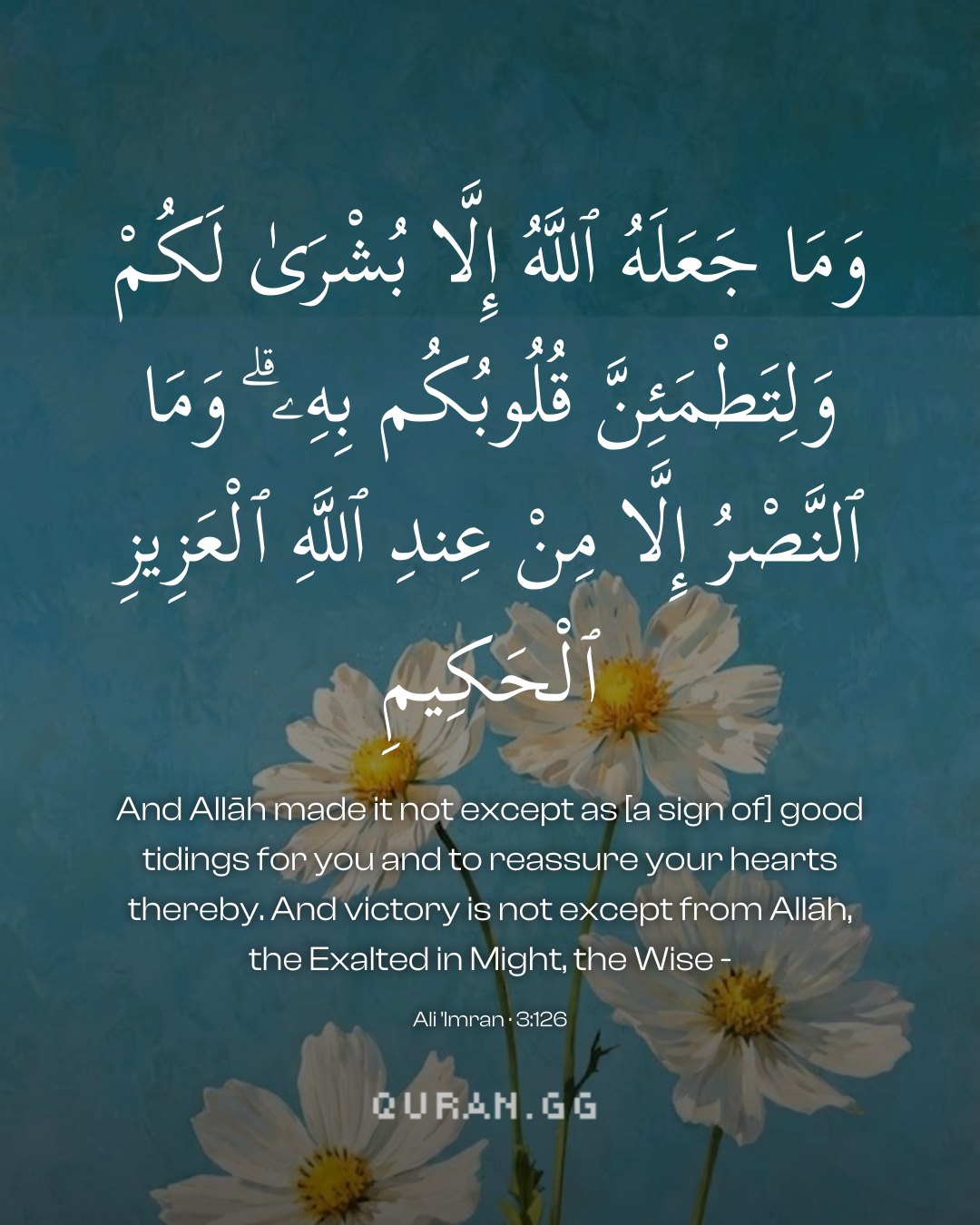
وَمَا جَعَلَهُ اللَّهُ إِلاَّ بُشْرَى لَكُمْ وَلِتَطْمَئِنَّ قُلُوبُكُمْ بِهِ وَمَا النَّصْرُ إِلاَّ مِنْ عِندِ اللَّهِ الْعَزِيزِ الْحَكِيمِ
(Allah made it not but as a message of good news for you and as an assurance to your hearts. And there is no victory except from Allah, the All-Mighty, the All-Wise) 3:126.
This Ayah means, "Allah is the Almighty Whose power can never be undermined, and He has the perfect wisdom in His decrees and in all His decisions." Allah said,
لِيَقْطَعَ طَرَفاً مِّنَ الَّذِينَ كَفَرُواْ
(That He might cut off a part of those who disbelieve,) 3:127 meaning, out of His wisdom, He commands you to perform Jihad and to fight.
Allah then mentions the various consequences of performing Jihad against the disbelievers. For instance, Allah said,
لِيَقْطَعَ طَرَفاً
(That He might cut off a part...) meaning, to cause a part of a nation to perish,
مِّنَ الَّذِينَ كَفَرُواْ أَوْ يَكْبِتَهُمْ
(of those who disbelieve, or expose them to infamy,) by disgracing them and forcing them to return with only their rage, having failed in their aim to harm you. This is why Allah said next,
أَوْ يَكْبِتَهُمْ فَيَنقَلِبُواْ
(or expose them to infamy, so that they retire) to go back to their land,
خَآئِبِينَ
(frustrated) without achieving their aims.
Allah then mentions a statement that testifies that the decision in this life and the Hereafter is for Him Alone without partners. (3:127)
لَيْسَ لَكَ مِنَ الاٌّمْرِ شَىْءٌ
(Not for you is the decision) 3:128
meaning, "The matter is all in My Hand." Allah also said,
فَإِنَّمَا عَلَيْكَ الْبَلَـغُ وَعَلَيْنَا الْحِسَابُ
(your duty is only to convey (the Message) and on Us is the reckoning.) 13:40, and,
لَّيْسَ عَلَيْكَ هُدَاهُمْ وَلَـكِنَّ اللَّهَ يَهْدِى مَن يَشَآءُ
(Not upon you is their guidance, but Allah guides whom He wills.) 2:272, and,
إِنَّكَ لاَ تَهْدِى مَنْ أَحْبَبْتَ وَلَـكِنَّ اللَّهَ يَهْدِى مَن يَشَآءُ
(Verily, you guide not whom you like, but Allah guides whom He wills) 28: 56.
Muhammad bin Ishaq said that Allah's statement,
لَيْسَ لَكَ مِنَ الاٌّمْرِ شَىْءٌ
(3:128... Not for you is the decision;), means, "No part of the decision regarding My servants is yours, except what I command you." Allah then mentions the rest of the consequences of Jihad,
أَوْ يَتُوبَ عَلَيْهِمْ
(whether He pardons them) concerning the acts of disbelief that they commit, thus delivering them from misguidance to the guidance.
أَوْ يُعَذِّبَهُمْ
(or punishes them;) in this life and the Hereafter because of their disbelief and errors,
فَإِنَّهُمْ ظَـلِمُونَ
(verily, they are the wrongdoers), and thus, they deserve such a fate.(3:128 end)
Al-Bukhari recorded that, Salim bin `Abdullah said that his father said that he heard the Messenger of Allah ﷺ saying -- when he raised his head from bowing in the second unit of the Fajr prayer -- "O Allah! Curse so-and-so," after saying; Sami` Allahu Liman Hamidah, Rabbana wa lakal-Hamd. Thereafter, Allah revealed this Ayah,
لَيْسَ لَكَ مِنَ الاٌّمْرِ شَىْءٌ
(Not for you is the decision;) This was also recorded by An-Nasa'i. Imam Ahmad recorded that Salim bin `Abdullah said that his father said that he heard the Messenger of Allah ﷺ saying,
«اللَّهُمَّ الْعَنْ فُلَانًا، اللَّهُمَّ الْعَنِ الْحَارِثَ بْنَ هِشَامٍ، اللَّهُمَّ الْعَنْ سُهَيْلَ بْنَ عَمْرٍو، اللَّهُمَّ الْعَنْ صَفْوَانَ بْنَ أُمَيَّة»
(O Allah! Curse so-and-so. O Allah! Curse Al-Harith bin Hisham. O Allah! Curse Suhayl bin `Amr. O Allah! Curse Safwan bin Umayyah.)
Thereafter, this Ayah was revealed;
لَيْسَ لَكَ مِنَ الاٌّمْرِ شَىْءٌ أَوْ يَتُوبَ عَلَيْهِمْ أَوْ يُعَذِّبَهُمْ فَإِنَّهُمْ ظَـلِمُونَ
(Not for you is the decision; whether He turns in mercy to (pardon) them or punishes them; verily, they are the wrongdoers) 3:128.
All these persons were pardoned (after they embraced Islam later on).
Al-Bukhari recorded that Abu Hurayrah said that when Allah's Messenger ﷺ would supplicate against or for someone, he would do so when he was finished bowing and saying; Sami` Allahu Liman Hamidah, Rabbana wa lakal-Hamd. He would then say, (the Qunut)
«اللَّهُمَّ أَنْجِ الْوَلِيدَ بْنَ الْوَلِيدِ، وَسَلَمَةَ بْنَ هِشَامٍ وَعَيَّاشَ بْنَ أَبِي رَبِيعَةَ، وَالْمُسْتَضْعَفِينَ مِنَ الْمُؤْمِنِينَ، اللَّهُمَّ اشْدُدْ وَطْأَتَكَ عَلى مُضَرَ، وَاجْعَلْهَا عَلَيْهِمْ سِنِينَ كَسِنِي يُوسُف»
(O Allah! Save Al-Walid bin Al-Walid, Salamah bin Hisham, `Ayyash bin Abi Rabi`ah and the weak and the helpless people among the faithful believers. O Allah! Be hard on the tribe of Mudar and let them suffer from years of famine like that of the time of Yusuf. )
He would say this supplication aloud. He sometimes would supplicate during the Dawn prayer, "O Allah! Curse so-and-so (persons)," mentioning some Arab tribes. Thereafter, Allah revealed,
لَيْسَ لَكَ مِنَ الاٌّمْرِ شَىْءٌ
(Not for you is the decision.)
Al-Bukhari recorded that Hamid and Thabit said that, Anas bin Malik said that the Prophet was injured during the battle of Uhud and said,
«كَيْفَ يُفْلِحُ قَوْمٌ شَجُّوا نَبِيَّهُمْ؟»
(How can a people achieve success after having injured their Prophet)
Thereafter,
لَيْسَ لَكَ مِنَ الاٌّمْرِ شَىْءٌ
(Not for you is the decision,) was revealed.
Imam Ahmad recorded that Anas said that, the Prophet's front tooth was broken during the battle of Uhud and he also sustained injuries on his forehead until blood dripped on his face. The Prophet said,
«كَيْفَ يُفْلِحُ قَوْمٌ فَعَلُوا هذَا بِنَبِيِّهِمْ، وَهُوَ يَدْعُوهُمْ إِلى رَبِّهِمْ عَزَّ وَجَلَّ؟»
(How can a people achieve success after having done this to their Prophet who is calling them to their Lord, the Exalted and Most Honored) Allah revealed,
لَيْسَ لَكَ مِنَ الاٌّمْرِ شَىْءٌ أَوْ يَتُوبَ عَلَيْهِمْ أَوْ يُعَذِّبَهُمْ فَإِنَّهُمْ ظَـلِمُونَ
(Not for you is the decision; whether He turns in mercy to (pardons) them or punishes them; verily, they are the wrongdoers.) Muslim also collected this Hadith.
Allah then said,
وَللَّهِ مَا فِى السَّمَـوَتِ وَمَا فِى الاٌّرْضِ
(3:129... And to Allah belongs all that is in the heavens and all that is in the Earth.) 3:129, everything is indeed the property of Allah and all are servants in His Hand.
يَغْفِرُ لِمَن يَشَآءُ وَيُعَذِّبُ مَن يَشَآءُ
(He forgives whom He wills, and punishes whom He wills.) for His is the decision and none can resist His decision. Allah is never asked about what He does, while they will be asked,
وَاللَّهُ غَفُورٌ رَّحِيمٌ
(and Allah is Oft-Forgiving, Most Merciful.)(3:129 end...)