Tafsir Ibn Kathir (abridged)
The Reason and Wisdom Behind the Defeat at Uhud
Allah said,
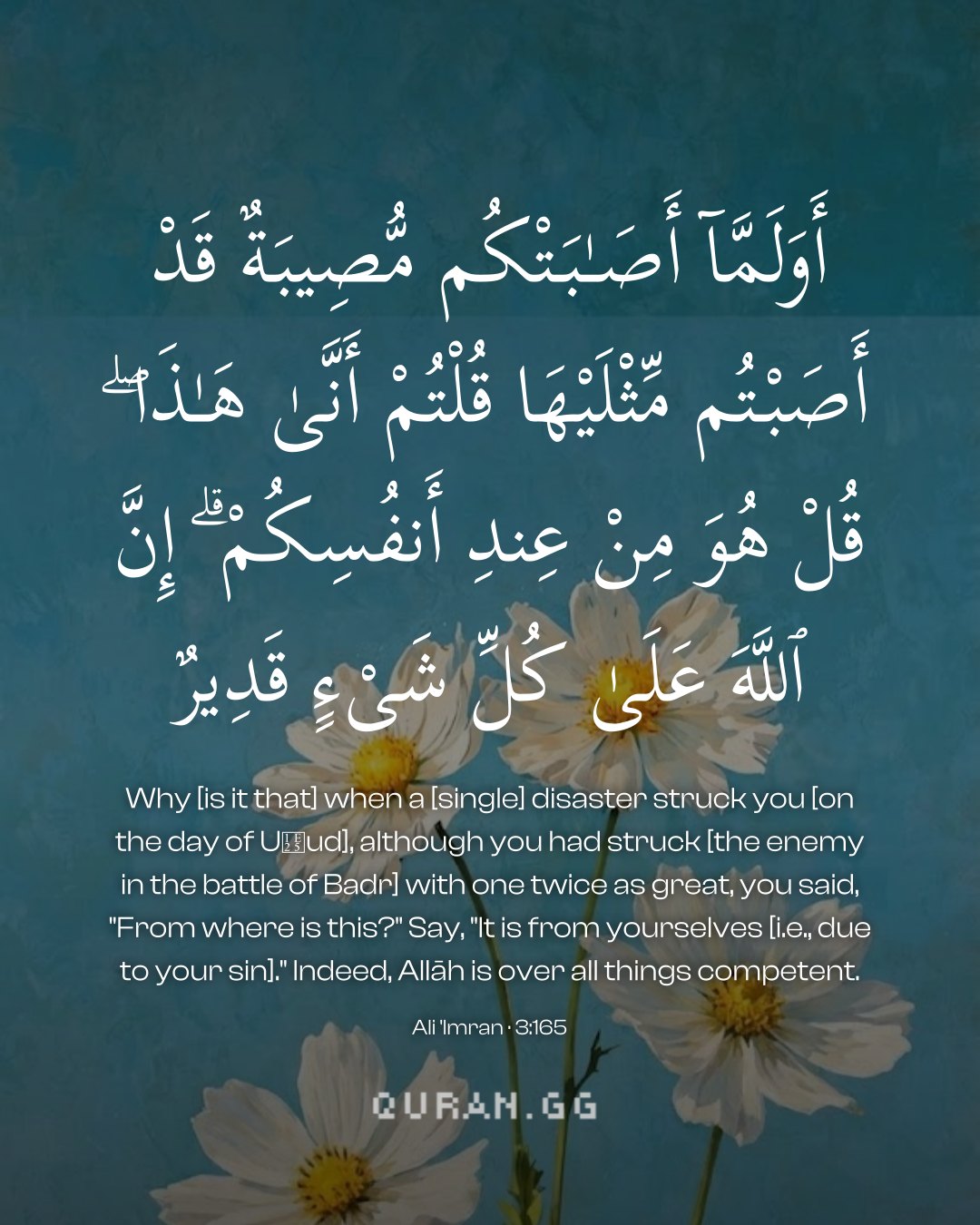
أَوَ لَمَّا أَصَـبَتْكُمْ مُّصِيبَةٌ
(When a single disaster smites you), in reference to when the Muslims suffered seventy fatalities during the battle of Uhud,
قَدْ أَصَبْتُمْ مِّثْلَيْهَا
(although you smote (your enemies) with one twice as great,) during Badr, when the Muslims killed seventy Mushriks and captured seventy others,
قُلْتُمْ أَنَّى هَـذَا
(you say: "From where does this come to us") why did this defeat happen to us
قُلْ هُوَ مِنْ عِندِ أَنْفُسِكُمْ
(Say, "It is from yourselves.") Ibn Abi Hatim recorded that `Umar bin Al-Khattab said, "When Uhud occurred, a year after Badr, Muslims were punished for taking ransom from the disbelievers at Badr in return for releasing the Mushriks whom they captured in that battle. Thus, they suffered the loss of seventy fatalities and the Companions of the Messenger of Allah gave flight and abandoned him. The Messenger suffered a broken tooth, the helmet was smashed on his head and blood flowed onto his face. Allah then revealed,
أَوَ لَمَّا أَصَـبَتْكُمْ مُّصِيبَةٌ قَدْ أَصَبْتُمْ مِّثْلَيْهَا قُلْتُمْ أَنَّى هَـذَا قُلْ هُوَ مِنْ عِندِ أَنْفُسِكُمْ
(When a single disaster smites you, although you smote (your enemies) with one twice as great, you say: "From where does this come to us" Say, "It is from yourselves".), because you took the ransom." Furthermore, Muhammad bin Ishaq, Ibn Jurayj, Ar-Rabi` bin Anas and As-Suddi said that the Ayah,
قُلْ هُوَ مِنْ عِندِ أَنْفُسِكُمْ
(Say, "It is from yourselves.") means, because you, the archers, disobeyed the Messenger's command to not abandon your positions.
إِنَّ اللَّهَ عَلَى كُلِّ شَىْءٍ قَدِيرٌ
(And Allah has power over all things.) and He does what He wills and decides what He wills, and there is none who can resist His decision.
Allah then said,
وَمَآ أَصَـبَكُمْ يَوْمَ الْتَقَى الْجَمْعَانِ فَبِإِذْنِ اللَّهِ
(And what you suffered on the day the two armies met, was by the leave of Allah), for when you ran away from your enemy, who killed many of you and injured many others, all this occurred by Allah's will and decree out of His perfect wisdom,
وَلِيَعْلَمَ الْمُؤْمِنِينَ
(in order that He might test the believers.) who were patient, firm and were not shaken,
وَلِيَعْلَمَ الَّذِينَ نَافَقُواْ وَقِيلَ لَهُمْ تَعَالَوْاْ قَاتِلُواْ فِى سَبِيلِ اللَّهِ أَوِ ادْفَعُواْ قَالُواْ لَوْ نَعْلَمُ قِتَالاً لاَّتَّبَعْنَـكُمْ
(And that He might test the hypocrites, it was said to them: "Come, fight in the way of Allah or defend yourselves." They said: "Had we known that fighting will take place, we would certainly have followed you.") 3:167,
This refers to the Companions of `Abdullah bin Ubayy bin Salul who went back (to Al-Madinah) with him before the battle. Some believers followed them and encouraged them to come back and fight, saying,
أَوِ ادْفَعُواْ
(or defend), so that the number of Muslims increases, as Ibn `Abbas, `Ikrimah, Sa`id bin Jubayr, Ad-Dahhak, Abu Salih, Al-Hasan and As-Suddi stated. Al-Hasan bin Salih said that this part of the Ayah means, help by supplicating for us, while others said it means, man the posts. However, they refused, saying,
لَوْ نَعْلَمُ قِتَالاً لاَّتَّبَعْنَـكُمْ
("Had we known that fighting will take place, we would certainly have followed you.") meaning, according to Mujahid, if we knew that you would fight today, we would join you, but we think you will not fight. Allah said,
هُمْ لِلْكُفْرِ يَوْمَئِذٍ أَقْرَبُ مِنْهُمْ لِلإِيمَـنِ
(They were that day, nearer to disbelief than to faith,)
This Ayah indicates that a person passes through various stages, sometimes being closer to Kufr and sometimes closer to faith, as evident by,
هُمْ لِلْكُفْرِ يَوْمَئِذٍ أَقْرَبُ مِنْهُمْ لِلإِيمَـنِ
(They were that day, nearer to disbelief than to faith,)
Allah then said,
يَقُولُونَ بِأَفْوَهِهِم مَّا لَيْسَ فِى قُلُوبِهِمْ
(saying with their mouths what was not in their hearts.) for they utter what they do not truly believe in, such as,
لَوْ نَعْلَمُ قِتَالاً لاَّتَّبَعْنَـكُمْ
("Had we known that fighting will take place, we would certainly have followed you.")
They knew that there was an army of idolators that came from a far land raging against the Muslims, to avenge their noble men whom the Muslims killed in Badr. These idolators came in larger numbers than the Muslims, so it was clear that a battle will certainly occur. Allah said;
وَاللَّهُ أَعْلَمُ بِمَا يَكْتُمُونَ
(And Allah has full knowledge of what they conceal.)
الَّذِينَ قَالُواْ لإِخْوَنِهِمْ وَقَعَدُواْ لَوْ أَطَاعُونَا مَا قُتِلُوا
((They are) the ones who said about their killed brethren while they themselves sat (at home): "If only they had listened to us, they would not have been killed.") had they listened to our advice and not gone out, they would not have met their demise. Allah said,
قُلْ فَادْرَءُوا عَنْ أَنفُسِكُمُ الْمَوْتَ إِن كُنتُمْ صَـدِقِينَ
(Say: "Avert death from your own selves, if you speak the truth.") meaning, if staying at home saves one from being killed or from death, then you should not die. However death will come to you even if you were hiding in fortified castles. Therefore, fend death off of yourselves, if you are right.
Mujahid said that Jabir bin `Abdullah said, "This Ayah 3:168 was revealed about `Abdullah bin Ubayy bin Salul (the chief hypocrite)."