In the Name of Allah, the Most Beneficent, the Most Merciful.
Refutation against the Idolators' Denial of the Occurrence of the Day of Judgement
In rejection of the idolators' questioning about the Day of Judgement, due to their denial of its occurrence, Allah says,
عَمَّ يَتَسَآءَلُونَ - عَنِ النَّبَإِ الْعَظِيمِ
(What are they asking about About the great news,) meaning, what are they asking about They are asking about the matter of the Day of Judgement, and it is the great news. Meaning the dreadful, horrifying, overwhelming information.
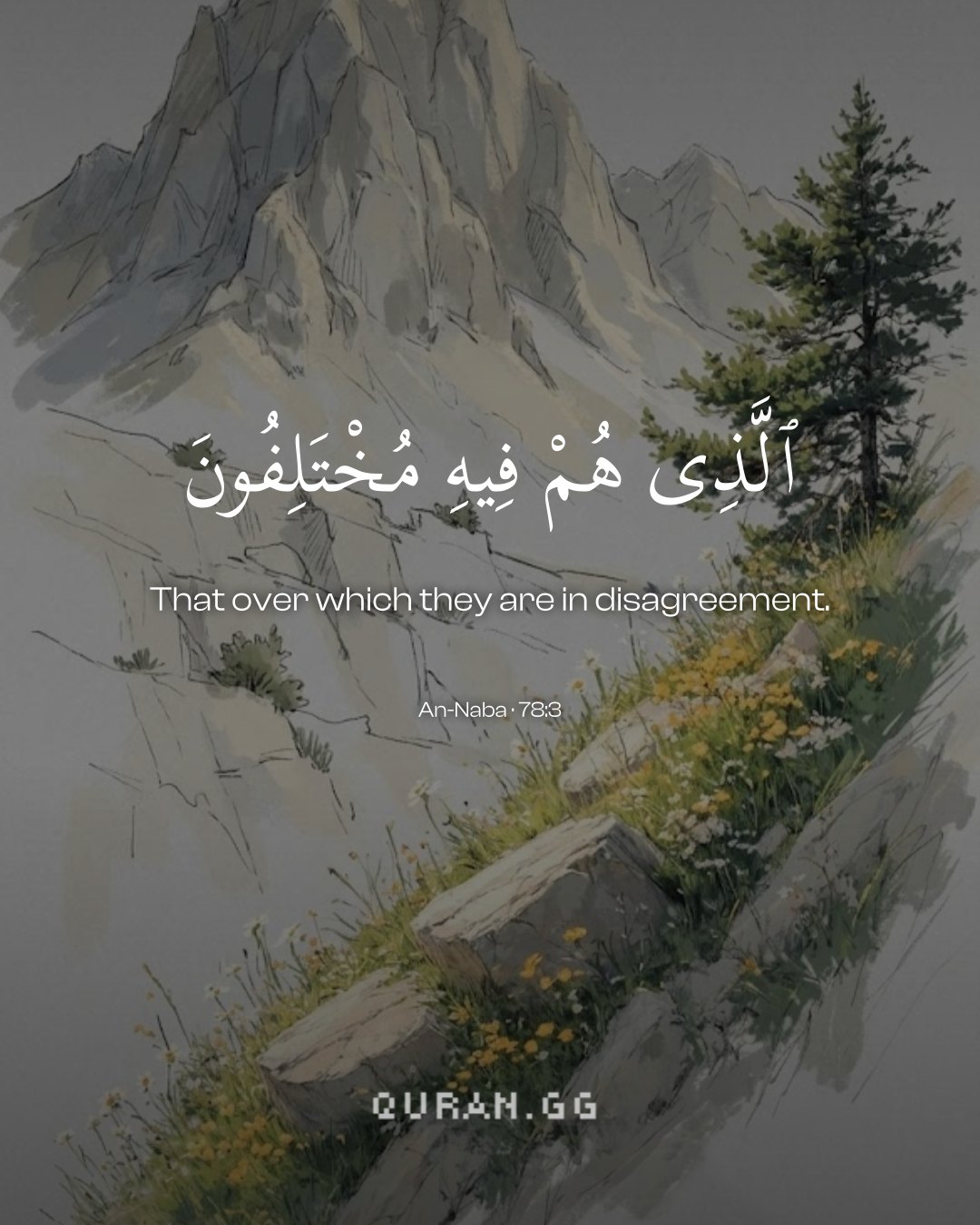
الَّذِى هُمْ فِيهِ مُخْتَلِفُونَ
(About which they are in disagreement.) meaning, the people are divided into two ideas about it. There are those who believe in it and those who disbelieve in it. Then Allah threatens those who deny the Day of Judgement by saying,
عَنِ النَّبَإِ الْعَظِيمِ الَّذِي هُمْ فِيهِ مُخْتَلِفُونَ (About the Great Event in which they dispute!...78:2, 3). The word naba' means 'news' but not every news is naba'. It means a 'momentous news of a great event'. This refers to the news of the Day of Judgment. The verse purports to convey that the inhabitants of Makkah ask about the Day of Judgment in which they dispute [ while some of them believed in Resurrection, others did not.]
Sayyidna Ibn ` Abbas ؓ reports that when the revelation of Qur'an started, the pagan Arabs used to form circles and discuss and criticise it, especially about the tremendous import of Resurrection and Judgment referred to in the Qur'an. The pagans thought this was impossible, and they used to have protracted discussion. The disbelievers persuade themselves to believe that the predicted event will never take place, though there were others who believed in the event. The Surah opens by shunning the enquirers and the enquiry, it wonders that anyone should raise any doubts about Resurrection and Judgment. Some of the commentators express the opinion that their enquiry was not a genuine one where they were keen to learn about the truth. So they ask half-mockingly and half in doubt, when that event, so loudly pronounced, will happen. Qur'an has responded by asserting one statement twice for emphasis, thus:
Tazkirul Quran
Maulana Wahiduddin KhanOn ayahs 3–16
The Arab people were not disbelievers in the Hereafter. But they did not believe in a Hereafter of such a nature as is mentioned in the Quran. In other words, they doubted that by rejecting Muhammad, they would face degradation and humiliation in the world of the Hereafter.
Uthmani text of the Madinah mushaf (King Fahd Complex). Translation: Saheeh International. Tafsir via Quran.com.