Allah's Wrath against the Apostate, except for the One Who is forced into Disbelief
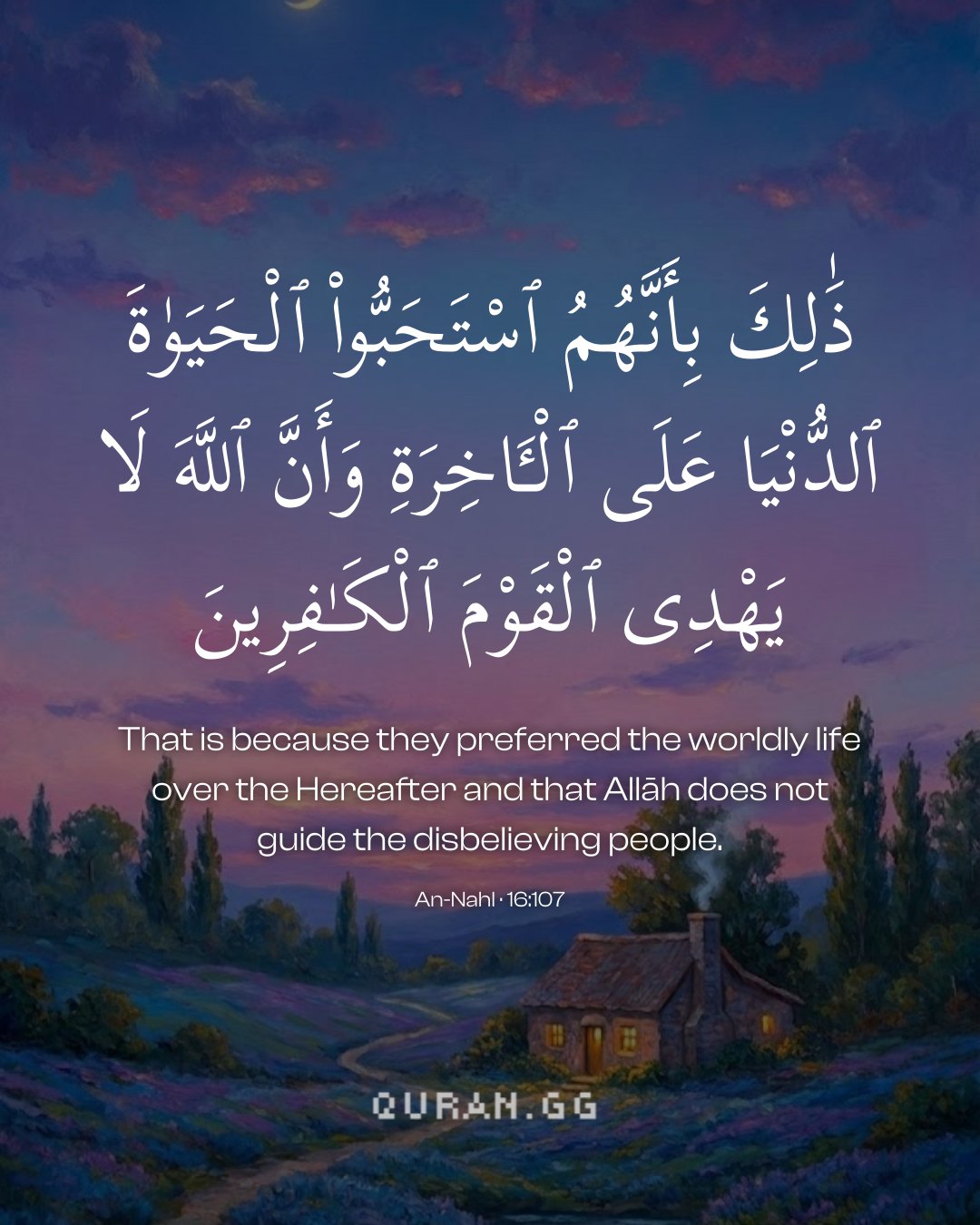
Allah tells us that He is angry with them who willingly disbelieve in Him after clearly believing in Him, who open their hearts to disbelief finding peace in that, because they understood the faith yet they still turned away from it. They will suffer severe punishment in the Hereafter, because they preferred this life to the Hereafter, and they left the faith for the sake of this world and Allah did not guide their hearts and help them to stand firm in the true religion. He put a seal on their hearts so that they would not be able to understand what is beneficial for them, and He sealed their ears and eyes so that they would not benefit from them. Their faculties did not help them at all, so they are unaware of what is going to happen to them.
From the first verse (106) comes the religious ruling about a person who has been compelled to utter a word of infidelity (kufr) under the threat that he would be killed if he did not do that. If he feels that, in all likelihood, the people threatening him have full capability of doing just that, then, this is a state of duress. If he were to utter some word of disbelief verbally - but, with a heart firm on Faith, a heart that shuns saying what is false and evil - then, there is no sin on him, nor will his wife become unlawful for him. (Qurtubi, Mazhari).
This verse was revealed about the noble Sahabah who were arrested by the Mushriks. Their disbelieving captors had told them that they must return to infidelity failing which they would be killed.
In Makkah there were some non-Arab slaves. In various books of tafsir (commentary) their names have been given as Jabr, Yasar, ‘A’ish, Ya‘ish, etc. (there is some mention also of Salman al-Farsi who later became a Muslim). These slaves being either Jews or Christians were very knowledgeable about the ancient holy religions of Judaism and Christianity. From time to time they chanced to meet the Prophet Muhammad. On the basis of such meetings, the Chiefs of the Quraysh started saying, ‘The non-Arabs tell Muhammad something and he presents it to the people, declaring it to be “divine discourse.’” Why was this ridiculous statement made by them? It was due to the same common wrong approach which is found in every period all over the world; i.e. the refusal to recognize the value of one who is one’s own contemporary. The Prophet Muhammad was a contemporary personality for the Quraysh, and therefore, they failed to appreciate him. This verse shows that those who feel nothing but contempt for their contemporaries can never be truly inspired to accept the Truth. Instead of accepting the Truth, they fabricate false allegations against the messengers of the Truth; ignoring the greater facts, they seize upon irrelevant things amounting to hair-splitting in order to defame the preacher. They spend their entire lives in this way until the day of their death when they will be punished by God.
Uthmani text of the Madinah mushaf (King Fahd Complex). Translation: Saheeh International. Tafsir via Quran.com.